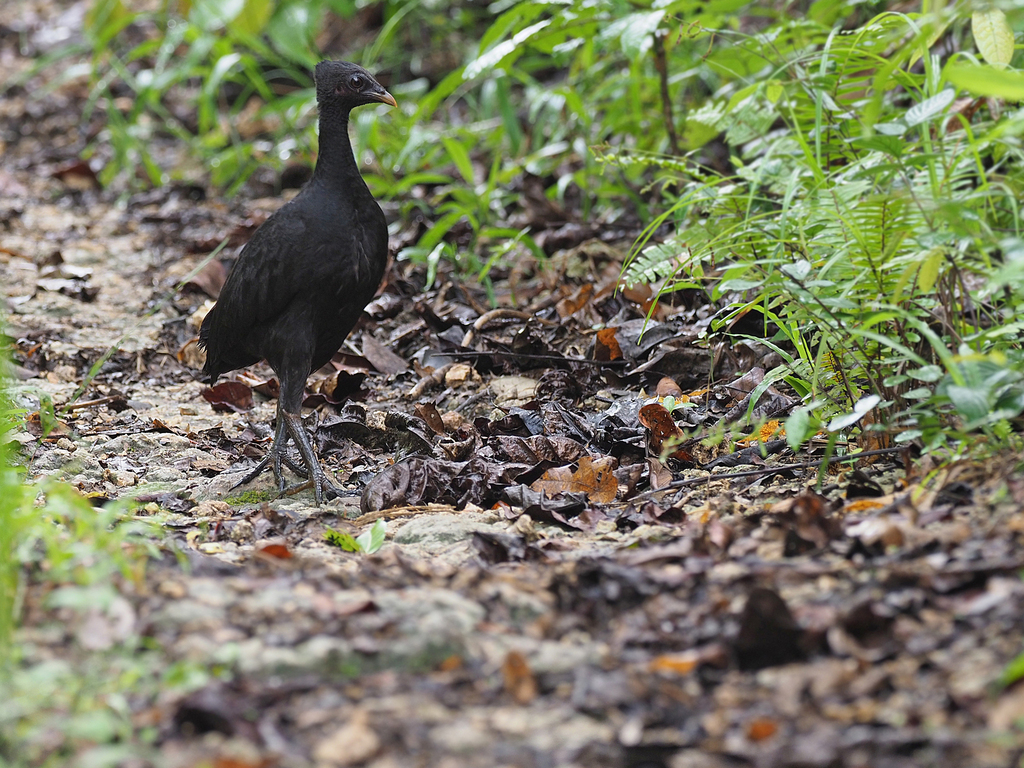
Dusky Megapode
Photo © James Eaton
Photo © James Eaton — CC0 1.0 — Source: iNaturalist #234486115Identification
The dusky megapode is a medium-sized, stocky galliform measuring approximately 41 cm (16 in) in length. This predominantly blackish bird is unmistakable in its range, with a distinctive short pointed crest crowning its head. A striking bare patch of red facial skin provides vivid colour contrast against its dark plumage, while its dark legs, brown irises, and dark brown and yellow bill complete the species' sombre but distinctive appearance. Male and female birds are similar in plumage, making this species relatively straightforward to identify once encountered in the field.
Range & Habitat
The dusky megapode is endemic to Indonesian waters, inhabiting the Maluku and Raja Ampat Islands. This terrestrial species shows a strong preference for forested and swampy environments, including mangrove areas where it can exploit the rich substrate for its remarkable nesting behaviour. The species maintains a fairly common distribution throughout much of its range, making it a realistic target for visitors to these regions.
Behaviour & Diet
Like all members of the megapode family, the dusky megapode employs an extraordinary reproductive strategy that sets it apart from most other birds. Rather than incubating eggs with body heat, it constructs enormous mounds from earth mixed with leaves, sand, gravel, and sticks. These structures are impressively large, potentially reaching 11 m (36 ft) in diameter and standing nearly 5 m (16 ft) tall. The heat generated by decomposing organic matter within the mound incubates the eggs, a remarkable adaptation that allows the parents to forego brooding entirely. The chicks hatch precocial and fully independent, requiring no parental care after emerging from the mound.
Best Time & Places to See It
The dusky megapode's status as a fairly common species throughout much of its range increases the likelihood of encounters for patient observers visiting the Maluku and Raja Ampat Islands. Its terrestrial habits and preference for forest and swamp habitats mean that thorough exploration of suitable areas—particularly mangrove zones and densely vegetated lowland forests—offers the best chances of observation. The species' least concern conservation status reflects its current population stability, suggesting that its range remains relatively intact and accessible to wildlife enthusiasts.
Photography Tips
The dusky megapode's dark plumage can present exposure challenges in the shadowy forest and mangrove environments it inhabits. Photographers should be prepared to use faster shutter speeds and higher ISO settings to capture sharp images in low light conditions. The bird's distinctive bare red facial skin and pointed crest offer compelling compositional elements; frame shots to emphasize these features when possible. The enormous mounds constructed by this species offer an equally photogenic subject and can be impressive landscape features in their own right, providing context for understanding this remarkable bird's behaviour.
No community photos yet. Log in to add the first one.
No community observations of this species yet.