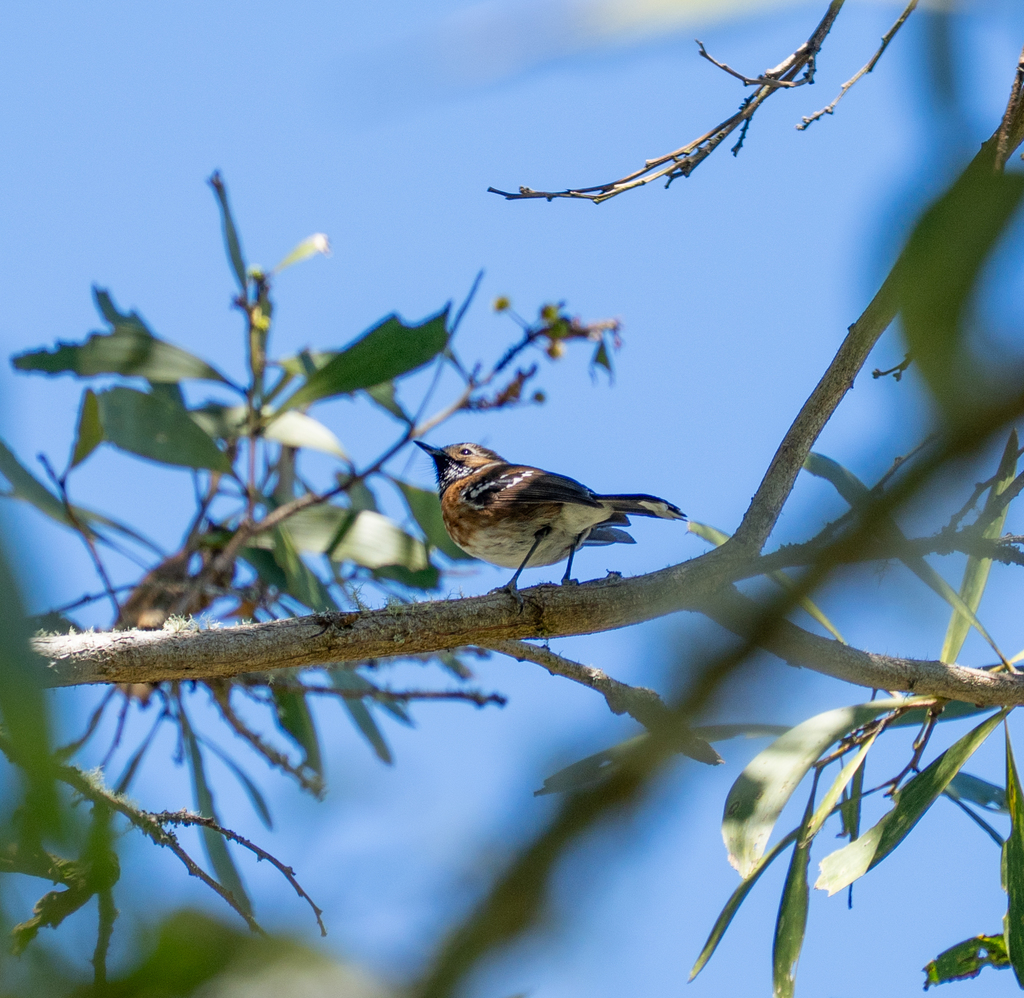
Hawaii Elepaio
The Hawaiʻi ʻelepaio (Chasiempis sandwichensis), also Hawaiian ʻelepaio, is a monarch flycatcher found on the Big Island of Hawaii. Until 2010, all three ʻelepaio species, the Kauaʻi ʻelepaio (Chasiempis sclateri), the Oʻahu ʻelepaio (Chasiempis ibidis) and this species were considered conspecific. == Taxonomy and systematics == The Hawaiʻi ʻelepaio was formally described in 1789 by the German naturalist Johann Friedrich Gmelin in his revised and expanded edition of Carl Linnaeus's Systema Naturae. He placed it with the flycatchers in the genus Muscicapa and coined the binomial name Muscicapa sandwichensis. Gmelin based his description on the "sandwich flycatcher" that had been described in 1783 by the English ornithologist John Latham in his book A General Synopsis of Birds. Latham had examined a specimen from the Sandwich Islands (now the Hawaiian Islands) in the collection of the naturalist Joseph Banks. The specimen would have been collected between 17 January and 22 February 1779 near Kealakekua Bay on the island of Hawaii during James Cook's third voyage to the Pacific Ocean. The Hawaiʻi ʻelepaio is now placed in the genus Chasiempis that was introduced in 1847 by the German ornithologist Jean Cabanis. The species was formerly considered to be conspecific with the Kauaʻi…
No community photos yet. Log in to add the first one.
No community observations of this species yet.