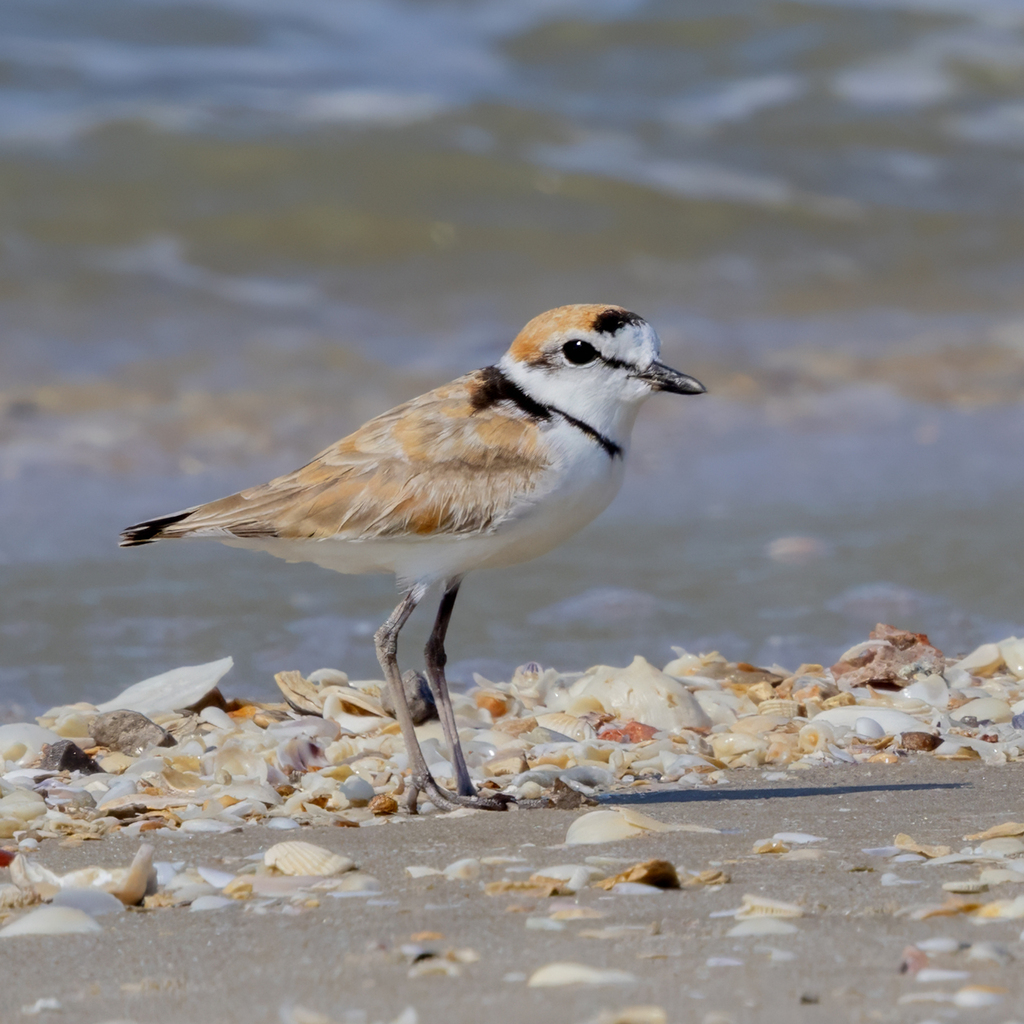
Malaysian Plover
Identification
The Malaysian plover is a small wader, measuring just 15 cm in length and weighing around 35–42 grams. Despite its diminutive size, it is easily recognized by distinctive plumage features. Males display a striking thin black band encircling the neck, while females are marked instead with a thinner brown band. Both sexes have pale legs. The species produces a soft, quiet "twit" call that belies its presence on busy beaches.
Range & Habitat
This species is endemic to Southeast Asia, where it nests exclusively on beaches and salt flats in coastal environments. The Malaysian plover depends on open sandy shores and mudflats for both breeding and feeding, making it inherently vulnerable to the rapid coastal development transforming the region. Major populations are concentrated in Thailand, particularly in Khao Sam Roi Yot National Park and coastal areas of Prachuap Khiri Khan and Petchburi provinces, though the species' range extends across the broader Southeast Asian region.
Behaviour & Diet
Malaysian plovers are ground-nesters that lay two to five cryptic eggs—typically three—in small scrapes on beaches. Both parents share incubation duties for approximately 30 days and then cooperatively raise the precocial chicks until fledging, which occurs after a further 30 days. In Thailand, the breeding season commences in late March and may extend until September, during which successful pairs may produce multiple clutches. The species forages on invertebrates found on beaches and mudflats, making it entirely dependent on these specialized coastal habitats.
Best Time & Places to See It
The breeding season from late March through September offers the best opportunity to observe Malaysian plovers, particularly in Thailand where the population is most accessible. Khao Sam Roi Yot National Park, Thailand's first marine protected area, harbors one of the main remaining large populations. Additional key locations include beaches around Bonok village and Laem Phak Bia in Petchburi province, both in Prachuap Khiri Khan province. However, visitors should be mindful that human disturbance during the breeding season can stress nesting birds, so observation should be conducted respectfully and from a distance.
Photography Tips
Photographing Malaysian plovers requires patience and discretion. Early morning hours on undisturbed beaches will yield the best sightings and lighting conditions. Keep a respectful distance—these birds are vulnerable to disturbance during the breeding season, and approaching too closely may force adults off nests, leaving eggs and chicks exposed to heat stress. Use a telephoto lens to capture the distinctive neck bands without causing disturbance. Focus on the pale leg coloration and subtle plumage patterns that distinguish this species, and listen for the soft "twit" call to locate birds in open habitats where they may otherwise blend with their surroundings.
Mu Ko Ang Thong National Park
Thailand
+105 birds+18 mammals
Limestone karsts pierce an emerald sea, their weathered peaks rising abruptly from turquoise waters where mangrove forests cling to tidal […]
VIEW NATIONAL PARKKhao Laem Ya-Mu Ko Samet National Park
Mueang Rayong District, Thailand
+132 birds+30 mammals
Where limestone cliffs plunge into crystalline waters and coastal forests merge with rocky outcrops, a mosaic of Thailand’s most pristine […]
VIEW NATIONAL PARKBako National Park
Kuching, Malaysia
+112 birds+18 mammals
Weathered sandstone cliffs rise dramatically from the South China Sea, their ochre faces sculpted by millennia of wind and tide […]
VIEW NATIONAL PARKKuching Wetlands National Park
Kuching, Malaysia
+135 birds+21 mammals
Where brackish waters meet mangrove stilts and freshwater swamps blend into coastal mudflats, one of Southeast Asia’s most dynamic wetland […]
VIEW NATIONAL PARKWest Bali National Park
Gerokgak, Indonesia
+142 birds+12 mammals
Where limestone cliffs plunge into crystalline waters and monsoon forests cling to volcanic slopes, Indonesia’s northwestern frontier reveals one of […]
VIEW NATIONAL PARKNo community photos yet. Log in to add the first one.
No community observations of this species yet.