Identification
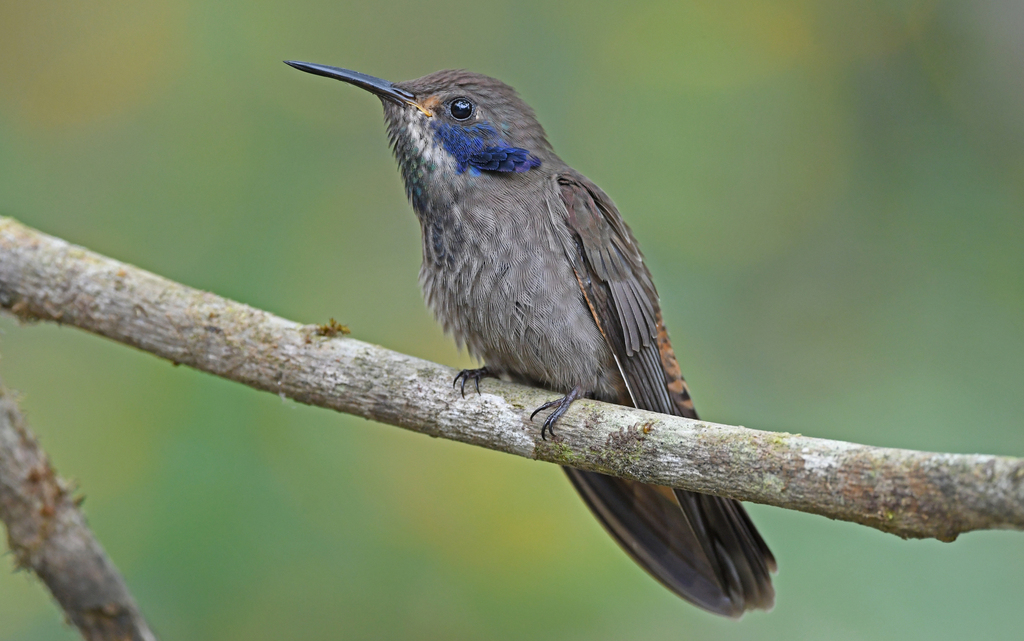
The brown violetear is a large hummingbird at 11.5 cm long, weighing 6.5–7 g, and is unmistakable in the field. Its plumage is predominantly dull brown with a distinctive rufous rump and greyer underparts. The most striking feature is a violet patch that runs back and down from the eye, combined with a hermit-like malar stripe and a glittering green and blue throat stripe. The bill is relatively short and almost straight.
Females are similar to males but display a smaller throat patch. Immature birds are distinguishable by rufous fringes to their upperpart plumage and little or no violet colouring behind the eyes, making them easier to confuse with related species until they mature.
Range & Habitat
The brown violetear breeds at middle elevations in the mountains of Central America and western and northern South America, primarily throughout the Andes and the tepuis, with isolated populations on Trinidad and in the Brazilian state of Bahia. The species favours forest at altitudes between 400 and 1600 m during breeding season, but spreads widely into the lowlands when not nesting. It is replaced at higher altitudes by its close relative, the lesser violetear, though their ranges overlap considerably.
This species is typically found high in the canopy of rainforest, tall second growth, and coffee plantations, though it will descend to feed at lower levels at forest edges and clearings.
Behaviour & Diet
The brown violetear feeds primarily on nectar from small flowers of trees, shrubs, and epiphytes. Crucially, it also takes insects—often caught in flight through hawking—as an essential source of protein. This dual diet strategy is typical of larger hummingbird species.
The species is highly aggressive despite not being particularly territorial, spending far more time at feeders attacking other hummingbirds than actually feeding. Males gather in loose leks to breed, where they deliver a vigorous, repetitive song made up of their chit call, with up to several dozen males singing together. Nesting females construct tiny cup nests from plant down, saddled on a twig 1–3 m high in a bush, typically laying two white eggs.
Best Time & Places to See It
The brown violetear is found throughout its range year-round, though it is most abundant during breeding season when males gather in their characteristic leks. To observe this species, focus on middle-elevation mountain forests between 400 and 1600 m, where it is most reliably found. Forest edges, clearings, and coffee plantations offer good viewing opportunities, as birds frequently descend to feed in these more open areas.
Photography Tips
Photograph this species in good light to capture the iridescent violet and throat patches that make it unmistakable. The bird's aggressive behaviour at feeders can work in your favour—set up near flowering plants or feeders where multiple birds gather, as their territorial displays and feeding interactions offer dynamic photo opportunities. The striking contrast between the dull brown plumage and glittering throat colours requires careful exposure management to render both areas properly.