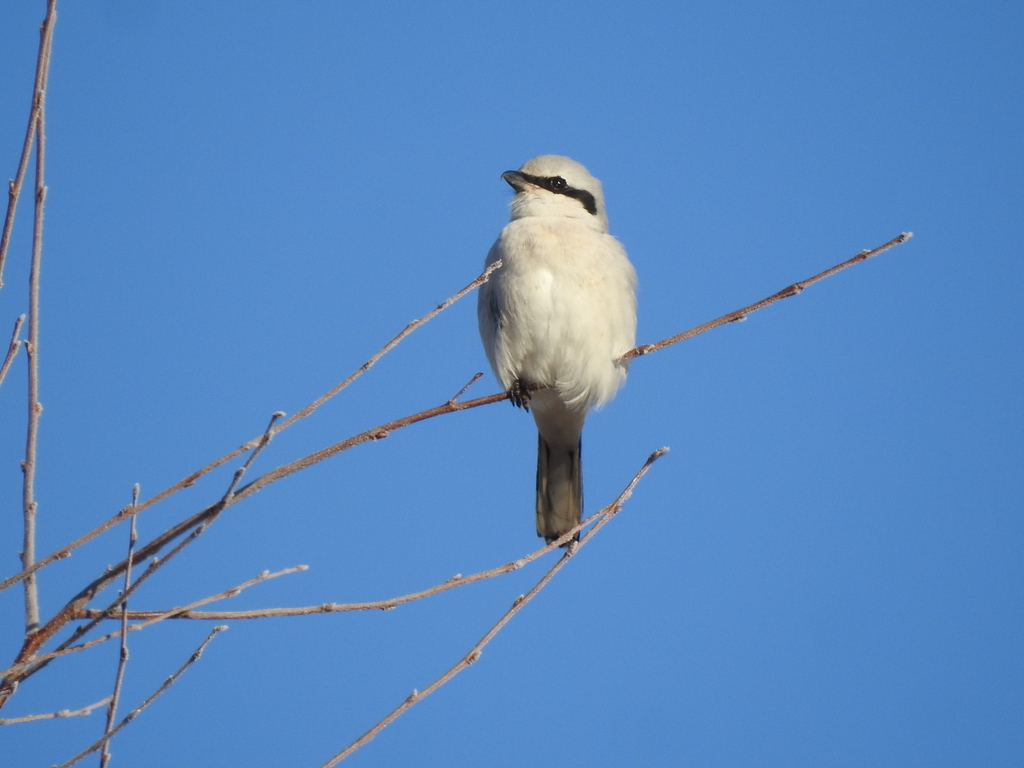
Identification
The Great Grey Shrike is a large, predatory songbird easily recognised by its distinctive plumage. Males and females are similar in appearance, with pearly grey upperparts, a striking black eye-mask, and white underparts. The bird's scientific name, Lanius excubitor, literally means "sentinel butcher" – Lanius from the Latin for butcher, and excubitor meaning watchman or sentinel – a fitting description of this imposing hunter.
Range & Habitat
The Great Grey Shrike breeds generally north of 50° northern latitude across northern Europe and Asia. Most populations are migratory, moving south during winter to temperate regions where they can find adequate food supplies. This pattern of seasonal movement makes them a variable presence across their range, appearing in different areas depending on the time of year.
Behaviour & Diet
This species is highly carnivorous, with rodents comprising more than half of its diet. The Great Grey Shrike exhibits two particularly conspicuous behaviours that explain its evocative common name. It is famous for impaling prey animals on thorns – a food storage strategy that earned it the nickname "butcher-bird" among earlier naturalists. The bird also regularly uses exposed tree-tops and poles as vantage points to scan the surrounding landscape for potential prey, a watchful sentinel behaviour that makes it relatively easy to locate in suitable habitat. According to historical records, this habit of surveillance was even exploited in falconry, where the bird's keen vigilance was put to practical use.
Best Time & Places to See It
Winter visits to temperate regions in Europe and Asia offer the best opportunities to encounter this species. Look for Great Grey Shrikes in open habitats with scattered trees and poles, where they can perch conspicuously while hunting. The bird's habit of using elevated perches makes it relatively visible compared to many other species, though patience and good habitat selection will increase your chances of a sighting.
Photography Tips
The Great Grey Shrike's striking black and white facial mask and contrast between grey and white plumage make it a rewarding subject for photographers. Its preference for exposed perches on tree-tops and poles works in the photographer's favour, offering relatively unobstructed views and good light. The bird's habit of remaining still while surveying for prey provides excellent opportunities for sharp, detailed images of this impressive predator.