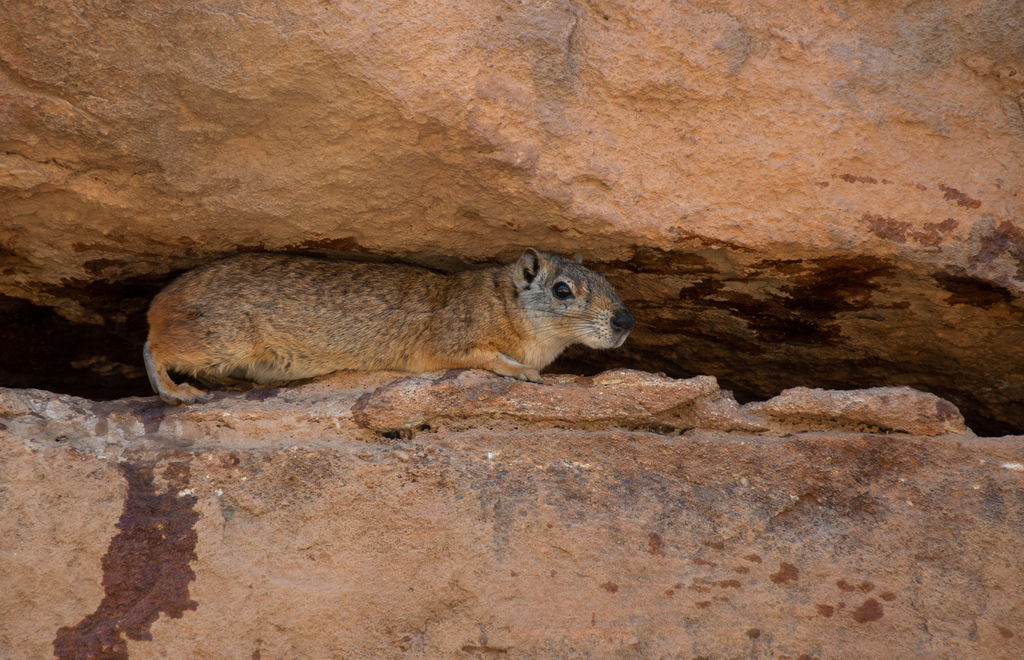
The rock cavy or mocó (Kerodon rupestris) is a species of cavy that is endemic to eastern Brazil. It has also been introduced to the Atlantic island of Fernando de Noronha. The rock cavy is called mocó in Brazilian Portuguese, and koriko pexerumen in the Xukuru language of Pernambuco, Brazil. == Description == The rock cavy is a fairly large rodent weighing up to 1 kg (2.2 lb). Like other cavy species, their tails are vestigial or absent. Their backs are grey-brown and their bellies tan to light brown. In appearance and habit, they closely resemble the unrelated African rock hyraxes (an example of convergent evolution). They are herbivorous, feeding on seeds and leaves of the scrubby vegetation that grows in their territories. This vegetation consists of tender leaves and certain species of creeper. == Distribution and habitat == Rock cavies are found in dry, rocky areas with low, scrubby vegetation, and they prefer to reside close to stony mountainsides and hills. They are native to eastern Brazil, from eastern Piauí state to Minas Gerais state, and have been introduced to the island of Fernando de Noronha, off the eastern coast of Brazil. == Phylogeny == Rock cavies belong to…