Brown Palm Civet
Identification
The brown palm civet is a uniformly brown viverrid with darker coloration around the head, neck, shoulders, legs, and tail. Unlike the closely related Asian palm civet, it lacks distinct facial markings or body patterns, though the pelage can vary considerably from pale buff to dark brown and may appear slightly grizzled. A distinctive feature is the reversed direction of hair growth on the nape, a characteristic it shares with the golden palm civet of Sri Lanka. The tail, which is long and sleek, sometimes bears a white or pale-yellow tip.
In size, the brown palm civet is comparable to the common palm civet. Males typically weigh between 3.6 and 4.3 kilograms, with a head and body length of 430–620 millimetres and a tail length of 380–530 millimetres, making it a moderately sized member of the viverrid family.
Range & Habitat
The brown palm civet, also known as Jerdon's palm civet, is endemic to the Western Ghats of India, with its range extending from Castle Rock in Goa southward to the Kalakkad Mundanthurai Tiger Reserve at the southern tip of the mountain range. It inhabits rainforest tracts at elevations between 500 and 1,300 metres.
The landscape it occupies is highly fragmented, with remnants of tropical rainforest interspersed with commercially exploited areas such as tea and coffee plantations. The species' ability to persist in these human-modified landscapes depends critically on the presence of diverse fruit tree species, including shade trees in coffee plantations that provide essential food resources.
Behaviour & Diet
Brown palm civets are solitary and strictly nocturnal animals. During daylight hours, they rest in sheltered day-bed sites including tree hollows, tangled canopy vines, abandoned nests of Indian giant squirrels, and branch forks. These resting sites are typically located in large trees within dense mature forest stands that offer high canopy connectivity. Occasionally, they may rest on open branches during the night.
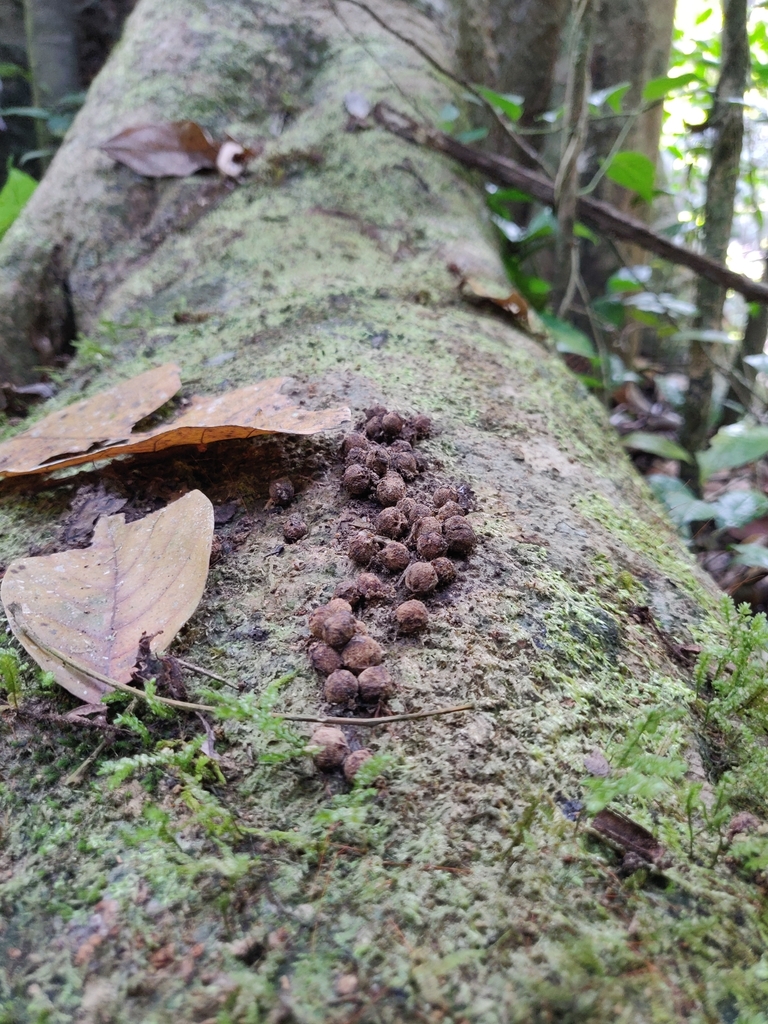
The brown palm civet is predominantly frugivorous and plays a crucial ecological role as a key mammalian seed disperser in Western Ghats rainforests. Fruits constitute approximately 97 percent of its diet, with records documenting consumption from more than 53 native plant species and four introduced species. It favours fruits from trees and lianas with small diameters, including many-seeded pulpy berries and drupes with moderate to high water content. It also feeds on flowers of certain species and a diverse range of invertebrates and vertebrates. Diet varies across years and seasons in response to local fruit availability.
Best Time & Places to See It
As a nocturnal species, the brown palm civet is best observed during night excursions through suitable habitat. The species is present within several protected areas throughout the Western Ghats, including the Kalakkad Mundanthurai Tiger Reserve in the south. Visitors should focus on mature rainforest tracts at mid to high elevations within the Western Ghats, where canopy connectivity is high and fruit tree diversity is greatest, including areas adjacent to coffee plantations that retain shade trees.
Photography Tips
Photographing brown palm civets requires patience and specialized night equipment, as the species is strictly nocturnal. Wide-aperture lenses and high-ISO capability are essential for capturing images in low light conditions. Position yourself quietly near suitable daytime rest sites, such as large trees in dense forest, and conduct night searches along trails through mature rainforest. A headlamp with a red filter will minimize disturbance while allowing visibility. The species' sleek form and long tail are distinctive features worth emphasizing in photographs, and the reversed nape hair, though subtle, is a notable identifying characteristic for close-up shots.
Eravikulam National Park
Devikulam, India
+127 birds+30 mammals
Where the Western Ghats rise into perpetual mist, rolling grasslands stretch across the high plateaus of Kerala’s southern reaches. This […]
VIEW NATIONAL PARKPampadum Shola National Park
Vattavada, India
+125 birds+30 mammals
Where misty shola forests cling to the high plateaus of the Nilgiri Mountains, ancient evergreen remnants create a world apart. […]
VIEW NATIONAL PARKBandipur National Park
Hirehalli, India
+135 birds+30 mammals
Where the Western Ghats descend into the Deccan plateau, ancient deciduous forests blanket a landscape carved by the Nugu River. […]
VIEW NATIONAL PARKNo community photos yet. Log in to add the first one.
No community observations of this species yet.