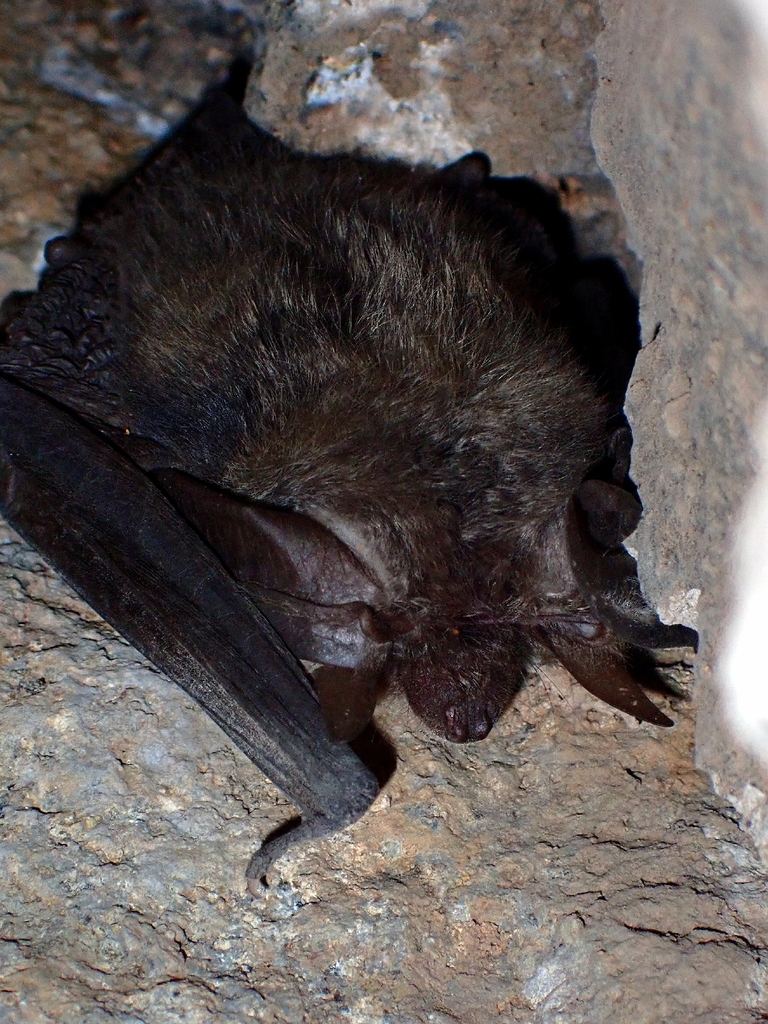
Canary Long-eared Bat
The Canary long-eared bat (Plecotus teneriffae), also known as the Canary big-eared bat or Tenerife long-eared bat, is a species of vesper bat endemic to the Canary Islands. According to the IUCN, it is critically endangered. It feeds mainly on moths. Roosting sites include caves, lava tubes and abandoned buildings. == Taxonomy and etymology == It was described as a new species in 1907 by British mammalogist Gerald Edwin Hamilton Barrett-Hamilton. He described it based on specimens in the British Museum of Natural History. The holotype had been collected by R. Gomez in April 1887 near the town of La Orotava. "R. Gomez" was likely Ramon Gomez, a local pharmacist who traded in medicines, old coins, and biological specimens from the Canary Islands. Its species name "teneriffae" is derived from Tenerife, which is one of the islands of the Canary Islands and the place where the holotype was collected. == Description == When Hamilton described it as a new species, he noted that it was similar in appearance to the brown long-eared bat, Plecotus auritus, but that it had "much larger wings." == Conservation == It is evaluated as critically endangered by the IUCN. It meets the criteria for this…
No community photos yet. Log in to add the first one.
No community observations of this species yet.