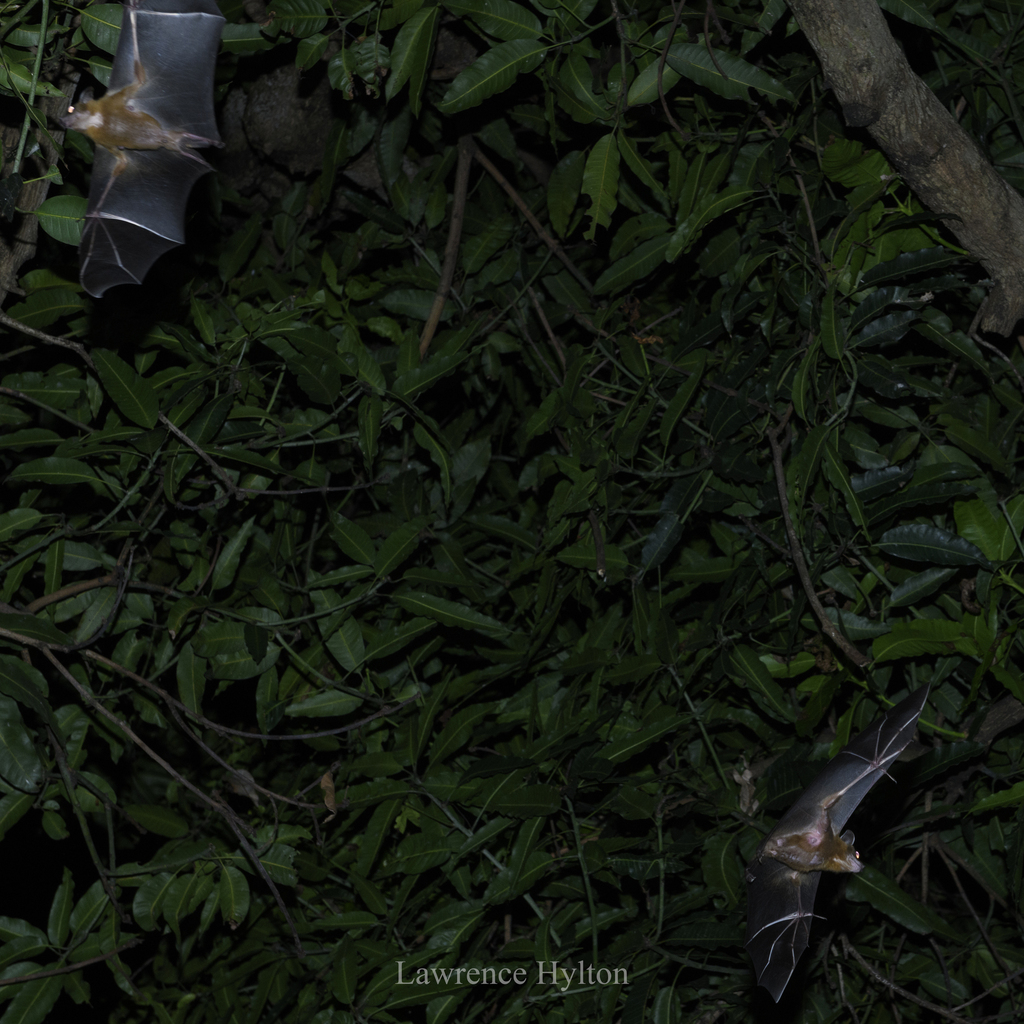
Greater Short-nosed Fruit Bat
Identification
The greater short-nosed fruit bat is a megabat with distinctive features that make it recognizable in the field. Despite its common name, it has a relatively long snout compared to other fruit bat species. Adults display brown to grey-brown upper parts with contrasting paler underparts, and their fur is notably fine and silky to the touch. A useful identifying characteristic is the white edging on the ears and wing bones. The wingspan of adults reaches approximately 48 cm (19 inches), with an average forearm length of 70.2 mm. Juveniles are noticeably lighter in coloration than adults, which can help distinguish age groups when observing roosting colonies.
Range & Habitat
The greater short-nosed fruit bat is found across a broad swathe of South and Southeast Asia, ranging from Pakistan eastward to Vietnam. These highly adaptable bats are common inhabitants of tropical forests and cultivated fruit crop areas, making them frequent visitors to agricultural regions. They also thrive in grasslands and mangrove forests, demonstrating considerable ecological flexibility.
These bats are renowned architects of their own shelters. They typically nest high in palm trees, where they chew fronds to construct simple tent-like structures. When palms are unavailable, they show remarkable ingenuity by closely interweaving leaves and twigs of creeping vines that cover buildings, fashioning functional temporary homes from alternative materials.
Behaviour & Diet
Greater short-nosed fruit bats are highly gregarious, roosting in same-sex groups of eight to nine individuals outside the breeding season. During mating season, group sizes expand considerably, with 6–10 males and 10–15 females sharing palm-frond tents. The adult population shows a strong female bias, attributed to females reaching sexual maturity faster than males. In Central India, these bats breed twice annually, with females producing a single young per breeding cycle. Females reach sexual maturity at 5–6 months of age, while males require a full year.
These bats are voracious frugivores, locating preferred food items by scent and consuming more than their body weight in a single sitting. Favored fruits include ripe guava, banana, chikoo, dates, and lychees. Beyond fruit consumption, they engage in nectarivory and folivory, and have recently been documented practicing geophagy—consuming soil—possibly for mineral supplementation and detoxification. Despite their ecological importance as seed dispersers for date palms and pollinators of night-blooming flowers, they inflict serious damage on fruit crops and are considered agricultural pests in many regions.
Best Time & Places to See It
Look for these bats in tropical forest regions and cultivated fruit areas throughout their range from Pakistan to Vietnam. Early morning and dusk are optimal viewing times when they return to or depart from their roosts. During the breeding season, larger congregations gather in their palm-frond tents, offering better opportunities for observation. Agricultural areas with fruiting trees—particularly those growing guava, banana, dates, and lychees—are reliable locations for encounters.
Photography Tips
Photograph roosting bats in their high palm-tree tents using a telephoto lens to avoid disturbing them. The white-edged ears and wing bones provide striking contrast against their brown plumage and make excellent focal points. Early morning light filtering through tropical canopy creates natural backlighting that highlights the fine texture of their silky fur. For action shots, position yourself near fruiting trees at dusk when bats arrive to feed, using a fast shutter speed to capture their movement.
Valmiki National Park
Ramnagar, India
+128 birds+30 mammals
Where the Himalayan foothills soften into the Ganges plains, dense sal forests rise above meandering rivers and grassland mosaics that […]
VIEW NATIONAL PARKRanthambhore National Park
Sawai Madhopur, India
+126 birds+25 mammals
Where granite fortresses rise from the Aravalli Hills, a sprawling mosaic of dry deciduous forest, grassland, and ten interconnected lakes […]
VIEW NATIONAL PARKKhao Laem Ya-Mu Ko Samet National Park
Mueang Rayong District, Thailand
+132 birds+30 mammals
Where limestone cliffs plunge into crystalline waters and coastal forests merge with rocky outcrops, a mosaic of Thailand’s most pristine […]
VIEW NATIONAL PARKNo community photos yet. Log in to add the first one.
No community observations of this species yet.