Meridional Serotine
Identification
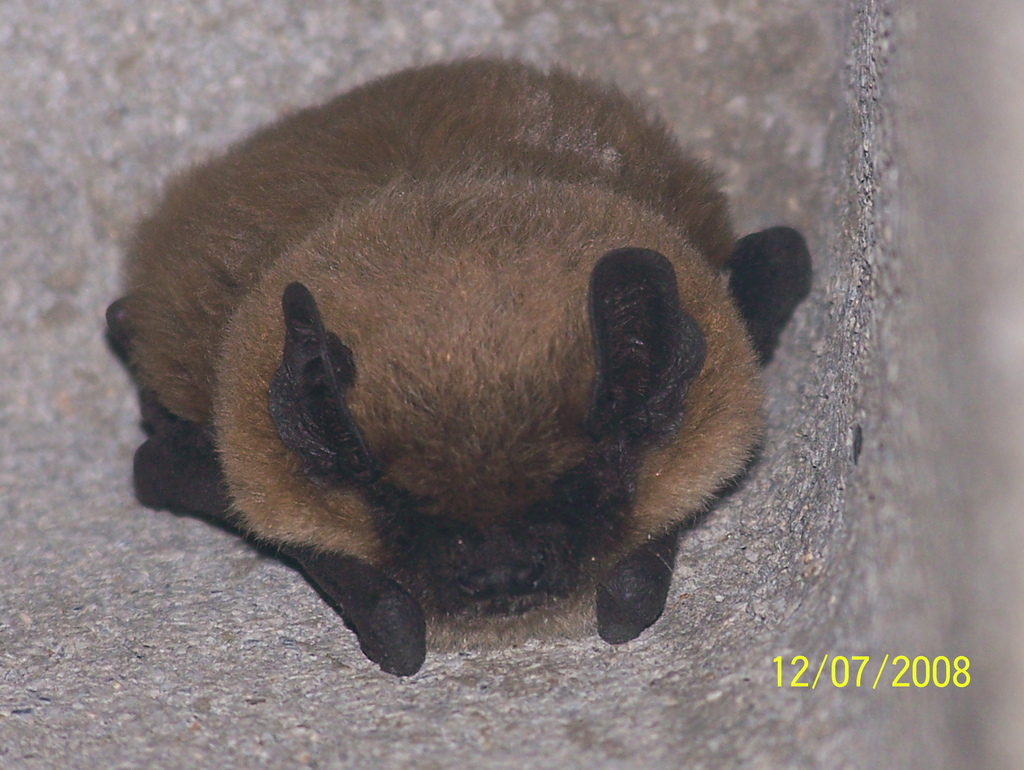
The meridional serotine is a small bat with a forearm length of 51 mm and distinctive pale yellowish-brown fur—much lighter than its close relative, the serotine bat. Its species name, isabellinus, derives from "isabelline," meaning pale yellow, a description that perfectly captures this bat's coloration. The fur on its back is long and silky, with individual hairs measuring 8 mm, while belly hairs are shorter at 6 mm. Look for its large feet with brown claws and hairy toes, rounded ears with a convex inner margin, and a blunt-tipped tragus.
Range & Habitat
This species is native to the Iberian Peninsula and North Africa, with confirmed records from Spain, Portugal, Gibraltar, Morocco, Algeria, Tunisia, and Libya. It does not occur at elevations above 1,800 meters. The meridional serotine is remarkably adaptable, thriving in diverse habitats including semi-desert, temperate forest, shrubland, subtropical dry forest, and suburban areas. During daylight hours, it roosts in rock crevices, under bridges, and in buildings, making it well-suited to both natural and human-modified landscapes.
Behaviour & Diet
Like other serotines, this species is insectivorous, feeding primarily on beetles, moths, and flies. Scarab beetles and various fly species are particularly important food items. The bat forages over open habitats such as pastures and gardens, where prey is readily available. Females are highly social, forming maternity colonies that range from 20 to 100 individuals, where they rear their young together during the breeding season.
Best Time & Places to See It
In some areas of southern Spain, the meridional serotine is one of the most common bat species, making it a reliable subject for bat-watching in the region. Your best opportunities will be in open foraging habitat—pastures, gardens, and grasslands—where the bats emerge at dusk to hunt insects. The species' tolerance of diverse climates means it can be found across its range year-round, though activity peaks during the warmer months when insect availability is highest.
Photography Tips
Photographing this small bat in flight requires high-speed flash and fast shutter speeds to freeze movement. Focus on open foraging areas at dusk when the bats are most active and the light is still workable. The bat's pale coloration and silky fur can be challenging to expose correctly—slightly overexposing may help capture the luminous quality of its distinctive yellowish-brown coat. Patience and multiple visits will increase your chances of obtaining quality images of this adaptable species.
Cabo de Gata-Níjar Nature Park
San José, Spain
+131 birds+21 mammals
Where arid mountains plunge toward an impossibly blue Mediterranean, Spain’s southeastern corner harbors one of Europe’s most dramatically understated wilderness […]
VIEW NATURAL PARKParque-Reserva Natural de las Quinientas
Berlanga, Spain
+134 birds+23 mammals
Where limestone cliffs rise dramatically above emerald valleys, a tapestry of Mediterranean ecosystems unfolds across one of Spain’s most biodiverse […]
VIEW NATURE RESERVENo community photos yet. Log in to add the first one.
No community observations of this species yet.