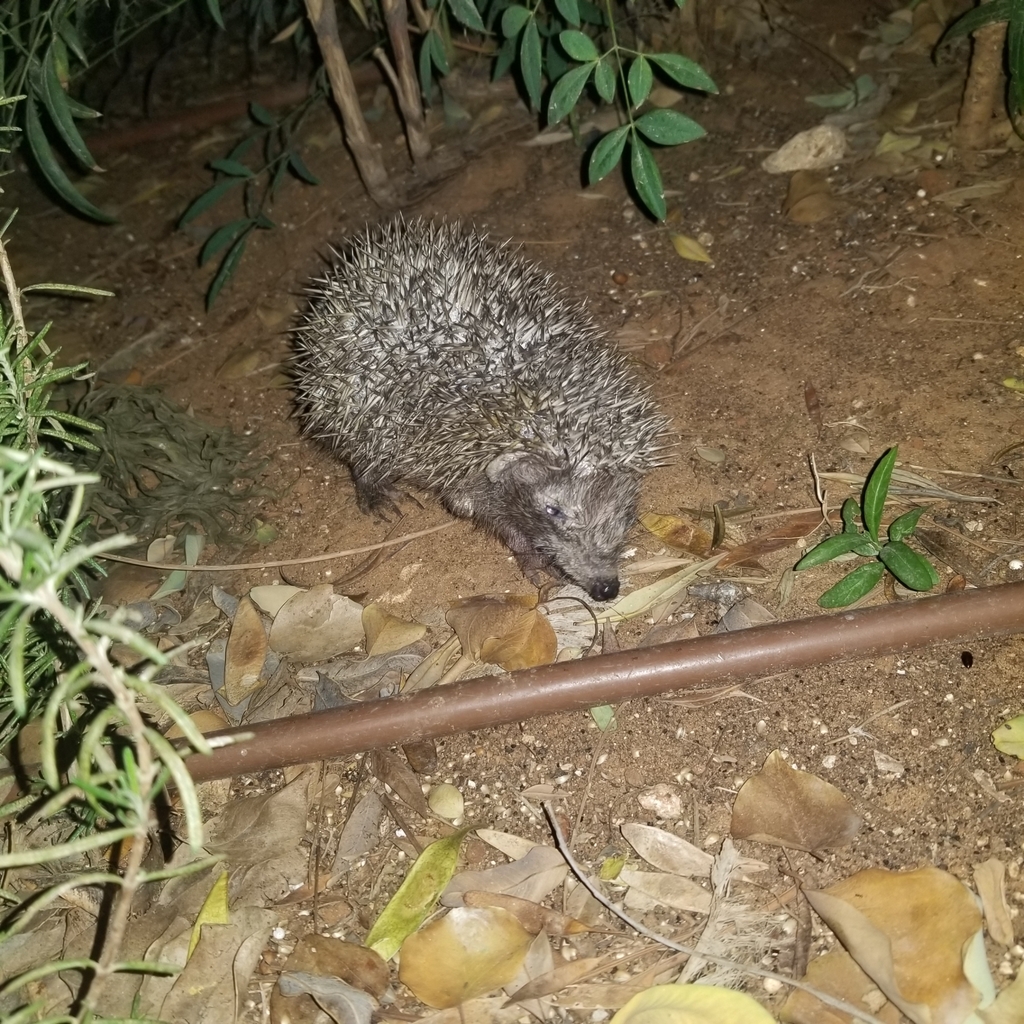
Southern White-breasted Hedgehog
Identification
The southern white-breasted hedgehog is easily confused with the European hedgehog, as the two species are remarkably similar in appearance. The most reliable distinguishing feature is a distinctive white spot on the chest—a characteristic that gives this species its common name. These compact animals weigh between 680 and 900 grams during their active season, though their body weight drops no lower than 600 grams even during hibernation, when they enter a state of torpor rather than true sleep.
Range & Habitat
Native to Eastern Europe and Southwestern Asia, the southern white-breasted hedgehog inhabits a broad geographical region. The Caucasus Mountains have played a significant role in shaping the species' distribution, creating distinct populations. Today, these hedgehogs are found in Russia (north of the Caucasus), Turkey, Iran, and Israel. The species has become increasingly popular as an exotic pet in the United States and Iran in recent years.
In the wild, southern white-breasted hedgehogs favour habitats ranging from deciduous forests to parks and gardens—environments that provide cover and abundant invertebrate prey. Unlike their European relatives, these hedgehogs display a curious nesting behaviour: they never dig dens, instead preferring to construct grass nests in secluded locations.
Behaviour & Diet
The southern white-breasted hedgehog is primarily nocturnal and insectivorous. Its diet consists mostly of insects, slugs, snails, and worms—a typical hedgehog menu. Remarkably, this species preys upon toxic beetles and possesses immunity to their poisons. The breeding season spans from March to July, during which females may produce up to 7 offspring following a gestation period of approximately 6 weeks. As a cold-climate adaptation, these hedgehogs enter hibernation from November to March each year.
Best Time & Places to See It
For travellers hoping to observe southern white-breasted hedgehogs in their natural habitat, spring and summer months offer the best opportunities, as the animals are active during the breeding season from March through July. Look for them during twilight and night hours in deciduous forests, parks, and gardens across Turkey, Iran, Israel, and Russia. Early mornings may also reward patient observers, as hedgehogs may remain active just before dawn.
Photography Tips
Photographing wild hedgehogs requires patience and a headlamp or red-light torch to avoid disturbing them. Focus on capturing the distinctive white chest spot—your best identifying feature in images. These animals are most active in darkness, so consider using a remote camera trap or high-ISO settings with fast lenses for nocturnal photography. Move slowly and quietly through suitable habitat at dusk; the animals' small size and tendency to curl into a ball when threatened demands close-focus capability and stable shooting technique.
Kolkheti National Park
Nigvziani, Georgia
+149 birds+6 mammals
Where the Caucasus descends to meet the Black Sea, a mosaic of wetlands, reed beds, and coastal lagoons creates one […]
VIEW NATIONAL PARKTrialeti Planned National Park
Tbisi, Georgia
+130 birds+21 mammals
Where limestone plateaus rise above the Caucasian foothills, a mosaic of oak forests, alpine meadows, and beech woodlands creates one […]
VIEW NATIONAL PARKJavakheti National Park
Bozali, Georgia
+148 birds+6 mammals
Dawn breaks over a high-altitude plateau where volcanic peaks pierce the Caucasian sky, their slopes cloaked in alpine meadows that […]
VIEW NATIONAL PARKMachakhela Planned National Park
Skurdidi, Georgia
+138 birds+12 mammals
Where the Lesser Caucasus mountains plunge toward the lowlands of southern Georgia, a landscape of dramatic contrasts unfolds. Steep limestone […]
VIEW NATIONAL PARKNo community photos yet. Log in to add the first one.
No community observations of this species yet.