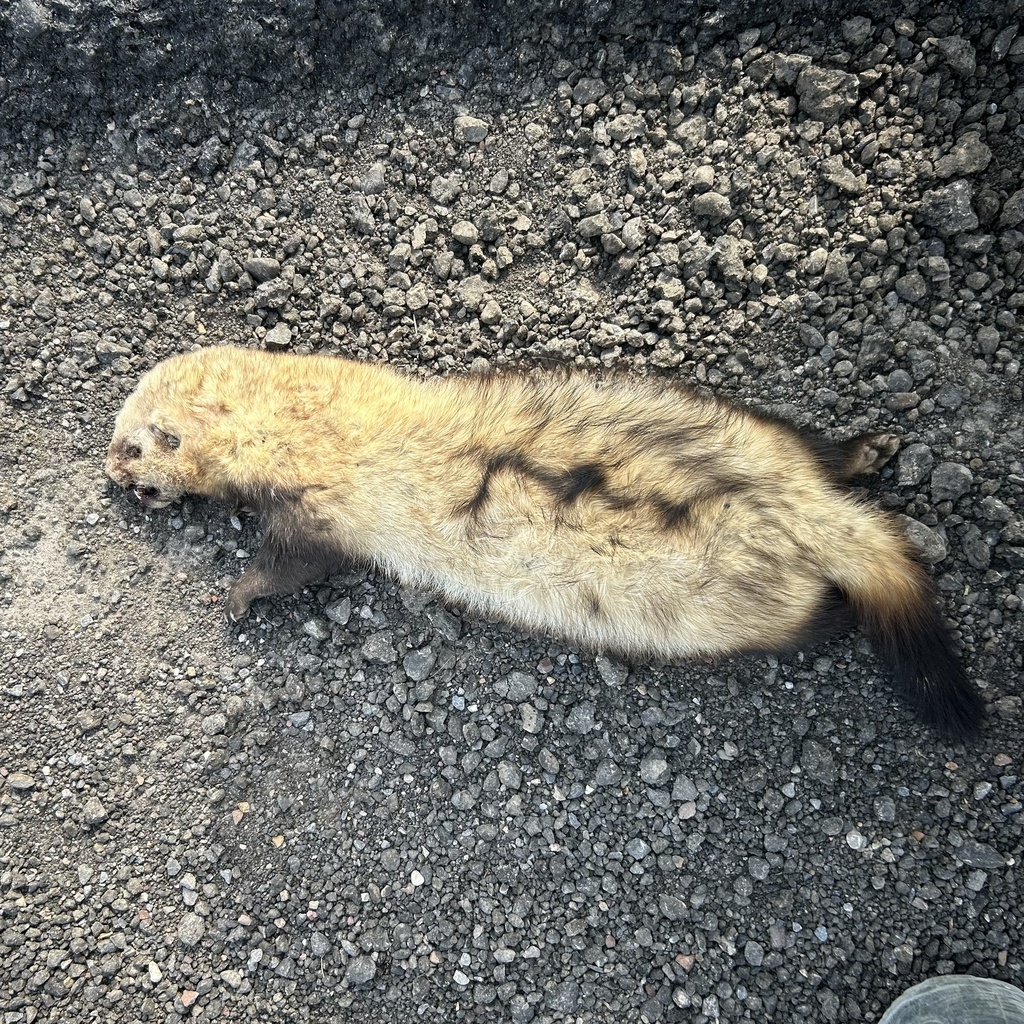
Steppe Polecat
The steppe polecat (Mustela eversmanii), also known as the white or masked polecat, is a species of mustelid native to Central and Eastern Europe and Central and East Asia. It is listed as Least Concern on the IUCN Red List because of its wide distribution, occurrence in a number of protected areas, and tolerance to some degree of habitat modification. It is generally of a very light yellowish colour, with dark limbs and a dark mask across the face. Compared to its relative, the European polecat, the steppe polecat is larger in size and has a more powerfully built skull. The steppe polecat is a nomadic animal which typically only settles in one area until its prey, mainly ground squirrels, are extirpated. It mates from March to May, and generally gives birth to litters of three to six kits, which attain their full growth at the age of two years. It hunts for larger prey than the European polecat, including pikas and marmots. == Evolution == The earliest true polecat was Mustela stromeri, which appeared during the late Villafranchian. It was considerably smaller than the present form, thus indicating polecats evolved at a relatively late period. The steppe polecat's closest…
Danube Delta Biosphere Reserve
Tulcea, Romania
+123 birds+30 mammals
Where Europe’s mightiest river dissolves into the Black Sea, a labyrinth of reed beds, shallow lagoons, and floating islands creates […]
VIEW NATIONAL PARKFertő–hanság National Park
Fertőszéplak, Hungary
+12 birds+27 mammals
Where shallow waters meet vast reed beds beneath wide Hungarian skies, one of Central Europe’s most dynamic wetland complexes unfolds […]
VIEW NATIONAL PARKNo community photos yet. Log in to add the first one.
No community observations of this species yet.