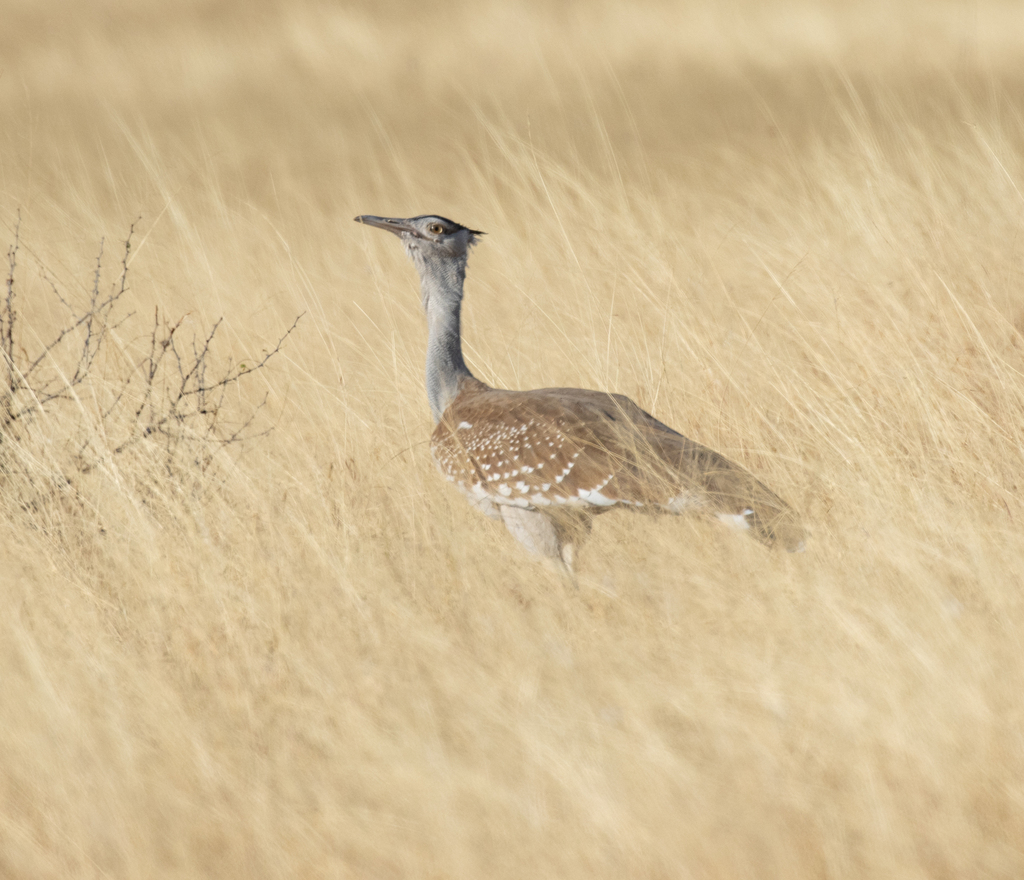
The Arabian bustard (Ardeotis arabs) is a species of bustard which is found across the Sahel region of Africa and south western Arabia. It is part of the large-bodied genus, Ardeotis, and, though little known, appears to be a fairly typical species in that group. == Taxonomy == In 1743 the English naturalist George Edwards included an illustration and a description of the Arabian bustard in his A Natural History of Uncommon Birds. Edwards' hand-coloured etching was based on a live specimen that had been kept by Hans Sloan at his house in London. When in 1758 the Swedish naturalist Carl Linnaeus updated his Systema Naturae for the tenth edition, he placed the Arabian bustard with the other bustards in the genus Otis. Linnaeus included a brief description, coined the binomial name Otis arabs and cited Edwards' work. The specific epithet arabs is Latin meaning "Arabian". The Arabian bustard is now placed in the genus Ardeotis that was introduced in 1853 by the French naturalist Emmanuel Le Maout. Four subspecies are recognised: A. a. lynesi (Bannerman, 1930) – west Morocco A. a. stieberi (Neumann, 1907) – southwest Mauritania, Senegal and Gambia to east Sudan A. a. arabs (Linnaeus, 1758) –…
No community photos yet. Log in to add the first one.
No community observations of this species yet.