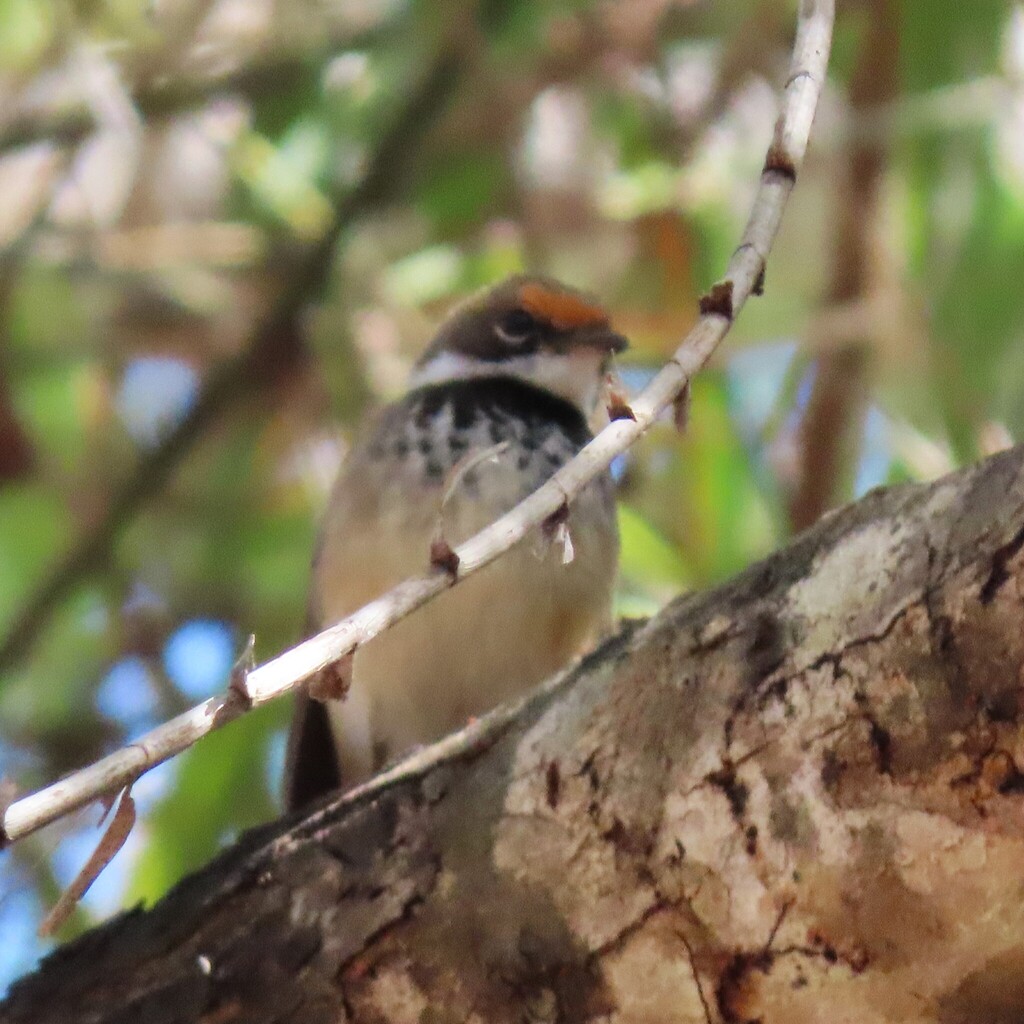
Arafura Fantail
Photo © pimelea
Photo © pimelea — CC BY 4.0 — Source: iNaturalist #297539457Identification
The Arafura fantail is a small passerine closely related to the rufous fantail, from which it was taxonomically split. It is generally duller in plumage than its relative, with rufous colouration more restricted in extent. The two species occupy largely discrete geographic ranges, with only minor overlap in the eastern Moluccas, making field identification dependent on location.
Range & Habitat
This fantail inhabits the Lesser Sunda Islands, the northern coast of Australia from the Kimberley to the western side of the Cape York Peninsula (including subcoastally in the Top End of the Northern Territory), and southern New Guinea. Two subspecies are recognised: R. d. streptophora occurs in coastal central south New Guinea, while R. d. dryas ranges from northeast Western Australia to northwest Queensland and associated coastal areas of central northern Australia.
The species favours mangroves and other coastal woodland, as well as primary and secondary low-level forest. It shows remarkable altitudinal tolerance, occurring from near sea level to approximately 2000 metres in the Timor region of its range.
Behaviour & Diet
As a member of the genus Rhipidura—one of over 60 fantail species worldwide—the Arafura fantail shares the active, acrobatic foraging behaviour characteristic of fantails. These energetic birds are skilled aerial insectivores, though detailed dietary and behavioural information for this species remains limited in available literature.
Best Time & Places to See It
The Arafura fantail is most reliably encountered in coastal mangrove systems and adjacent lowland forests throughout its range. In Australia, focus on mangrove habitats and associated woodlands along the northern coast, particularly from the Kimberley through the Top End and toward Cape York. Southern New Guinea and the Lesser Sunda Islands offer additional opportunities. The species' tolerance for altitude means it can be found in foothill forests as well as sea-level habitats.
Photography Tips
The Arafura fantail's preference for coastal and lowland forest habitats, combined with its active foraging style, requires patience and quick reflexes. Position yourself near mangrove edges and forest openings at dawn when birds are most active. The species' generally dull plumage means subtle lighting is essential—avoid harsh midday sun and work with soft, diffused light to capture the nuances of its rufous markings. A telephoto lens (at least 400mm) is recommended to photograph this small, mobile bird without disturbance.
Mutis Timau National Park
Timor Tengah Selatan, Indonesia
+77 birds
Where the volcanic highlands of Timor Tengah Selatan rise above the surrounding lowlands, Mutis Timau National Park unfolds across approximately 224 square kilometres of mountain forest…
VIEW NATIONAL PARKLitchfield National Park
Australia
+175 birds+15 mammals
Where weathered sandstone plateaus rise above the savanna woodlands of Australia's Top End, Litchfield National Park unfolds as a landscape of dramatic contrasts shaped by a…
VIEW NATIONAL PARKBoodjamulla National Park
Australia
+142 birds+3 mammals
Where red sandstone gorges carve through the semi-arid interior of far north Queensland, Boodjamulla National Park reveals a landscape shaped by seasonal water availability and ancient…
VIEW NATIONAL PARKNo community photos yet. Log in to add the first one.
No community observations of this species yet.