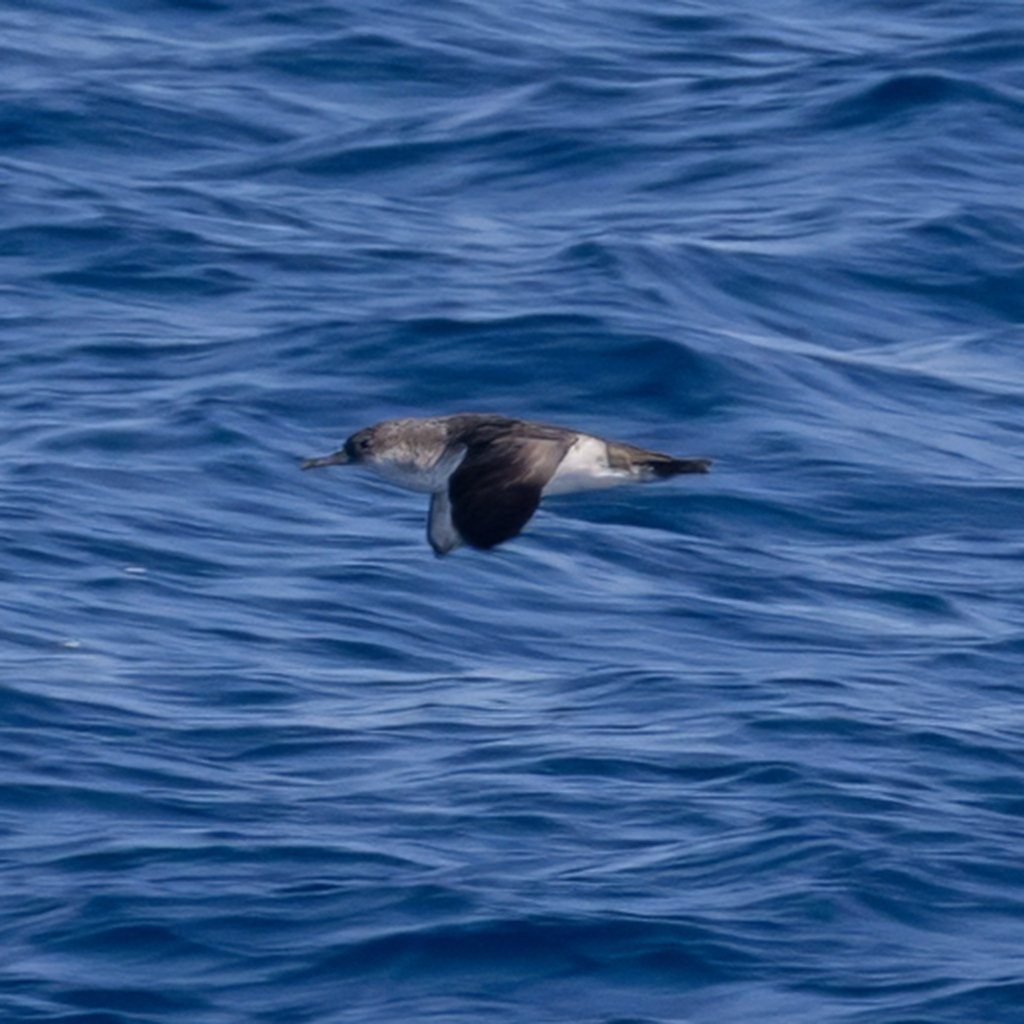
Black-vented Shearwater
Photo © Dan Vickers
Photo © Dan Vickers — CC BY 4.0 — Source: iNaturalist #319452397Identification
The Black-vented Shearwater is a small seabird, measuring 30–38 cm in length with a wingspan of 76–89 cm and weighing around 400 g. Adults display the classic countershading pattern of marine birds: dark brown heads and upperparts contrasting with lighter, often white underparts marked with brown specks and smudges. Chicks are clothed in grey down feathers, lighter around the throat and breast, which gradually lighten with age. Juveniles resemble adults but appear darker and more contrasted than worn adult plumage. The species shows no sexual dimorphism, so males and females are indistinguishable in the field. A notable feature is a moult during the breeding season that reduces wing surface area, believed to enhance diving efficiency during the critical chick-rearing period.
Range & Habitat
Endemic to the Pacific coast of Mexico and the Gulf of California, the Black-vented Shearwater is primarily pelagic but forages closer to shore than most other shearwater species. It nests predominantly on offshore islands, with approximately 95% of the breeding population historically found on Isla Natividad. Other important breeding sites include Isla de Guadalupe, Islas San Benito, and more recently, Isla Rasa and Isla Partida in the Gulf of California, indicating range expansion. The species is relatively common along the central and southern California coast during colder months, with occasional sightings as far north as British Columbia. Black-vented Shearwaters prefer warmer waters exceeding 14°C and primarily inhabit continental shelf waters, though some individuals forage in depths exceeding 2 kilometers. Unlike many seabirds, this species does not migrate far, remaining relatively close to breeding colonies year-round.
Behaviour & Diet
Distinctly nocturnal, Black-vented Shearwaters are most active in low light conditions—a strategy thought to minimize predation by diurnal predators such as the Western Gull. They call only at night during moonless periods, producing vocalizations likened to moaning growls or the sound of a dentist's drill, which play a crucial role in mating given the species' lack of sexual dimorphism. The Black-vented Shearwater feeds primarily on small fish including sardines, herring, and anchovies, along with occasional Mastegoteuthid squid. Unlike some seabirds, they show no attraction to chum and do not follow ships for food. These birds are exceptional free-divers, achieving maximum dive durations of 88 seconds and depths of 52 meters—the best performance among Puffinus species. Diving depths increase during breeding season when chick-rearing demands are high.
Best Time & Places to See It
The Black-vented Shearwater's nocturnal habits make daytime observation challenging, but pelagic boat trips off the central and southern California coast during colder months offer the best opportunities for sightings. The species' primary breeding islands—Isla Natividad, Isla de Guadalupe, and Islas San Benito off Baja California—are accessible by specialized birding tours, though breeding season (late November through January and beyond) coincides with burrow construction and nesting activity. Observers should note that these birds remain relatively close to breeding colonies year-round, making offshore waters near known nesting sites the most reliable locations. Evening and night excursions will yield better results than daytime birding due to the species' strictly nocturnal behaviour.
Photography Tips
Photographing Black-vented Shearwaters presents significant challenges due to their nocturnal and pelagic nature. Low-light photography equipment and high ISO settings are essential for capturing these birds during their active periods. Pelagic boat tours provide the most reliable platform, though rough seas common in their habitat demand secure camera mounting and fast shutter speeds to freeze motion. The species' preference for closer inshore waters compared to other shearwaters may offer slightly better accessibility. Capturing their distinctive dark upperparts and lighter underparts requires careful exposure management to preserve detail in both highlights and shadows. Recording their characteristic moaning vocalizations during moonless nights offers an alternative to visual documentation of this elusive species.
Channel Islands National Park
El Vizcaíno
Farallon National Wildlife Refuge
Parque Nacional Isla Isabel
Redwood National Park
Nothing matches these filters.
No community photos yet. Log in to add the first one.
No community observations of this species yet.