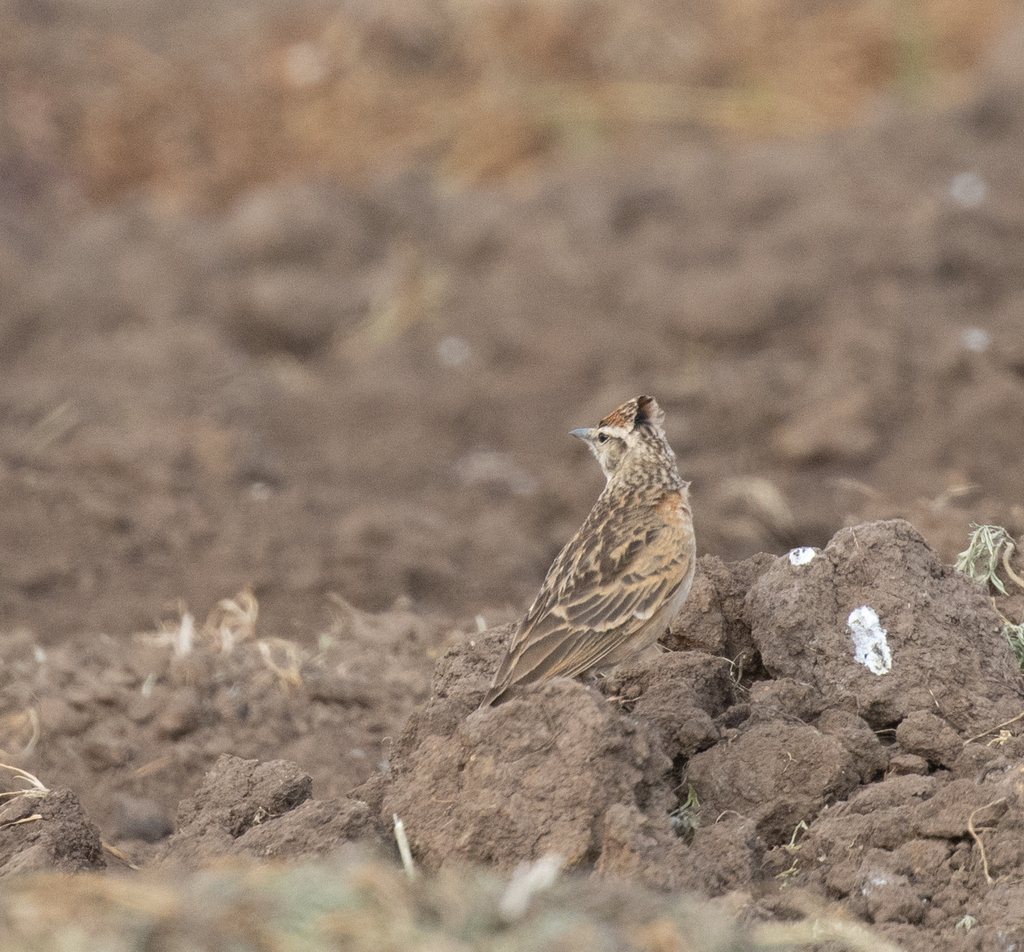
Blanford’s Lark
Photo © avocat
Photo © avocat — CC BY 4.0 — Source: iNaturalist #339984752Blanford's lark or Blanford's short-toed lark (Calandrella blanfordi) is a small passerine bird of the lark family, Alaudidae, which is native to north-eastern Africa. Its common name commemorates the English zoologist William Thomas Blanford. == Taxonomy and systematics == Blanford's lark was formerly included in either the greater short-toed lark (C. brachydactyla) or the red-capped lark (C. cinerea) but is now commonly treated as a separate species. Alternate names for Blanford's lark include Blandford's lark, Blandford's short-toed lark and Blanford's red-capped lark. === Subspecies === Two subspecies are recognized: Calandrella blanfordi blanfordi - (Shelley, 1902): Found in northern Eritrea Calandrella blanfordi erlangeri - Erlanger's lark- (Neumann, 1906): Found in Ethiopia == Description == Blanford's lark is 14–15 centimetres long. The upperparts are pale sandy-brown with some darker streaking and the crown is rufous. The underparts are pale and plain apart from a small dark patch on the side of the neck made up of vertical streaks. The greater short-toed lark is similar but has a greyer, more-streaked crown. Erlanger's and red-capped larks have darker upperparts with more streaking and a darker rufous crown. Erlanger's lark has larger dark neck-patches while in red-capped lark the patches are rufous. Blanford's lark has…
Bale Mountains National Park
Ethiopia
+397 birds+20 mammals
Where the Ethiopian highlands rise above 4,000 metres, the Bale Mountains create a landscape of stunning ecological extremes—from afroalpine grasslands swept by wind and mist to…
VIEW NATIONAL PARKSimien Mountains National Park
Debark, Ethiopia
+120 birds+9 mammals
Where granite escarpments plunge thousands of metres into misty valleys, the Ethiopian highlands reveal a landscape of almost mythical drama. These volcanic plateaus, carved by ancient…
VIEW NATIONAL PARKNo community photos yet. Log in to add the first one.
No community observations of this species yet.