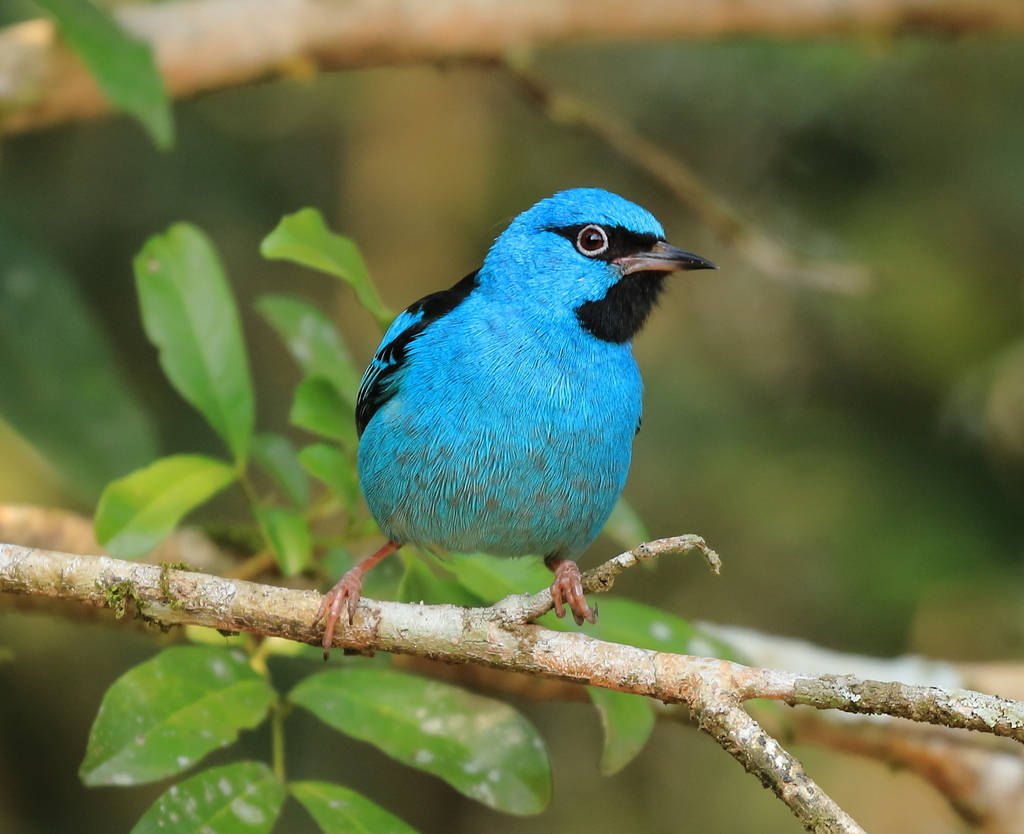
Blue Dacnis
Photo © Darren Obbard
Photo © Darren Obbard — CC BY 4.0 — Source: iNaturalist photo #425659477Identification
The blue dacnis is a small passerine measuring 12.7 cm in length and weighing just 13 g. The adult male is unmistakable, displaying brilliant turquoise-blue plumage contrasted sharply with black markings around the eyes, throat, and back. The wings and tail are black but edged with turquoise. Females and immature birds present a different appearance, featuring predominantly green plumage with a blue head, paler green underparts, and green-edged brown wings. Despite its alternative common name of turquoise honeycreeper, this species is not a true honeycreeper, distinguished by its shorter bill. The bird's call is a thin, high-pitched tsip.
Range & Habitat
The blue dacnis is found across a wide geographic range extending from Nicaragua and Panama through Central America, across Trinidad, and throughout much of South America as far south as Bolivia and northern Argentina. It is widespread and often common, particularly throughout its South American range. The species inhabits forests and other woodlands, showing adaptability to disturbed habitats including gardens and parks, making it accessible to travellers in various settings.
Behaviour & Diet
Blue dacnis are notably social birds, often seen in small groups gleaning insects from foliage, flowers, and bromeliads. The diet is primarily insectivorous, though fruit forms an important seasonal component, including licorice, Cecropia, Clusia, Miconia, berries, figs, and bananas, typically swallowed whole. Nectar is rarely consumed. Breeding birds construct a bulky cup nest in trees, with females producing a normal clutch of two to three grey-blotched whitish eggs. The female incubates the eggs while being fed by the attentive male throughout the incubation period.
Best Time & Places to See It
The blue dacnis's widespread distribution and common status, particularly in South America, make it a relatively reliable species for nature travellers. Its preference for gardens and parks in addition to natural forest and woodland habitats means it can often be encountered in accessible locations near human settlements. Looking in fruiting trees and flowering plants will increase chances of observation, as the species is attracted to these food sources.
Photography Tips
The striking sexual dimorphism of this species offers excellent photographic opportunities. The brilliant turquoise and black plumage of males photographs exceptionally well in strong, direct light that accentuates the iridescent quality of the blue. When photographing females and immatures, the green-and-blue colour pattern is more subtle but equally rewarding with proper exposure. The bird's small size and active, social behaviour require a telephoto lens and patience, but its habit of frequenting flowers, bromeliads, and fruiting trees in relatively open canopy situations often provides clear sightlines and shooting opportunities.
Amacayacu National Park
Amazônia National Park
Anavilhanas National Park
Arenal Volcano National Park
Bahuaja Sonene National Park
Barbilla National Park
Barra del Colorado National Wildlife Refuge
Brasília National Park
Braulio Carrillo National Park
Nothing matches these filters.
No community photos yet. Log in to add the first one.
No community observations of this species yet.