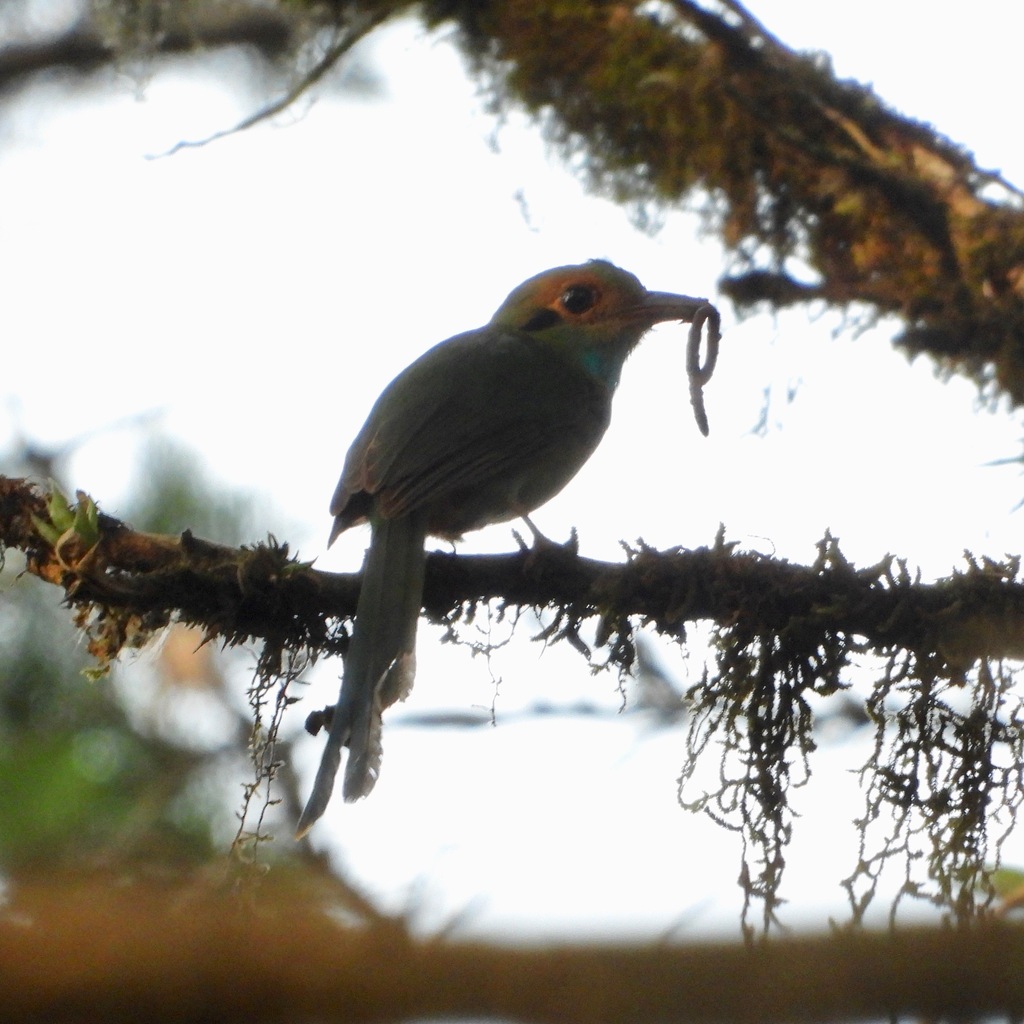
Blue-throated Motmot
Photo © Grete Pasch
Photo © Grete Pasch — CC BY 4.0 — Source: iNaturalist #211317324Identification
The blue-throated motmot is a medium-sized bird measuring 25.5 to 28.0 cm in length and weighing 56.0 to 67.3 grams. Its most distinctive feature is the brilliant blue throat that gives the species its name, accented by a striking black spot just below it. The head's sides are ochre-coloured with a characteristic black "ear" spot. The bird is mostly green above with paler green underparts, and it sports a long, graduated tail that, unusually for motmots, lacks the racquet-tipped feathers typical of most other family members. Juveniles are noticeably duller, with the green of the back washed with olive tones, making them slightly more challenging to identify in the field.
Range & Habitat
This species is endemic to Central America and southern Mexico, with a range extending from Oaxaca and Chiapas in Mexico southeastward through Guatemala and into El Salvador and Honduras. The blue-throated motmot is a bird of the highlands, preferring montane evergreen and pine forests in areas of medium to high humidity. Elevationally, the species ranges from 1,300 to 3,000 metres in Mexico, though in Honduras it is not found below 1,800 metres, reflecting its preference for cooler, higher-altitude forest environments.
Behaviour & Diet
The blue-throated motmot is an active forager, plucking insects—especially beetles—directly from foliage while flying, demonstrating the aerial dexterity characteristic of its family. The species supplements its insect diet with fruit and apparently feeds fruit to its nestlings as well. During breeding season, pairs excavate burrows in earth banks for nesting, constructing tunnels that can reach up to 1.8 metres in length and often featuring bends within them. In Guatemala, egg-laying occurs in April, with fledglings observed in late May in Mexico; clutches typically consist of three eggs.
Best Time & Places to See It
To encounter this species, travellers should focus on montane forest regions throughout its range, particularly in Guatemala and the highlands of Mexico's southern states. The breeding season from April through May offers excellent opportunities to locate birds, especially when listening for their distinctive calls. Look for this motmot in humid, high-elevation forests where it inhabits the canopy and mid-storey levels, typically perching prominently when vocalising.
Photography Tips
Photographers should position themselves near high, exposed perches where the blue-throated motmot typically calls, as these vantage points provide the best opportunities for clear shots of the bird's striking blue throat and distinctive head markings. The species' green plumage blends readily with foliage, so early morning light in open understory areas will help reveal its colours. Patience is essential when photographing this species; waiting near productive foraging areas or listening for its characteristic "hoot" or "huuk" calls can lead to rewarding encounters with this montane specialist.
No community photos yet. Log in to add the first one.
No community observations of this species yet.