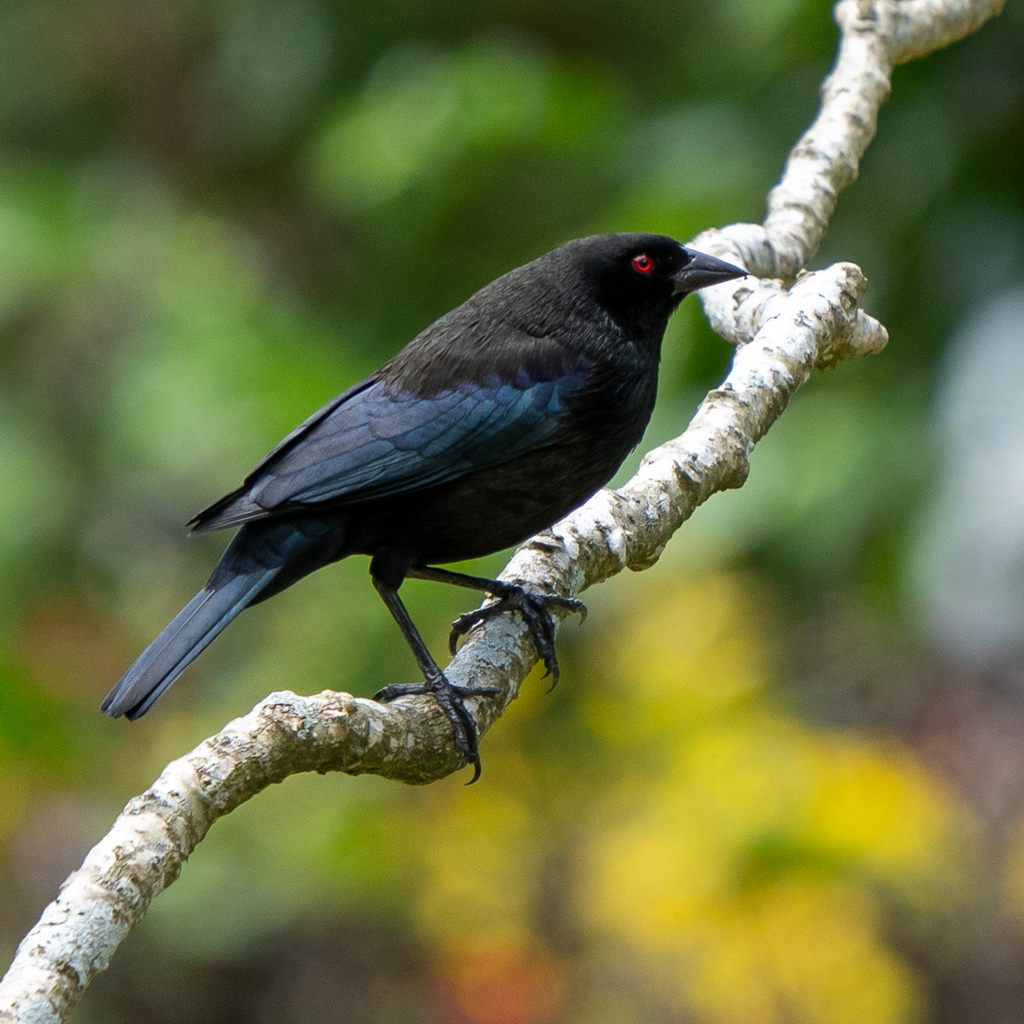
Bronzed Cowbird
Photo © Anthony Batista
Photo © Anthony Batista — CC BY 4.0 — Source: iNaturalist photo #372755543Identification
The bronzed cowbird is a small icterid, with males measuring 20 cm (7.9 in) and weighing 68 g (2.4 oz). Males are striking with glossy green-bronze and black plumage, and notably have red eyes during breeding season, shifting to brown outside that period. Females are smaller at 18.5 cm (7.3 in) and 56 g (2.0 oz), appearing as dull black with a brown underbelly and brown eyes. Young birds resemble females but display distinctive grey feather fringes, making them relatively easy to distinguish from adults in the field.
Range & Habitat
Also known as the red-eyed cowbird, this species breeds from the southwestern United States—California, Arizona, New Mexico, Texas, and Louisiana—south through Central America to Panama. Three subspecies occupy different ranges: M. a. loyei in the southwestern US and northwestern Mexico; M. a. assimilis in southwestern Mexico; and M. a. aeneus from South Texas through eastern Mexico to central Panama. These birds favour farmland, brush, and feedlots during breeding season. Outside the breeding period, they prefer very open habitats, though they roost in thick woods. They typically forage in open areas, often in close association with cattle in pastures.
Behaviour & Diet
The bronzed cowbird is an obligate brood parasite, meaning it relies entirely on other bird species to raise its young. Females lay their eggs in the nests of host species, where the young cowbirds are fed by the host parents at the expense of the hosts' own offspring. Known hosts include Prevost's ground-sparrows and white-naped brush finches. Young cowbirds develop rapidly, typically leaving the nest after just 10–12 days. Their diet consists primarily of seeds and insects, with snails becoming an important food source during breeding season, providing essential calcium.
Best Time & Places to See It
Look for bronzed cowbirds in open farmland and pasture areas throughout their range, particularly where cattle graze. They are most reliably encountered during the breeding season from California, Arizona, and Texas southward through Mexico and Central America. Early morning visits to open agricultural areas and brush habitat offer the best opportunities for observation. During non-breeding periods, they favour very open spaces, making them visible but sometimes more dispersed across the landscape.
Photography Tips
Male bronzed cowbirds in breeding plumage are visually striking subjects, with their glossy green-bronze and black colouring particularly impressive in good light. Position yourself to capture the distinctive red eye, which is a key identifying feature during breeding season. Photograph birds in open habitats where lighting is abundant and backgrounds are uncluttered. Early morning light will enhance the iridescent qualities of the males' plumage. Since these birds often forage near cattle in pastures, open farmland provides good opportunities for photography with natural perches and varied compositions.
Arenal Volcano National Park
Barbilla National Park
Barra del Colorado National Wildlife Refuge
Baru Volcano National Park
Big Bend National Park
Biscayne National Park
Bosque del Apache National Wildlife Refuge
Braulio Carrillo National Park
Cahuita National Park
Nothing matches these filters.
No community photos yet. Log in to add the first one.
No community observations of this species yet.