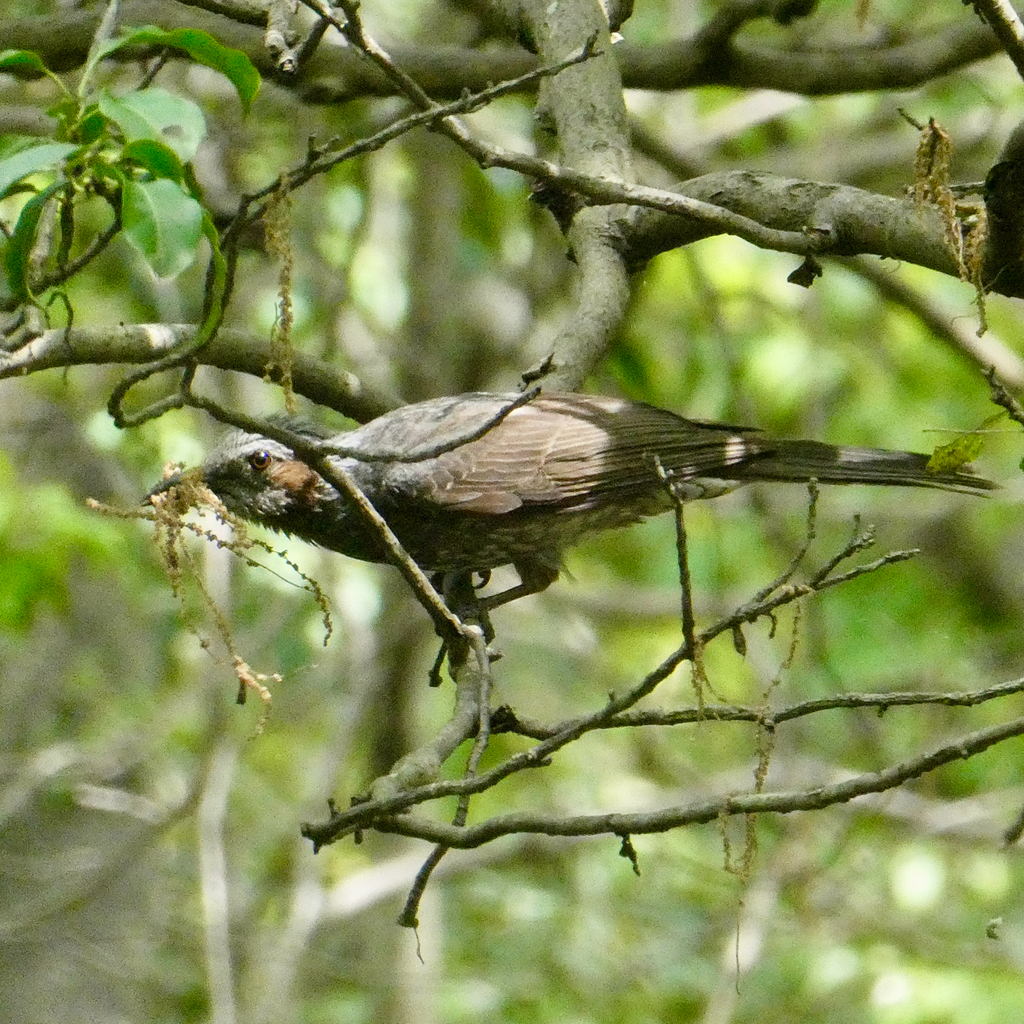
Brown-eared Bulbul
Photo © Karen Offereins
Photo © Karen Offereins — CC BY 4.0 — Source: iNaturalist #281243944The brown-eared bulbul (Hypsipetes amaurotis) is a medium-sized bulbul native to eastern Asia. It is extremely common within the northern parts of its range and can be found from southern Sakhalin to the northern Philippines. == Taxonomy and systematics == The brown-eared bulbul was originally described in the genus Turdus. Later, some authorities placed it in the genus Ixos and then the genus Microscelis, before being re-classified to Hypsipetes in 2010. Alternate names for the brown-eared bulbul include the Asian brown-eared bulbul, chestnut-eared bulbul, and Eurasian brown-eared bulbul. === Subspecies === Twelve subspecies are currently recognized: Japanese brown-eared bulbul (H. a. amaurotis) – (Temminck, 1830): Also named the Japanese chestnut-eared bulbul. Found on southern Karafuto, Japan and South Korea H. a. matchiae – (Momiyama, 1923): Found on southern Kyushu, Japan H. a. ogawae – Hartert, 1907: Found on northern Ryukyu Islands H. a. pryeri – Stejneger, 1887: Found on central Ryukyu Islands H. a. stejnegeri – Hartert, 1907: Found on southern Ryukyu Islands H. a. squamiceps – (Kittlitz, 1830): Originally described as a separate species in the genus Oriolus. Found on the Bonin Islands. H. a. magnirostris – Hartert, 1905: Found on the Volcano Islands H. a. borodinonis – (Kuroda…
Northeast China Tiger and Leopard National Park
Mu Dan Jiang Shi, China
+202 birds+19 mammals
Across the temperate forests of northeastern China, where winters grip the landscape in subzero silence and summers remain cool and brief, the Mudanjiang region supports a…
VIEW NATIONAL PARKYancheng National Nature Reserve
Yancheng, China
+208 birds+4 mammals
Where the East China Sea's tidal rhythms sculpt the Jiangsu coast, Yancheng National Nature Reserve sprawls across one of Asia's most dynamic wetland complexes. This vast…
VIEW NATURE RESERVENo community photos yet. Log in to add the first one.
No community observations of this species yet.