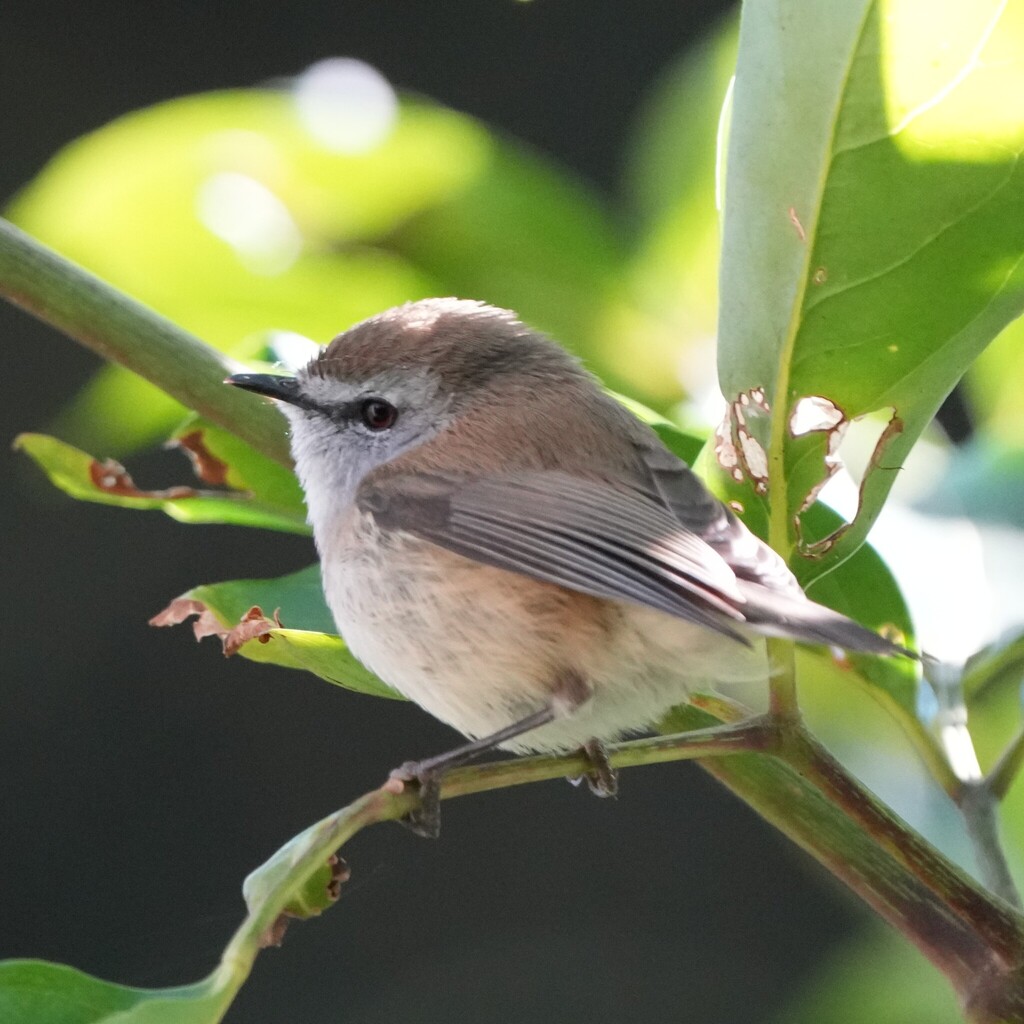
Brown Gerygone
Photo © themaskedlapwing
Photo © themaskedlapwing — CC0 1.0 — Source: iNaturalist #288307459Identification
The brown gerygone is a diminutive passerine, measuring approximately 10 cm in length, making it one of Australia's smallest birds. Its upper parts are olive-brown, though nominate populations from far-north Queensland show olive-grey tones instead. The face and underparts present a striking contrast: pale grey, cream, or washed-out brown plumage. A distinctive white eyebrow stripe is a key field mark, and the dark tail feathers are often white-tipped.
In the field, the brown gerygone can be confused with two congeners. It differs from the larger-billed gerygone by its distinctive white eyebrow combined with a grey-tinged face. The mangrove gerygone, though also bearing a white eyebrow, lacks the grey face, displays more white on the flanks, and shows a redder eye—useful distinctions when all three species occur in overlapping ranges.
Range & Habitat
The brown gerygone is endemic to eastern coastal Australia, where it maintains a relatively large range. This diminutive species inhabits coastal rainforest environments, favouring dense vegetation where it can forage among foliage and small branches.
Behaviour & Diet
Brown gerygones are typically encountered singly or in small groups of two to four individuals, gleaning insects from vegetation with characteristic warbler-like behaviour. They are insectivorous, picking small prey items from foliage as they move through the canopy and mid-storey. The species has a soft, distinctive call described as a soft what-is-it, which is often the first indication of its presence in dense rainforest habitat.
Best Time & Places to See It
Coastal rainforest reserves and national parks along eastern Australia provide the best opportunities for encountering this species. Patient observation in suitable habitat, particularly during active foraging periods, increases the chances of sightings. Listen carefully for the soft call, which often betrays the bird's location before it is visually located among dense foliage.
Photography Tips
The small size and preference for dense rainforest vegetation present significant challenges for photographers. High shutter speeds and good light are essential given the bird's diminutive stature and quick movements through foliage. Focus on capturing the distinctive white eyebrow and grey-tinged face, which are key identification features. Patience and a telephoto lens will be rewarded, as this charming gerygone may remain in favourable spots long enough for careful approach and photography.
Barrington Tops National Park
Ben Boyd National Park
Blue Mountains National Park
Bouddi National Park
Budawang National Park
Bunya Mountains National Park
Daintree National Park
Dorrigo National Park
Girraween National Park
Nothing matches these filters.
No community photos yet. Log in to add the first one.
No community observations of this species yet.