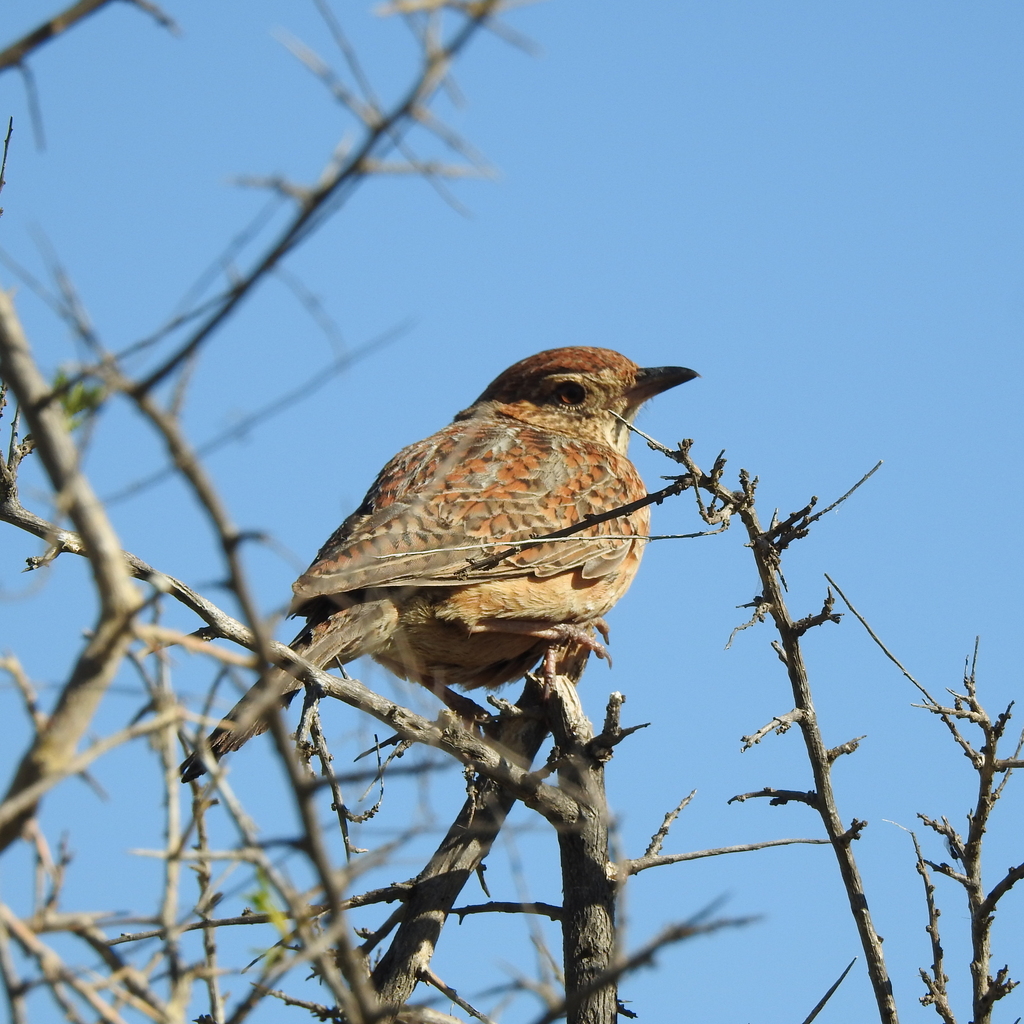
Cape Clapper Lark
Photo © Noeleen du Toit
Photo © Noeleen du Toit — CC BY-SA 4.0 — Source: iNaturalist #182095084The Cape clapper lark (Corypha apiata) is a small passerine bird which breeds in southern Africa. It derives its name from the wing clapping which forms part of the display flight. The Cape clapper lark is a species of open grassland and savannah, also inhabiting karoo, fynbos and fallow agricultural land. == Taxonomy == The Cape clapper lark was originally placed in the genus Alauda. This species and the Eastern clapper lark were formerly considered conspecific as the clapper lark (M. apiata) until split in 2009. The Cape clapper lark and the Eastern clapper lark are regarded as forming a superspecies with the flappet lark, which is found further to the north. Bar-tailed lark is another alternate name for the Cape clapper lark. The Cape clapper lark was formerly placed in the genus Mirafra. It is one of several species that were moved to the resurrected genus Corypha based on the results of a large molecular genetic study by the Swedish ornithologist Per Alström and collaborators that was published in 2023. === Subspecies === Two subspecies are recognised: C. a. apiata (Vieillot, 1816) – southwest Namibia and west South Africa C. a. marjoriae (Winterbottom, 1956) – southwest South Africa ==…
Tankwa-Karoo National Park
Hantam Local Municipality, South Africa
+201 birds+20 mammals
Across the semi-arid heartland of the Northern Cape, where winter rains carve ephemeral watercourses through endless ochre plains, Tankwa-Karoo National Park sprawls across more than 3,100…
VIEW NATIONAL PARKBontebok National Park
Swellendam Local Municipality, South Africa
+204 birds+11 mammals
Where the Cape Fold Mountains give way to coastal lowlands, a landscape of rolling sandstone hills and fynbos heathland creates one of South Africa's most compact…
VIEW NATIONAL PARKNo community photos yet. Log in to add the first one.
No community observations of this species yet.