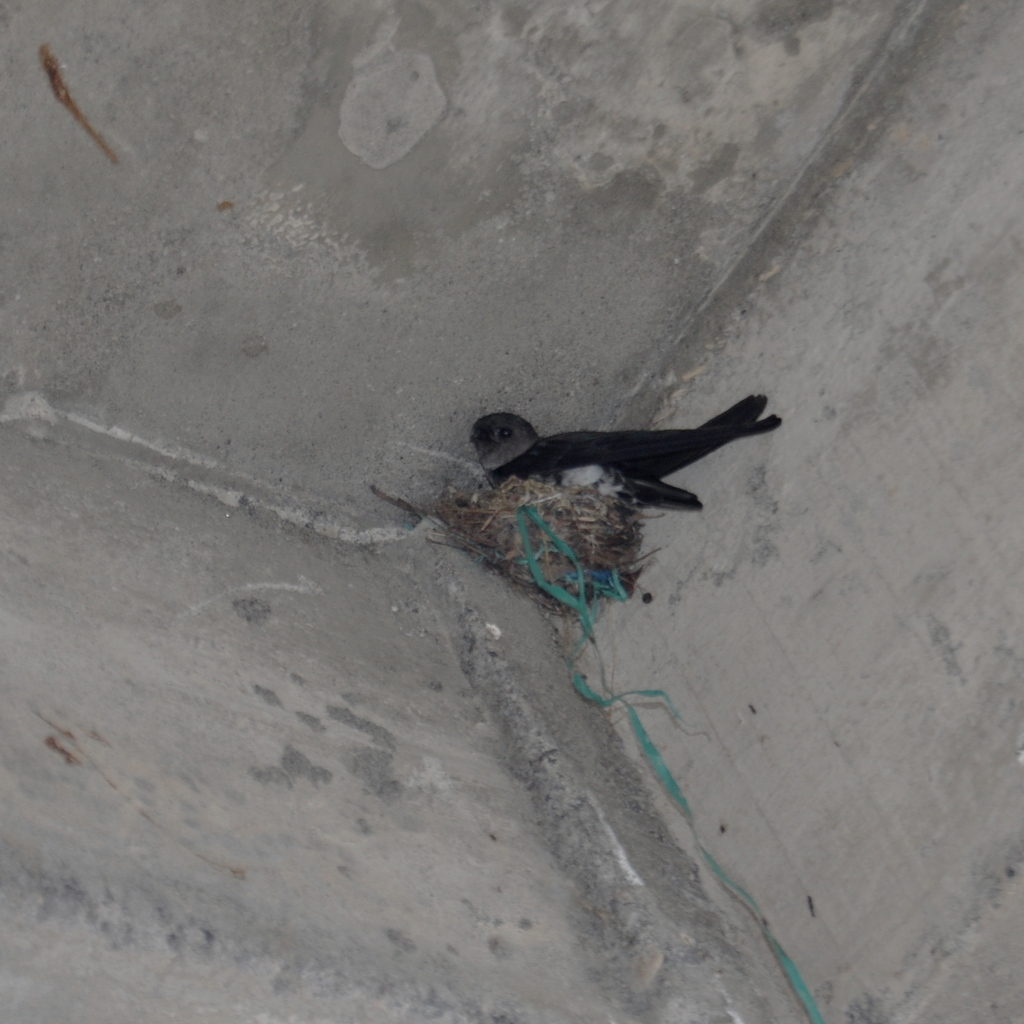
Cave Swiftlet
Photo © Abu Hamas
Photo © Abu Hamas — CC BY-SA 4.0 — Source: iNaturalist #153305967Identification
The cave swiftlet is a small swift, measuring 9 to 11.5 cm in length, with a distinctive shiny blackish-brown plumage that often appears black and hooded, featuring a greenish gloss across the back and rump. The chest is black, while the belly and flanks are pale grey with fine black speckles along the margins. The wings have rounded tips with black underwings, and the tail is black and rounded with a shallow notch. A key field mark distinguishing it from the very similar glossy swiftlet is the absence of a tuft on the hind toe—the cave swiftlet's toe is naked. Additionally, the cave swiftlet lacks the white specks on the tail found in glossy swiftlets. In flight, listen for its distinctive high-pitched "cheer-cheer" call.
Range & Habitat
This species is endemic to the Sundaic region of Southeast Asia, with a distribution spanning Java, Madura Island, Bawean, Kangean Island, Nusa Penida, Bali and Lombok, parts of Sumatra, and the western slopes of Mount Kinabalu in Sabah, Borneo. It inhabits lowland and upland forest and open woodland, showing a preference for areas with emergent fruiting trees. The cave swiftlet is common throughout Java and nearby islands and is considered a bird of least concern with no particular conservation threats.
Behaviour & Diet
The cave swiftlet is highly gregarious, frequently flying alongside other sympatric swift species in pursuit of aerial insects. It characteristically circles and flies through the branches of tall trees that emerge through the canopy, particularly around fruiting figs where insects congregate. During breeding season, it nests in the lighter portions of caves, constructing nests from stringy vegetation cemented to the rock face with saliva—a remarkable adaptation shared by several swiftlet species. Two white, somewhat elongated eggs are laid per clutch.
Best Time & Places to See It
Java and the nearby Sunda Islands offer the most reliable opportunities to encounter this species, where it is common year-round. Look for it in open woodland and forest edges, particularly around fruiting trees in the early morning or late afternoon when insects are most active and swiftlets are actively foraging. Cave systems that the species uses for breeding can also provide viewing opportunities, though access may be limited. Mount Kinabalu in Sabah, Borneo, offers another excellent destination for observing this and other swiftlet species in their natural habitat.
Photography Tips
Photographing cave swiftlets presents considerable challenges owing to their rapid, erratic flight patterns and preference for high canopy feeding. Fast shutter speeds (1/2000s or faster) and continuous autofocus are essential to capture sharp images in flight. Early morning light is ideal for capturing the species' characteristic greenish gloss and subtle plumage details. Position yourself beneath fruiting fig trees or near cave entrances where swiftlets congregate, and use a camera with good high-ISO performance, as cave interiors offer limited light. Patience and persistence are key—multiple visits to productive sites will increase your chances of obtaining quality images.
Gunung Merbabu National Park
Taman Nasional Baluran
Taman Nasional Meru Betiri
West Bali National Park
Nothing matches these filters.
No community photos yet. Log in to add the first one.
No community observations of this species yet.