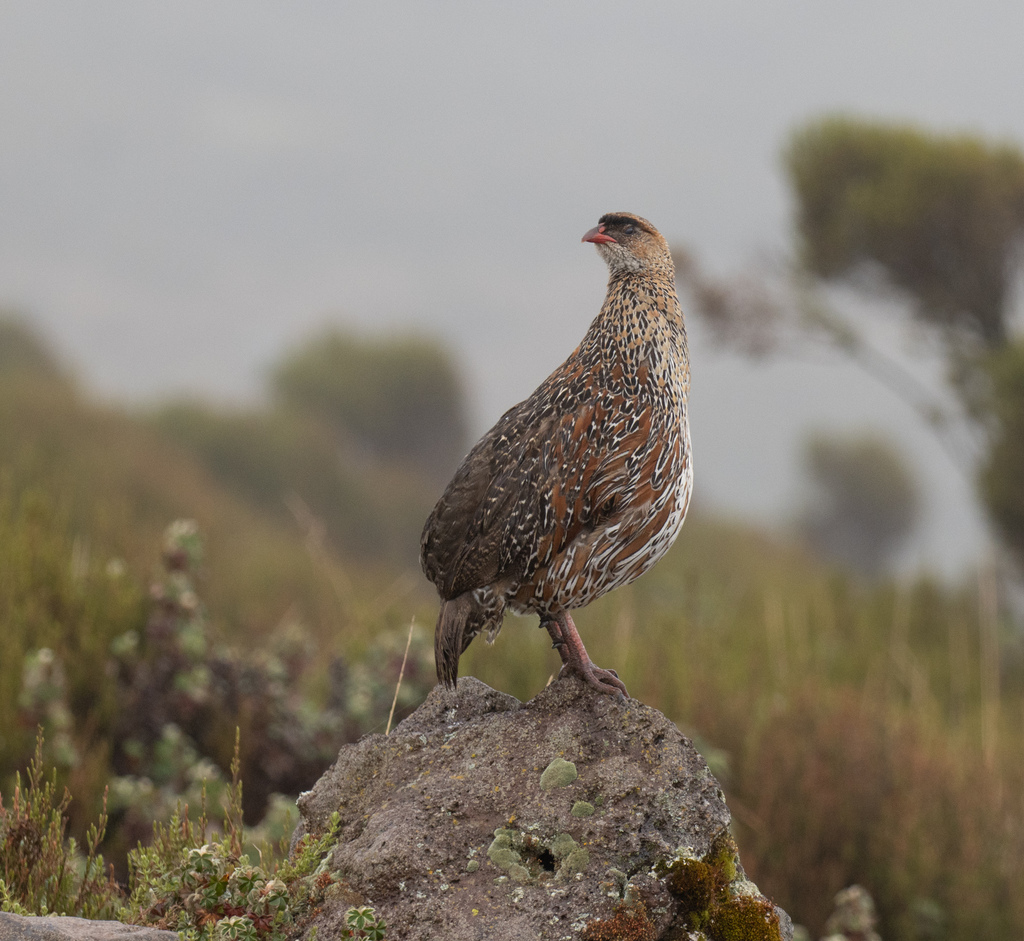
Chestnut-naped Spurfowl
CC BY 4.0
CC BY 4.0 — Source: iNaturalist photo #610018888The chestnut-naped spurfowl (Pternistis castaneicollis) is a species of bird in the pheasant family Phasianidae. At 33–37 cm (13–15 in) in length and weighing 550–1,200 g (19–42 oz), it is a large species of spurfowl. It is found in Ethiopia and Somaliland. The population is believed to be stable but according to the International Union for Conservation of Nature (IUCN) there is insufficient data to make an estimate of the population. == Taxonomy == The chestnut-naped spurfowl was described in 1888 by the Italian zoologist Tommaso Salvadori based on a specimen collected near "Lago Ciar-Ciar" (now Haro Ch'erch'er Hayk') in the Ahmar Mountains of central Ethiopia. He coined the binomial name Francolinus castaneicollis. The species is now placed in the genus Pternistis that was introduced by the German naturalist Johann Georg Wagler in 1832. The specific epithet castaneicollis combines the Latin castaneus meaning "chestnut-brown" and the Modern Latin -collis meaning "necked". Some taxonomies (eBird/Clements; IOC) list the black-fronted spurfowl as a subspecies (P. c. atrifrons). Others, such as the IUCN, currently maintain the black-fronted spurfowl as a separate species (Pternis atrifrons).
Abijata-Shalla Lakes National Park
Ethiopia
+438 birds+7 mammals
Two crater lakes of contrasting chemistry define this remote corner of Ethiopia's Rift Valley, where soda lakes and freshwater basins create a mosaic of distinct aquatic…
VIEW NATIONAL PARKBale Mountains National Park
Ethiopia
+397 birds+20 mammals
Where the Ethiopian highlands rise above 4,000 metres, the Bale Mountains create a landscape of stunning ecological extremes—from afroalpine grasslands swept by wind and mist to…
VIEW NATIONAL PARKSimien Mountains National Park
Debark, Ethiopia
+120 birds+9 mammals
Where granite escarpments plunge thousands of metres into misty valleys, the Ethiopian highlands reveal a landscape of almost mythical drama. These volcanic plateaus, carved by ancient…
VIEW NATIONAL PARKNo community photos yet. Log in to add the first one.
No community observations of this species yet.