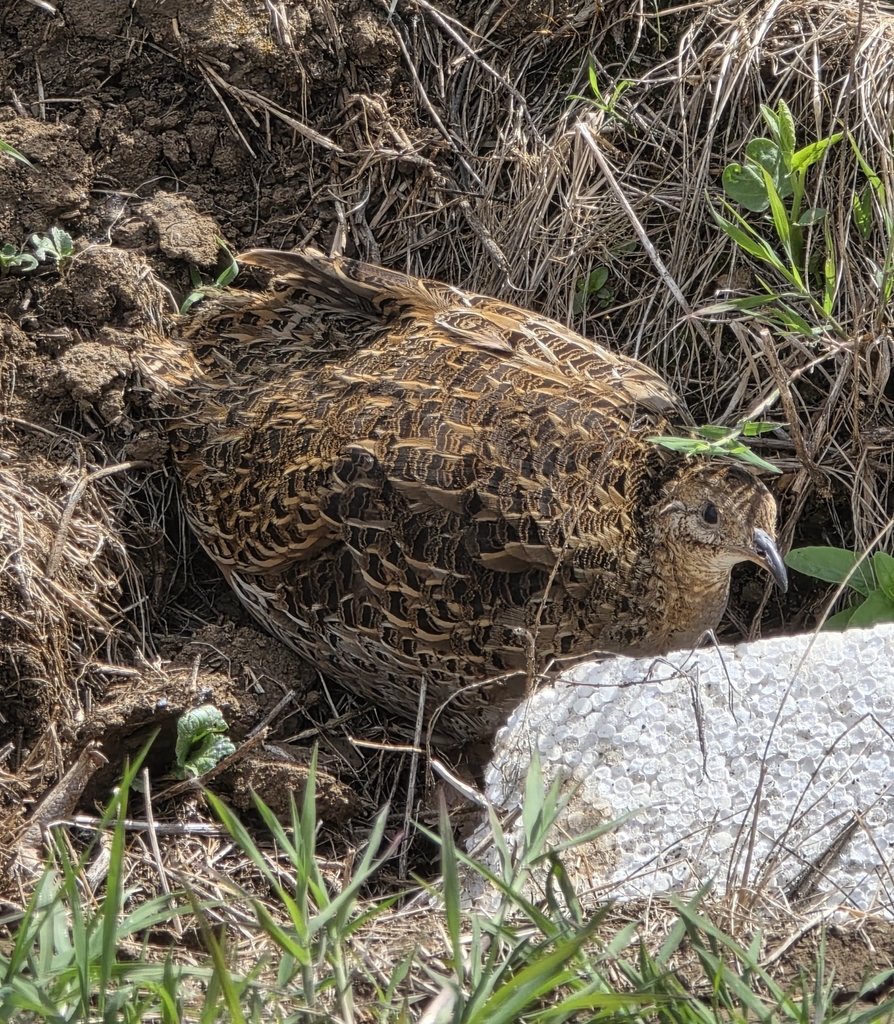
Chilean Tinamou
Photo © Pablo Maass Zepeda
Photo © Pablo Maass Zepeda — CC BY-SA 4.0 — Source: iNaturalist #321735714Identification
The Chilean tinamou is a compact, stocky bird approximately 29 cm (11 in) in length, notable for its almost tail-less appearance. Its most distinctive features include a curved bill similar to the California quail, thick short pale yellowish legs, and a characteristically upright gait. The plumage is complex and intricately patterned: the upper body appears striped, the face is buffy with a dark drooping eyeline and cheek strip, the crown is lighter, and the neck is brown with dark spotting on the lower neck. The chest is grey in northern populations but brownish in birds south of the Maule Region, which also show more reddish-brown streaking on the upper body and buttocks. In flight, the large rounded wings reveal distinctive reddish-brown undersides.
Range & Habitat
The Chilean tinamou is endemic to Chile, occurring across central and south-central regions from the Atacama through the northern Los Lagos area, with the species also found in adjacent Argentina. It inhabits high-elevation shrubland between 400 and 2,000 m (1,300–6,600 ft), and can be found in arid mountain forests associated with trees such as Acacia caven, Porlieria chilensis, and the endangered Jubaea chilensis. Two subspecies are recognized: the nominate race occupies semi-arid grasslands in north-central Chile, while the southern subspecies ranges through south-central regions. The species has also been introduced to Easter Island.
Behaviour & Diet
Chilean tinamous are vocal birds, with males producing a characteristic loud, double-syllabled whistle sounding like "sweee weee." When stressed, they release a lowering series of whistles resembling "swee wee wee wee" accompanied by rapid wing sounds. Breeding is marked by unique parental roles: females lay 10–12 glossy eggs in a simple scrape, which are covered with feathers when left unattended. The male alone incubates the eggs for approximately 21 days and raises the chicks. Chicks are buff-colored with dark stripes, run shortly after hatching, and fledge when half-grown; blue or gray spots may develop in their plumage later in life.
Best Time & Places to See It
Look for Chilean tinamous in the high-elevation shrublands and arid mountain forests of central and south-central Chile, particularly in the Atacama, Coquimbo, Valparaíso, Santiago, O'Higgins, Maule, Ñuble, Bio-bío, and Araucanía regions. The species' preference for upland habitats between 400 and 2,000 m makes it accessible to visitors exploring Chile's Andean foothills and high valleys. Its vocal nature makes early morning an ideal time for detection, when males are most vocal.
Photography Tips
The Chilean tinamou's stocky, upright posture and intricate plumage patterns reward close-range photography. The buffy face, drooping eyeline, and complex chest streaking are key identifying features worth capturing in detail. The reddish-brown wing undersides are striking in flight photographs. The bird's relatively small size and preference for dense shrubland habitat may require patience and careful stalking. Early morning light will best reveal the subtle coloration differences between regional populations, particularly the grey versus brownish chest variations.
No community photos yet. Log in to add the first one.
No community observations of this species yet.