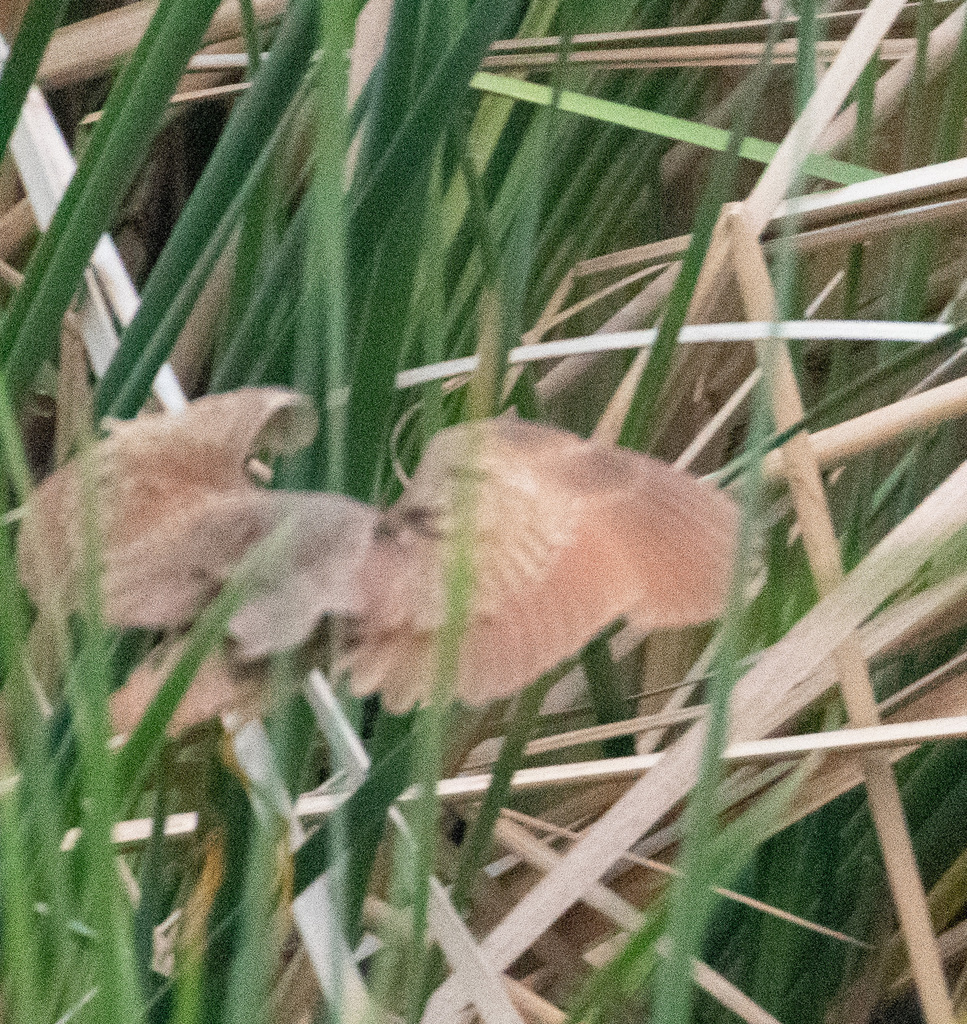
Cinnamon Bittern
Photo © Stefan C
Photo © Stefan C — CC0 1.0 — Source: iNaturalist #155288554The cinnamon bittern (Botaurus cinnamomeus) or chestnut bittern is a small Old World bittern, breeding in tropical and subtropical Asia from India east to China and Indonesia. It is mainly resident, but some northern birds migrate short distances. This species was formerly placed in the genus Ixobrychus. == Taxonomy == The cinnamon bittern was formally described in 1789 by the German naturalist Johann Friedrich Gmelin in his revised and expanded edition of Carl Linnaeus's Systema Naturae. He placed it with herons, cranes, egrets and bitterns in the genus Ardea and coined the binomial name Ardea cinnamomea. Gmelin based his description on the "Chinese heron" that had been included by the English ornithologist John Latham in his multi-volume A General Synopsis of Birds. Latham had based his own description on a partial specimen in the British Museum. The cinnamon bittern was formerly placed in the genus Ixobrychus. A molecular phylogenetic study of the heron family Ardeidae published in 2023 found that Ixobrychus was paraphyletic. To create a monophyletic genus, Ixobrychus was merged into the genus Botaurus that had been introduced in 1819 by the English naturalist James Francis Stephens. The genus name Botaurus is Medieval Latin for a bittern. The specific…
No community photos yet. Log in to add the first one.
No community observations of this species yet.