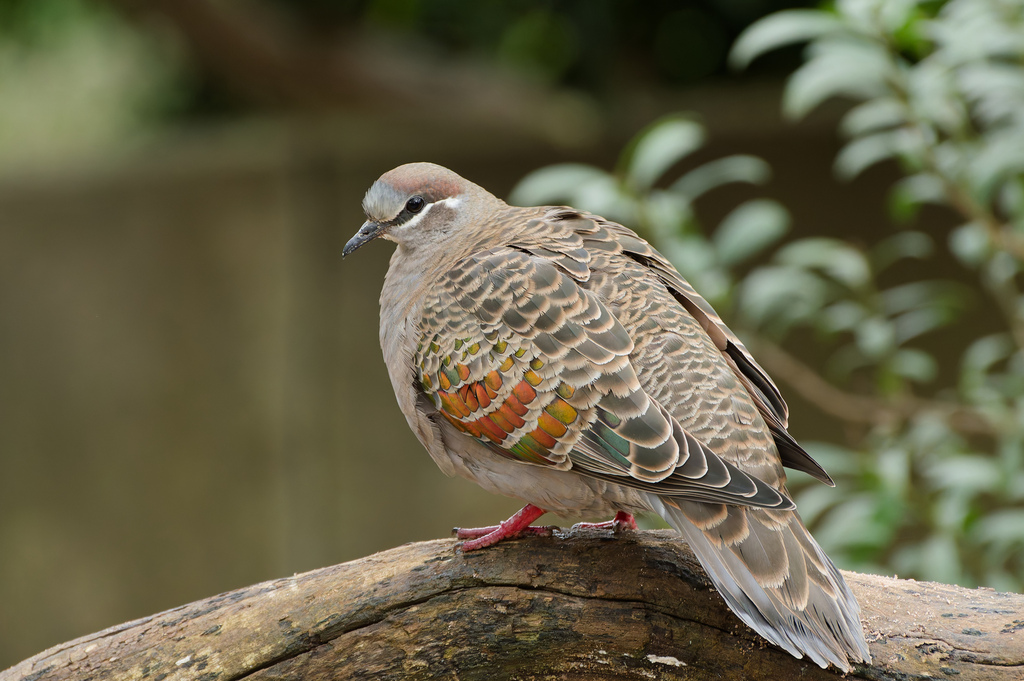
Common Bronzewing
Photo © Donald Davesne
Photo © Donald Davesne — CC BY 4.0 — Source: iNaturalist photo #627200198Identification
The common bronzewing is a medium-sized, heavily built pigeon measuring between 30 and 36 centimetres in length. Males are distinctive, with pale-yellow to yellow-white foreheads and pink breasts, while both sexes display an easily discernible white line around and proximate to their eyes. The species is named for the iridescent patches of red, blue and green on their wings—a characteristic feature of all bronzewing pigeons. Young birds are noticeably duller in colour and browner than mature adults, making age determination relatively straightforward in the field.
Range & Habitat
Native to Australia, the common bronzewing is one of the country's most common pigeons and is able to live in almost any habitat, with the possible exception of very barren areas and dense rainforests. The species shows remarkable adaptability across diverse environments, though it is rarely found far from a source of water, which remains essential to its survival.
Behaviour & Diet
Common bronzewings are usually cautious birds, making approach by humans or other animals difficult. They travel alone, in pairs, or in flocks, depending on circumstances. Their advertising call is extraordinarily distinctive—a mournful "whooo" repeated at metronomic intervals, making them identifiable by sound even when hidden from view. The species is primarily granivorous and herbivorous, with a diet consisting of seeds and all varieties of vegetables. Birds search for food in small groups, and these foraging expeditions can sometimes last for days. Because the pigeon must drink frequently, it regularly utilizes watering holes and any other available water sources.
Best Time & Places to See It
As one of Australia's most common pigeons with broad habitat tolerance, common bronzewings are relatively widespread and accessible to visiting naturalists. Look for them near permanent water sources, where they are most reliably encountered, particularly during foraging periods. Their distinctive, repetitive call often betrays their presence before visual contact is made.
Photography Tips
The cautious nature of common bronzewings demands patient, stalking approaches or positioning near water sources where birds come to drink. Early morning and late afternoon typically offer the best light for capturing the iridescent wing patches that give the species its common name. The white eye-line and colourful plumage of males provide excellent diagnostic features for identification in photographs. Patient observers positioned near watering holes may achieve intimate shots of drinking birds, revealing plumage detail and behaviour.
Bald Rock National Park
Barrington Tops National Park
Belair National Park
Ben Boyd National Park
Blue Mountains National Park
Boodjamulla National Park
Bribie Island National Park
Budawang National Park
Budj Bim National Park
Nothing matches these filters.
No community photos yet. Log in to add the first one.
No community observations of this species yet.