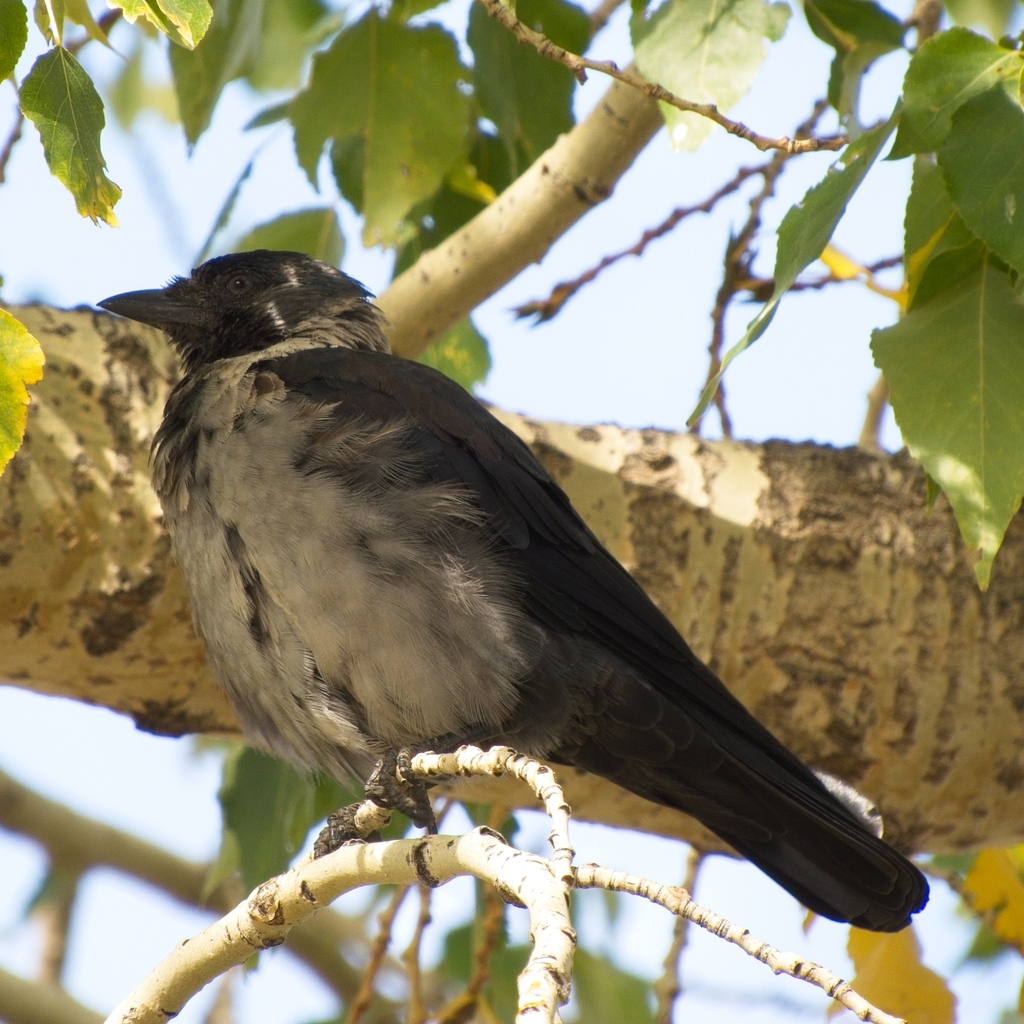
Daurian Jackdaw
Photo © Fedotova Elena
Photo © Fedotova Elena — CC BY 4.0 — Source: iNaturalist #135009524Identification
The Daurian jackdaw is a medium-sized corvid, around 32 cm (13 in) in length, closely resembling the western jackdaw in size and proportions. The most striking feature of many adults is extensive creamy-white plumage on the lower underparts, forming a broad collar around the neck. The head, throat, wings, and tail are glossy black, while the ear coverts display grizzled grey tones. A key identification feature separates this species from its western relative: the Daurian jackdaw possesses black irises, whereas the western jackdaw has distinctive grey-white eyes. Younger birds and darker adults may appear more similar to western jackdaws, making eye colour a crucial diagnostic character. The Chinese collared crow, the only other pied corvid in the region, is much larger and unlikely to cause confusion.
Range & Habitat
This eastern Asian species ranges from southern eastern Siberia south through Mongolia and much of China. Northern populations migrate southward during winter months. The bird is a scarce winter visitor to Korea, a rare annual winter visitor to Japan, and occurs occasionally as a vagrant to Taiwan, with very few records reaching Western Europe. The Daurian jackdaw favours open woodland, river valleys, and open hills and mountains across its range.
Behaviour & Diet
A highly sociable species, the Daurian jackdaw is often found in association with rooks. Its diet closely mirrors that of the western jackdaw, comprising cultivated grains, insects, berries, eggs, carrion, and faeces. The species demonstrates the omnivorous opportunism typical of corvids, exploiting diverse food sources across its habitat. Nesting occurs primarily in trees where suitable cavities are available, though tree hollows, rock openings, and ruined buildings remain preferred locations. Eggs are similar in appearance to those of the western jackdaw.
Best Time & Places to See It
For winter visitors, Korea and Japan offer the best opportunities, though sightings remain uncommon in these regions. Within the core range of southern eastern Siberia, Mongolia, and China, the species is more regularly encountered. Open woodland and river valleys provide ideal habitat for locating birds, particularly during feeding activities. Winter months offer increased chances of observation in southern parts of the range as northern populations migrate.
Photography Tips
The contrasting black and creamy-white plumage of many adults offers excellent photographic potential, particularly when the broad neck collar is visible. Capture birds in good light to showcase the glossy black tones of the head and wings and the subtle grizzled grey of the ear coverts. The distinctive black iris is a diagnostic feature worth documenting in close-up shots. Photographing birds in association with rooks can provide behavioural and comparative context, while feeding activities in open habitats offer opportunities for dynamic compositions.
Baikal National Park
Baima Snow Mountain National Nature Reserve
Giant Panda National Park
Gorkhi-Terelj National Park
Huanglong Scenic and Historic Interest Area
Hustai National Park
Jiuzhai Valley
Khangai Nuruu National Park
Khoridol Saridag National Park
Nothing matches these filters.
No community photos yet. Log in to add the first one.
No community observations of this species yet.