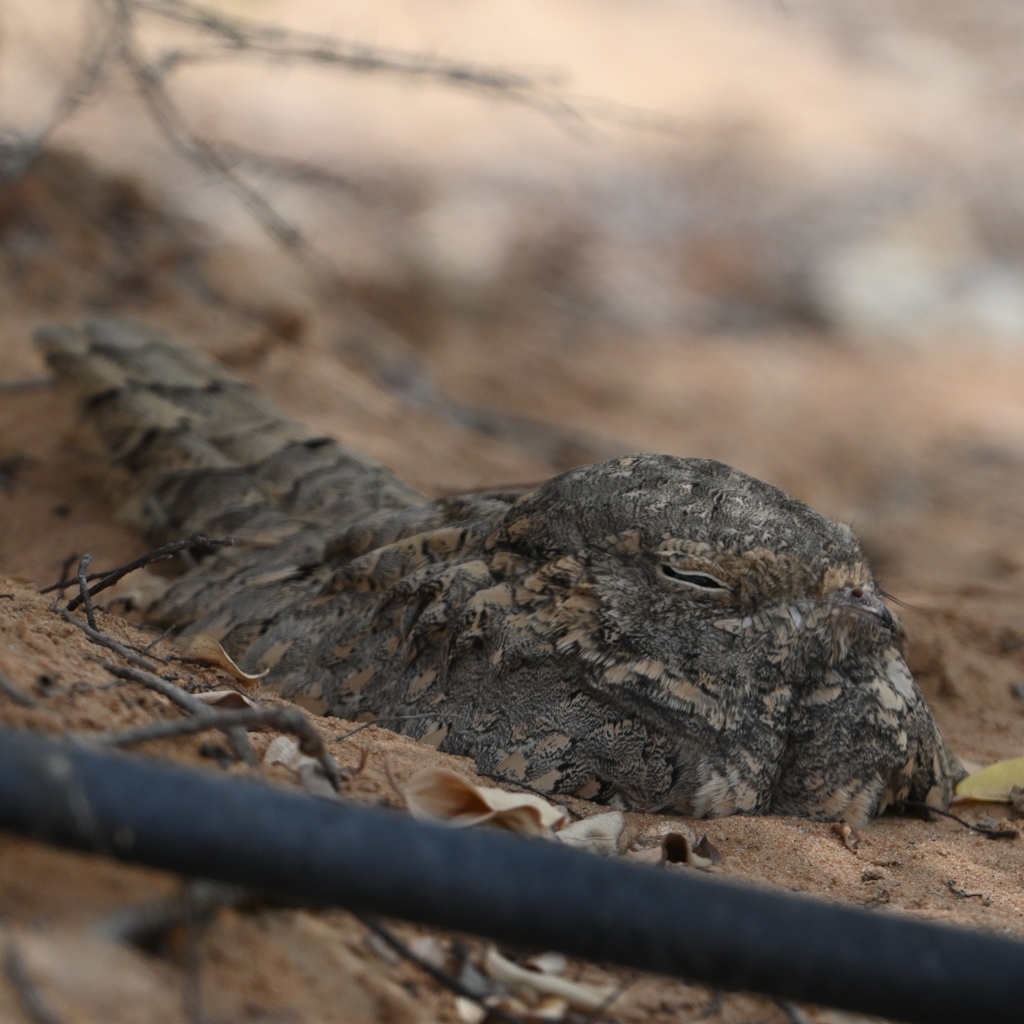
Egyptian Nightjar
Photo © Sameer Shaik
Photo © Sameer Shaik — CC BY 4.0 — Source: iNaturalist #310804146The Egyptian nightjar (Caprimulgus aegyptius) is a medium-small nightjar which occurs in south west Asia and north Africa and winters in tropical Africa. This is a fairly common species with a wide distribution which faces no obvious threats apart from habitat destruction, so the International Union for Conservation of Nature has rated its conservation status as being of "least concern". == Etymology == The genus name Caprimulgus is derived from the Latin capra, "nanny goat", and mulgere, "to milk", referring to an old myth that nightjars suck milk from goats. The specific aegyptius is Latin for Egyptian.". The common name "nightjar", first recorded in 1630, refers to the nocturnal habits of the bird, the second part of the name deriving from the distinctive churring song. == Description == The variegated plumage is much paler than the European nightjar. The adult is sand-coloured, barred and streaked with buff and brown. The under parts are sandy or whitish. It is smaller, but relatively longer-winged and longer-tailed than the more widespread species. Like other nightjars, it has a wide gape, long wings, soft downy plumage and nocturnal habits. The male has tiny white wing spots. The length is 25 cm, and the wingspan…
Nothing matches these filters.
No community photos yet. Log in to add the first one.
No community observations of this species yet.