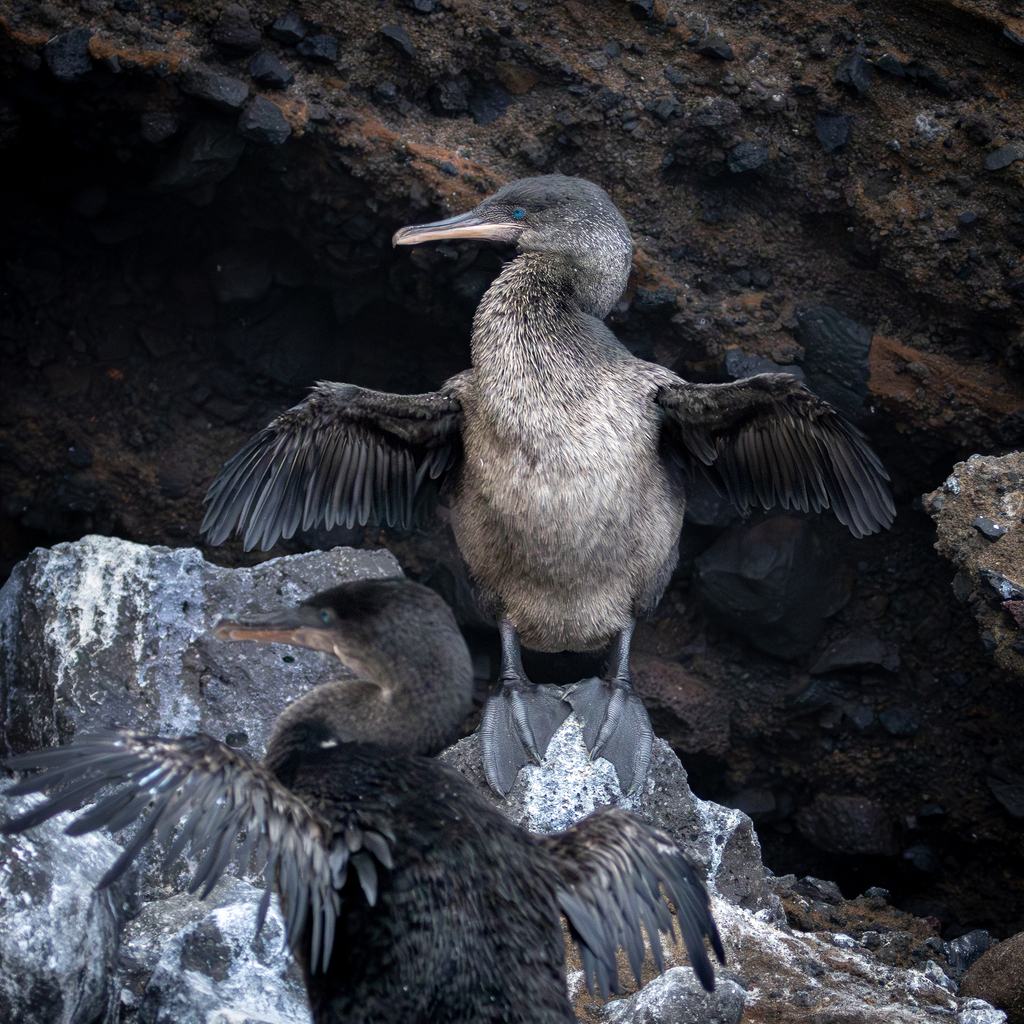
Flightless Cormorant
Photo © Chris Kirby-Lambert
Photo © Chris Kirby-Lambert — CC BY 4.0 — Source: iNaturalist #331204861The flightless cormorant (Nannopterum harrisi), also known as the Galápagos cormorant, is a cormorant endemic to the Galápagos Islands, and an example of the highly unusual fauna there. It is unique in that it is the only known cormorant that has lost the ability to fly. It was placed in its own genus, Nannopterum, but then was later placed with most of the other cormorants in the genus Phalacrocorax. A 2014 study supported reclassifying it and two other American cormorant species back into Nannopterum. The IOU followed this classification in 2021. == Description == The flightless cormorant is the largest extant member of its family, 89–100 cm (35–39.5 in) in length and weighing 2.5–5.0 kg (5.5–11.0 lb), and its wings are about one-third the size that would be required for a bird of its proportions to fly. The keel on the breastbone, where birds attach the large muscles needed for flight, is also significantly reduced. Like all cormorants, this bird has webbed feet and sturdy legs that propel it through the water as it seeks its prey of fish, small octopuses, and other little marine creatures. The species feeds near the sea floor and no more than 200 metres offshore.…
No community photos yet. Log in to add the first one.
No community observations of this species yet.