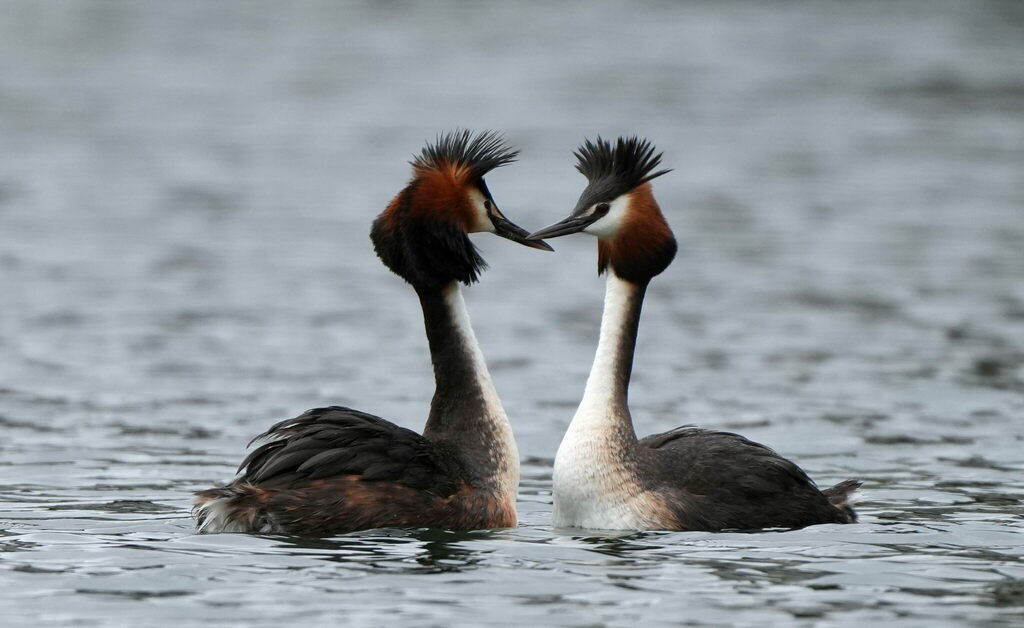
Great Crested Grebe
Photo © William Harland
Photo © William Harland — CC BY 4.0 — Source: iNaturalist photo #460622897Identification
The great crested grebe is the largest grebe species in the Old World, measuring 46–51 cm long with a wingspan of 59–73 cm and weighing 0.9 to 1.5 kg. In summer plumage, adults are unmistakable, displaying striking black, orange-brown, and white plumage with distinctive head and neck decorations. During winter, the bird becomes predominantly white with white markings above the eye and a characteristic pink bill. Birds in warmer regions retain their breeding plumage year-round with little or no seasonal change. Young grebes are boldly marked with alternating black and white head stripes, earning them the colloquial name "humbugs" from their resemblance to the striped sweets; these markings fade as they mature during their first winter.
Range & Habitat
The great crested grebe breeds in vegetated areas of freshwater lakes across a wide range. The widespread European subspecies occurs across Europe and eastward through the Palearctic, remaining resident in milder western regions while migrating from colder areas to winter on freshwater lakes, reservoirs, and coastal waters. African and Australasian populations are largely sedentary year-round, with birds in regions such as Kenya and parts of Australia maintaining relatively stable populations.
Behaviour & Diet
The great crested grebe is renowned for its elaborate courtship displays involving synchronised dances and distinctive vocalizations, including a loud barking "rah-rah-rah" call, clicking "kek" notes, and deep growls. Like all grebes, it nests on the water's edge, with both parents building the nest and incubating the average clutch of four chalky-white eggs for 27 to 29 days. The precocial chicks can swim and dive almost immediately after hatching and are fed by both parents, who teach diving skills by carrying young on their backs before diving and resurfacing nearby.
The diet consists mainly of fish, supplemented with small crustaceans, insects, small frogs, and newts. The bird is an excellent swimmer and diver, pursuing its prey underwater with remarkable agility.
Best Time & Places to See It
Great crested grebes can be found year-round in suitable freshwater lake habitats, though timing depends on regional migration patterns. European populations are easiest to observe during the breeding season when birds are most active and display their elaborate courtship behaviours. Sedentary populations in Africa and Australasia offer reliable viewing opportunities throughout the year on their respective lake systems.
Photography Tips
Photograph great crested grebes during breeding season to capture their striking summer plumage and elaborate head decorations in optimal light. Early morning and late afternoon provide the best lighting for capturing the intricate orange-brown and black head markings. The birds' aquatic lifestyle offers excellent opportunities for action shots of diving and swimming; patience and a respectful distance will yield the most natural behaviour. Young "humbug" chicks in their distinctive striped plumage make compelling subjects during the breeding season.
Delta de l’Ebre Natural Park
Kanha Tiger Reserve
Queen Elizabeth National Park
Abijata-Shalla Lakes National Park
Abruzzo, Lazio and Molise National Park
Addo Elephant National Park
Agulhas National Park
Alpilles Regional Nature Park
Altai Tavan Bogd National Park
Nothing matches these filters.
No community photos yet. Log in to add the first one.