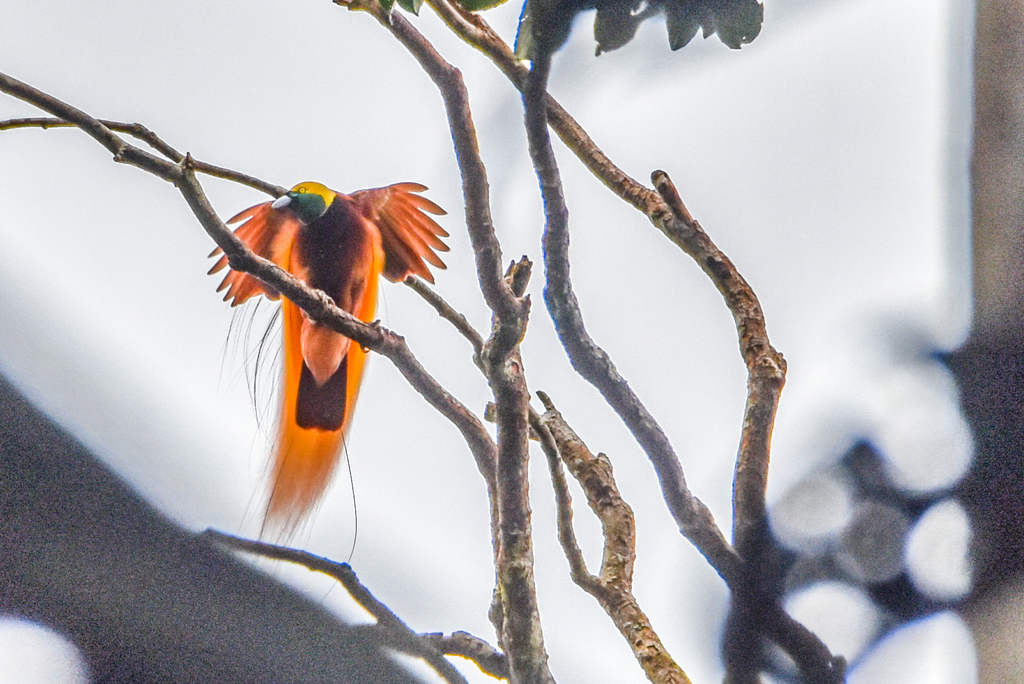
Greater Bird-of-paradise
Photo © Jay Pruett
Photo © Jay Pruett — CC BY 4.0 — Source: iNaturalist photo #337528805The greater bird-of-paradise (Paradisaea apoda) is a bird-of-paradise in the genus Paradisaea. Carl Linnaeus named the species Paradisaea apoda, or "legless bird-of-paradise", because early trade skins to reach Europe were prepared without wings or feet by the indigenous New Guinean people; this led to the misconception that these birds were beautiful visitors from paradise that were kept aloft by their plumes and never touched the earth until death. == Taxonomy == The greater bird-of-paradise was formally described by the Swedish naturalist Carl Linnaeus in 1758 in the tenth edition of his Systema Naturae under the current binomial name Paradisaea apoda. The genus name is from the Late Latin paradisus meaning "paradise", due to the voyagers in Ferdinand Magellan's circumnavigation of the Earth, the first Europeans to encounter this animals. Antonio Pigafetta, the main chronicler of that expedition, wrote that "The people told us that those birds came from the terrestrial paradise, and they call them bolon diuata, that is to say, 'birds of God'." The specific epithet apod combines the Ancient Greek a- meaning "lacking" and pous, podus meaning "foot". Although several subspecies have been described, these are now not recognised and the greater bird-of-paradise is considered to be monotypic.…
No community photos yet. Log in to add the first one.
No community observations of this species yet.