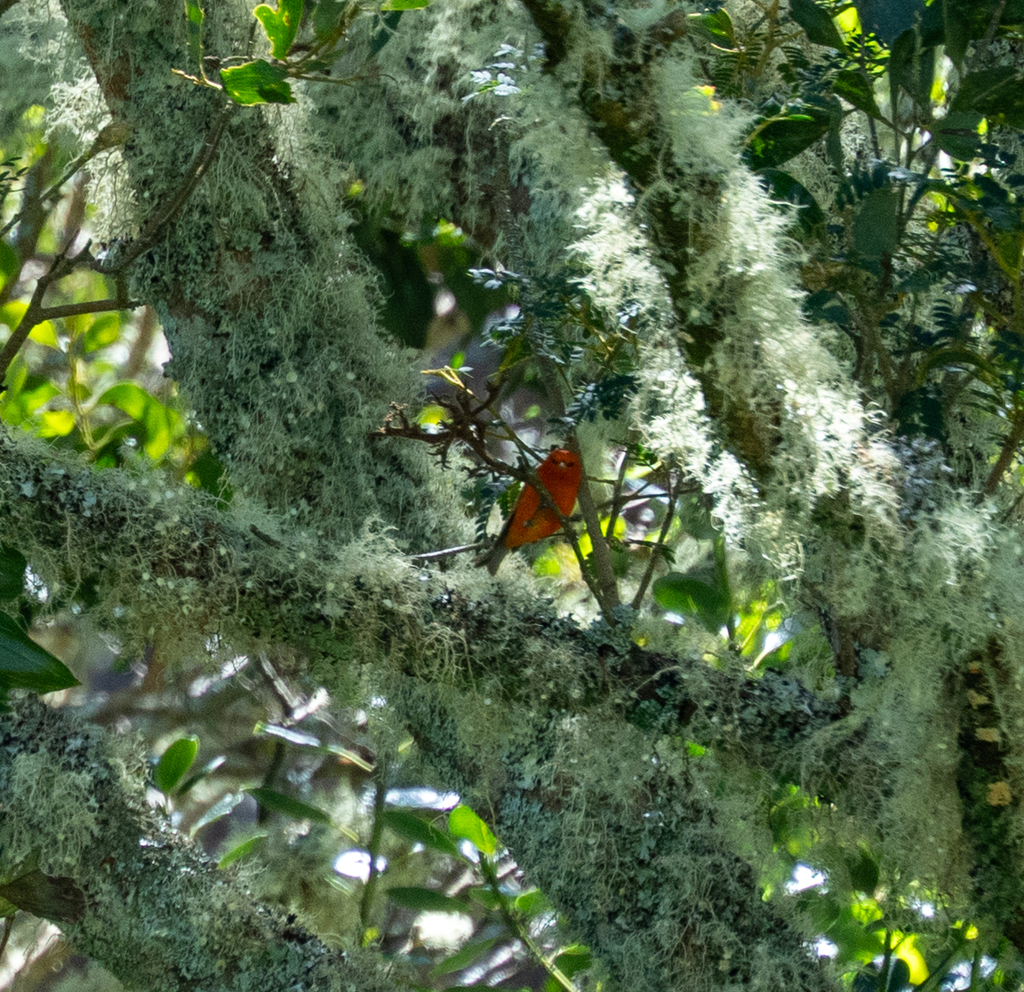
Hawaii Akepa
Photo © Bob Walker
Photo © Bob Walker — CC BY 4.0 — Source: iNaturalist #342287407The Hawaiʻi ʻākepa (Loxops coccineus) is an endangered ʻākepa native to Hawaiʻi in the Hawaiian Islands. The three ʻākepa species were considered monotypic before being split by the NACC of the AOU in 2015. The Hawaiʻi ʻākepa was first collected by western science during Captain James Cook's third voyage around the world. Several specimens were collected, as well as feather leis (necklaces resembling strings of flowers) constructed by Hawaiian artisans. The specimens were classified when brought back to England several years later. The Latin name of the bird, Loxops coccineus, means "crossed" (Loxops) and "red" (coccineus). == Description == It is a four-inch (10 cm) long bird of a dusty green color. Males are bright orange. It has a small cross bill just like the other Loxops species. Its call is a slight quivering whistle ending with a long trill. == Distribution and habitat == The Hawaiʻi ʻākepa survives only in two or three locations, all on the island of Hawaii: one population in Hakalau Forest National Wildlife Refuge (on the Hamakua Coast of Mauna Kea), one in the upper forest areas of Kaʻū (in the southern part of the island), and one on the northern slope of Hualālai (perhaps…
No community photos yet. Log in to add the first one.
No community observations of this species yet.