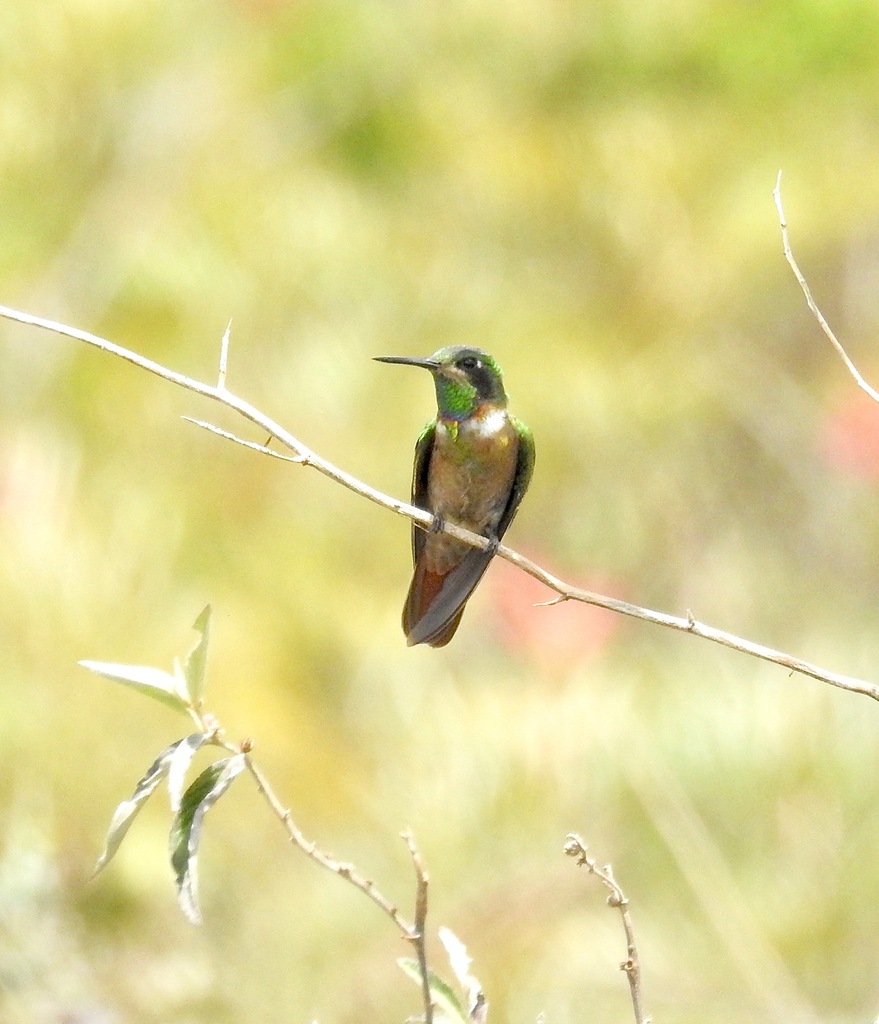
Hooded Visorbearer
Photo © Laura Gaudette
Photo © Laura Gaudette — CC BY 4.0 — Source: iNaturalist #195028172The hooded visorbearer (Augastes lumachella) is a small species of hummingbird in the family Trochilidae. Endemic to the east Brazilian state of Bahia, it is found only at higher altitudes in the Chapada Diamantina region. The species is sexually dimorphic. It resides in the campo rupestre, an arid, high-elevation area characterized by rocky outcrops, poor soils, open habitats, and harsh climatic conditions. There, it feeds primarily on nectar, though it also takes insects. Its breeding ecology remains largely undescribed, though it is known to build its nest from cactus spines. The International Union for Conservation of Nature rates it as a near-threatened species, primarily because of the relatively small size of its range. It is threatened by habitat loss, brought about primarily by unregulated mining and the conversion of the campo to pastureland and human habitation. Climate change is projected to cause a major contraction of its range – perhaps by as much as 90%. == Taxonomy and systematics == Rene Primevere Lesson first described the hooded visorbearer for science in 1838, using a specimen collected in Bahia, Brazil. He named it Ornismya lumachella. Five years later, Lesson moved it and four other species to his newly created genus Amazilis.…
No community photos yet. Log in to add the first one.
No community observations of this species yet.