Horsfield’s Bronze Cuckoo
Photo © John Cull
Photo © John Cull — CC0 1.0 — Source: iNaturalist #192158936Identification
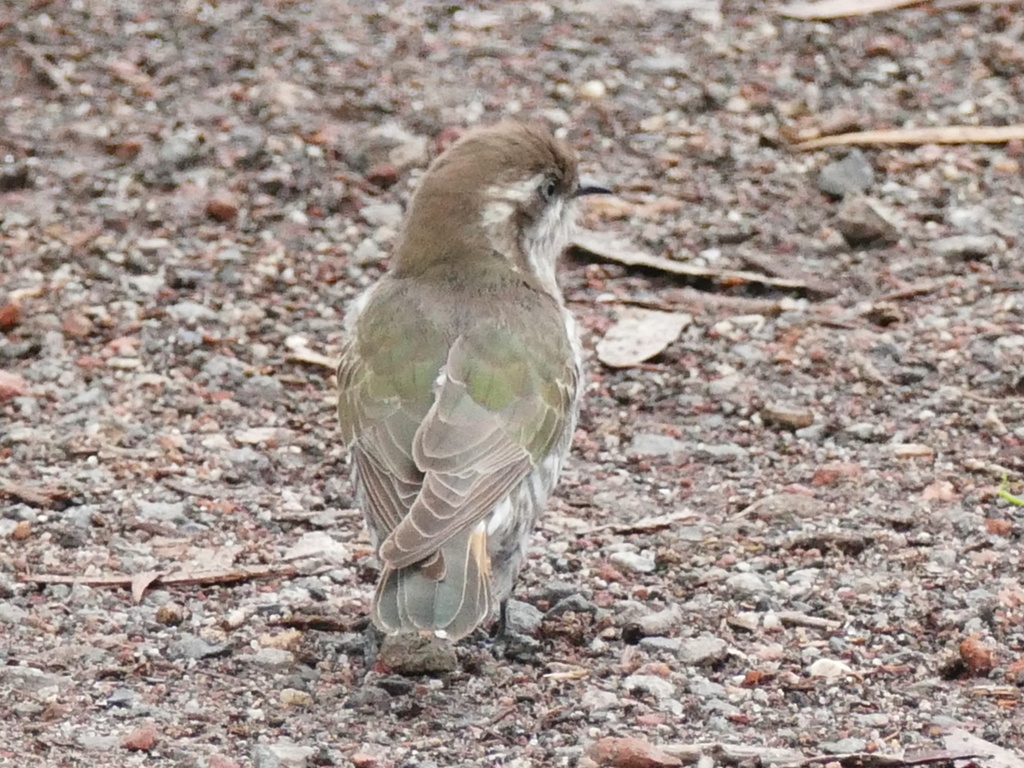
Horsfield's Bronze Cuckoo is a diminutive cuckoo averaging just 22 grams, making it one of Australia's smallest cuckoo species. Its most striking feature is the iridescent green and bronze colouring that adorns its back, coupled with incomplete brown barring that extends from the neck to the tail. The species is reliably distinguished from other bronze cuckoos by two key facial markings: a prominent white eyebrow stripe and a distinctive brown eye stripe. These subtle but diagnostic features are essential for field identification among the bronze cuckoo complex.
Range & Habitat
Horsfield's Bronze Cuckoo is common throughout Australia, with its range extending across Southeast Asia to Indonesia, Papua New Guinea, Malaysia, and southern Thailand. The species shows a strong preference for drier open woodlands, actively avoiding the dense forested areas that characterise other cuckoo habitats. This preference for open country makes them more accessible to observers than many woodland specialists. Notably, the first known specimen recorded outside its established range was documented in New Zealand in 2024, suggesting possible range expansion.
Behaviour & Diet
Horsfield's Bronze Cuckoo is primarily insectivorous, gleaning small insects from leaves and branches, and catching prey on the wing. The species is highly nomadic, moving between different Australian regions to breed and exploit seasonal food availability. During the breeding season, paired birds engage in a distinctive courtship ritual involving mutual feeding. As a brood parasite, this cuckoo does not build its own nest but instead lays its eggs in the nests of host species, primarily fairy-wrens of the genus Malurus, particularly the Superb and Splendid Fairy-wrens. Secondary hosts include thornbills, warblers, and scrub-wrens. Evidence suggests females select hosts through imprinting, remembering and preferring the species that raised them.
Best Time & Places to See It
The breeding season, which follows that of the primary host species, runs from September to February for populations parasitising Superb Fairy-wrens. This extended period provides multiple breeding opportunities for females. The species is nomadic and undertakes seasonal movements, so timing your visit to coincide with the host species' breeding activity maximises chances of encounter. Open woodland habitats across Australia, particularly those with high densities of fairy-wren populations, offer the best opportunities. The bird's small size and preference for staying among foliage can make it elusive despite being common in suitable habitat.
Photography Tips
The iridescent bronze and green plumage is best captured in bright, direct sunlight that reveals the full metallic sheen of the upperparts. The bird's small size requires patience and a steady approach; observing known host species nests during breeding season may yield opportunities. Look for the distinctive white eyebrow and brown eye stripe in close-up portraits to confirm identification. The bird's habit of gleaning insects from foliage offers chances to photograph natural feeding behaviour. Early morning activity during the breeding season, particularly around active fairy-wren territories, provides the most reliable viewing and photography opportunities.
Cania Gorge National Park
Australia
+131 birds+7 mammals
Where sandstone ridges rise above the Queensland inland plains, Cania Gorge National Park carves a compelling landscape across 51 square kilometres of dry eucalypt woodland and…
VIEW NATIONAL PARKCarnarvon National Park
Philadelphia, Australia
+179 birds+17 mammals
Across 15,000 square kilometres of inland Queensland, rugged sandstone plateaus rise above eucalypt woodlands and open grasslands, carved by creeks that have worn deep gorges into…
VIEW NATIONAL PARKNerang National Park
Gold Coast, Australia
+126 birds+13 mammals
Steep subtropical rainforest clads the hinterland ridges of southeast Queensland's Gold Coast, where Nerang National Park sprawls across 34 square kilometres of protected bushland between the…
VIEW NATIONAL PARKBunya Mountains National Park
Australia
+149 birds+11 mammals
Where subtropical rainforest meets open eucalyptus woodland on the elevated plateau of southeastern Queensland, Bunya Mountains National Park unfolds across 483 square kilometres of some of…
VIEW NATIONAL PARKHerberton Range National Park
Australia
+115 birds+10 mammals
Rainforest-clad ridges and rocky outcrops define this 324-square-kilometre reserve in far north Queensland, where the mountainous terrain of the Herberton Range rises through layered eucalypt woodland…
VIEW NATIONAL PARKKakadu National Park
Kakadu, Australia
+273 birds+46 mammals
Kakadu National Park is Australia’s largest national park and one of the world’s most remarkable protected areas, covering nearly 20,000 square kilometres in the tropical north…
VIEW NATIONAL PARKChiltern-Mt Pilot National Park
Australia
+229 birds+12 mammals
Granite ridges and eucalyptus woodlands define this 869-square-kilometre park straddling the border between Victoria and New South Wales, where rugged terrain rises sharply from gentler foothill…
VIEW NATIONAL PARKIkara-Flinders Ranges National Park
Australia
+149 birds+10 mammals
Where ancient quartzite ridges rise across the semi-arid heart of South Australia, Ikara-Flinders Ranges National Park unfolds across nearly two thousand square kilometres of one of…
VIEW NATIONAL PARKKinglake National Park
Australia
+164 birds+11 mammals
Where the volcanic plains of central Victoria rise into forested ridges, Kinglake National Park encompasses roughly 844 square kilometres of diverse habitat that represents one of…
VIEW NATIONAL PARKLower Glenelg National Park
Australia
+161 birds+12 mammals
Where the Glenelg River carves through southeastern Victoria's limestone country, Lower Glenelg National Park unfolds across nearly 800 square kilometres of river gorge, eucalypt woodland, and…
VIEW NATIONAL PARKBudj Bim National Park
Australia
+137 birds+7 mammals
Across southwestern Victoria's volcanic plains, Budj Bim National Park preserves a landscape shaped by ancient lava flows and Indigenous land stewardship spanning millennia. The park's 184…
VIEW NATIONAL PARKLamington National Park
Australia
+227 birds+24 mammals
Where subtropical rainforest rises steeply from the Queensland coast, Lamington National Park spreads across 541 square kilometres of one of Australia's most biodiverse mountain landscapes. The…
VIEW NATIONAL PARKSydney Harbour National Park
Sydney, Australia
+203 birds+26 mammals
Where Sydney Harbour's sheltered waters meet the sandstone headlands of New South Wales, a mosaic of coastal heathland, eucalyptus woodland and rocky shores creates one of…
VIEW NATIONAL PARKLittle Desert National Park
Australia
+200 birds+11 mammals
Across northwestern Victoria's semi-arid interior, sandstone ridges and heathland plateaus rise from red earth in a landscape sculpted by fire and drought rather than water. Little…
VIEW NATIONAL PARKNo community photos yet. Log in to add the first one.
No community observations of this species yet.