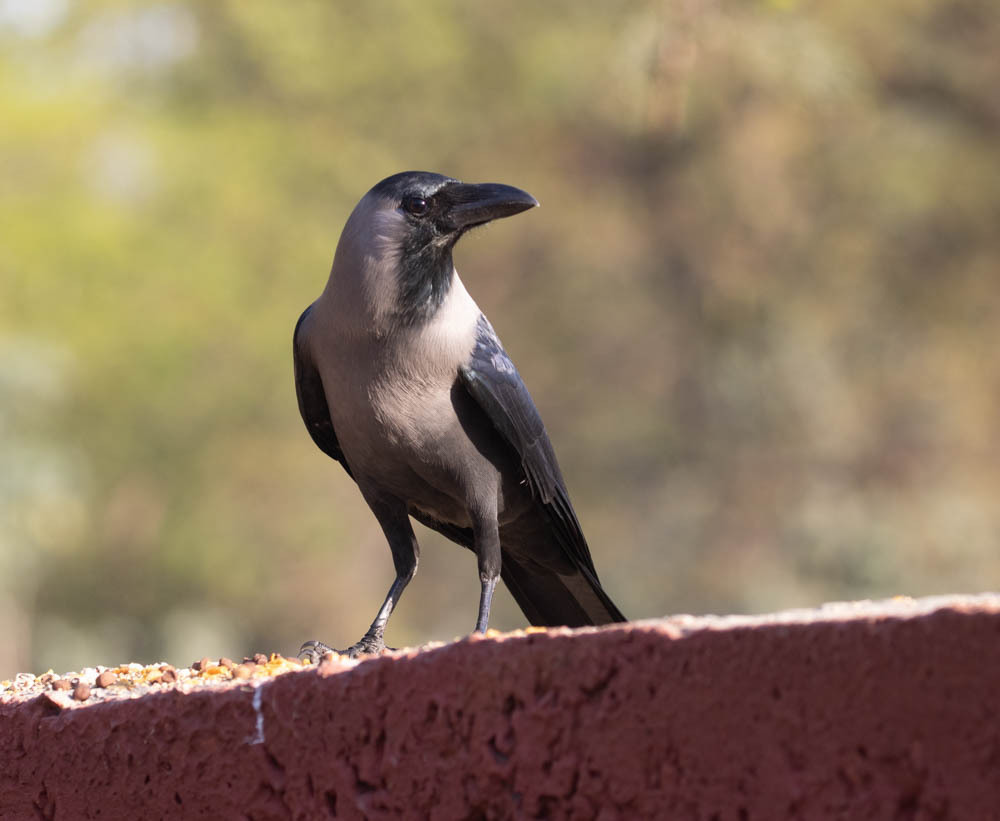
Identification
The house crow is a distinctive corvid of medium size, measuring 40 cm (16 inches) in length—positioned between a jackdaw and carrion crow in stature, though noticeably slimmer than either. The bird's most striking feature is its striking contrast in plumage: the forehead, crown, throat and upper breast are richly glossed black, while the neck and breast are a distinctive lighter grey-brown. The wings, tail and legs are entirely black. Regional subspecies show some variation in bill thickness and plumage depth, making it a rewarding species to study across its wide range.
Range & habitat
Native to southern Asia, the house crow is found throughout Nepal, Bangladesh, India, Pakistan, Sri Lanka, the Maldives, Laccadive Islands, southern Myanmar, south Thailand and coastal southern Iran. However, this species has become a global traveller, arriving in East Africa around Zanzibar and Port Sudan, establishing populations in Hong Kong, and more recently appearing in Europe, with a breeding population now present in Hook of Holland, Netherlands since 1998. The species is strongly associated with human settlements of all sizes, from small villages to sprawling cities.
Behaviour & diet
House crows are highly opportunistic omnivorous scavengers, feeding largely on refuse around human habitations, small reptiles and mammals, insects, eggs, nestlings, grain and fruits. They are commonly seen near marketplaces and garbage dumps foraging for scraps, taking most food from the ground but also from trees. These intelligent birds have even been observed swooping down to snatch baby squirrels mid-air. They roost communally in tall trees with dense crowns, preferring well-lit areas near food sources and human activity. House crows are notable among corvids for their well-documented tool usage and their remarkable ability to recognize themselves in mirrors—currently the only corvid species known to pass the mirror-mark test.
Best time & places to see it
Throughout their native range in southern Asia, house crows are abundant year-round in urban and village environments. Peak breeding season in India and Peninsular Malaysia occurs from April to July, when birds are actively nesting in large trees and displaying breeding behaviour. For travellers, the species is easiest to observe near human settlements, marketplaces and refuse areas where they congregate during the day. Early morning and evening are excellent times to witness their spectacular communal roosting displays.
Photography tips
The house crow's contrasting plumage—glossy black head and upper body against grey-brown breast and neck—photographs beautifully in good light. Capture the sharp demarcation between the black and grey-brown areas for impact. Photograph birds in communal roosts during dawn or dusk when pre-roosting aggregations gather on antennae, rooftops and wayside trees before settling into their roost trees. Their active, bold behaviour near human habitation offers excellent opportunities for behavioural shots, particularly around food sources where their opportunistic feeding can be documented.
Kanha Tiger Reserve
Minneriya National Park
Addo Elephant National Park
Arabuko Sokoke Forest Reserve
Arusha National Park
Bandhavgarh National Park
Bandipur National Park
Banke National Park
Bardiya National Park
Nothing matches these filters.
No community photos yet. Log in to add the first one.
No community observations of this species yet.