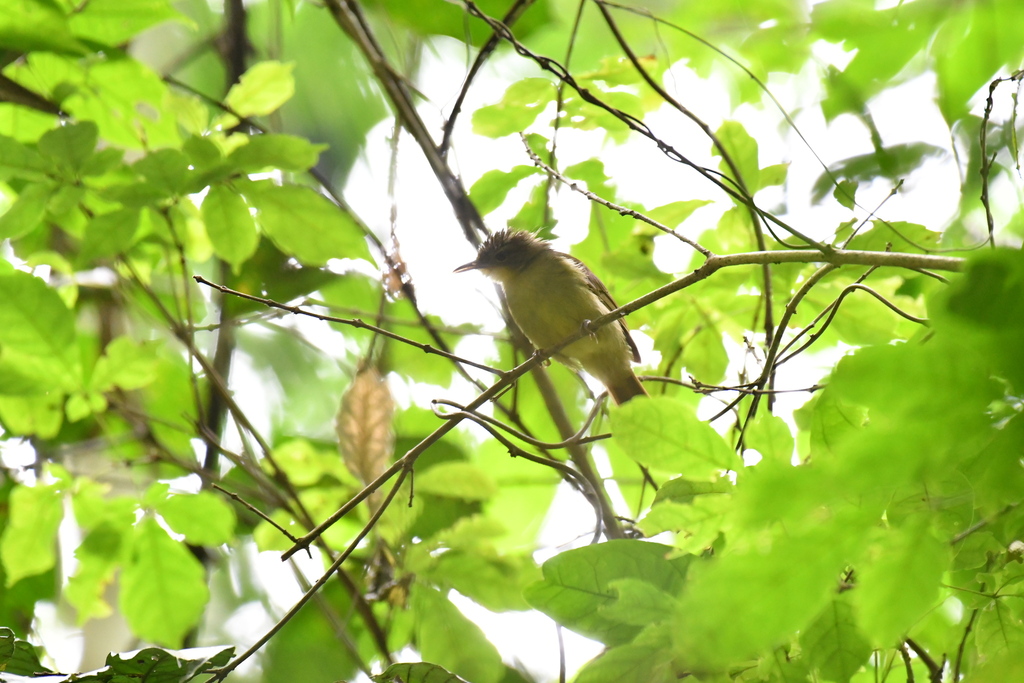
Icterine Greenbul
Photo © Justin Philbois
Photo © Justin Philbois — CC0 1.0 — Source: iNaturalist #132256622The icterine greenbul (Phyllastrephus icterinus) is a species of songbird in the bulbul family, Pycnonotidae. It is native to the African tropical rainforest. == Taxonomy and systematics == The icterine greenbul was originally described in the genus Trichophorus (a synonym for Criniger). The term icterine refers to its yellowish colouration. Formerly, some authorities have considered Sassi's greenbul to be a subspecies of the icterine greenbul. Alternate names for the icterine greenbul include the lesser icterine bulbul. === Liberian greenbul === Until 2018, a rare colour morph of the icterine greenbul from the Cavalla forest in south-eastern Liberia was believed to be a separate species. The Liberian greenbul (Phyllastrephus leucolepis) was known from only a few sightings between 1981 and 1984, and a specimen collected in 1984. This specimen is now considered to have been a plumage aberration. A 2017 DNA analysis revealed that the bird(s) were common icterine greenbuls, albeit with unusual plumage colouring, which may have been caused by a nutritional deficiency. Alternative names for the Liberian greenbul included the spot-winged bulbul, spot-winged greenbul and white-winged greenbul. == Distribution and habitat == The icterine greenbul is found in Africa from Guinea to Ghana; southern Nigeria to western and southern…
Bwindi Impenetrable National Park
Kanyashogi, Uganda
+603 birds+26 mammals
Steep ridges cloaked in montane forest rise from Uganda's southwestern borderlands, where the landscape grows so dense and tangled that early explorers named it impenetrable. At…
VIEW NATIONAL PARKToro-Semliki Proposed National Park
Uganda
+474 birds+5 mammals
Where the Albertine Rift's western escarpment rises above the Semliki River valley, a vast mosaic of forest, savanna and wetland converges to create one of East…
VIEW NATIONAL PARKNo community photos yet. Log in to add the first one.
No community observations of this species yet.