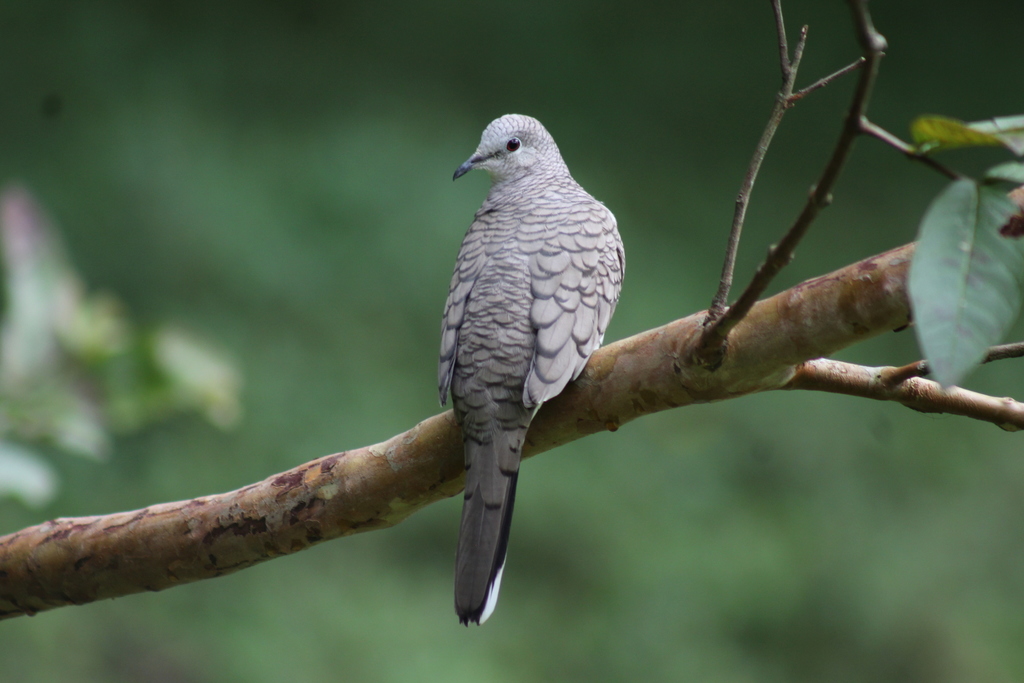
Inca Dove
Photo © Adrianh M. Orozco
Photo © Adrianh M. Orozco — CC BY 4.0 — Source: iNaturalist photo #10889150Identification
The Inca dove is a small, slender dove measuring 16.5–23 cm in length and weighing just 30–58 g, with an average wingspan of 28.5 cm. Its gray-brown plumage features a distinctive scaled pattern created by feather markings that give it an elegant, refined appearance. The long, square tail is edged with white feathers that flare visibly during flight. One of the species' most characteristic features is the reddish underwing, visible when the bird takes flight—accompanied by a distinctive, quiet rattling noise produced by the wings.
Range & Habitat
The Inca dove ranges from Costa Rica northward to the American Southwest, and has been steadily expanding its range both northward and southward over recent decades. Despite its name, this species does not occur in any lands that once formed part of the Inca Empire. Inca doves are often common to abundant in suitable habitat, preferring deserts, scrublands, and cultivated areas. They have also adapted well to urban settings, where they gather in flocks to feed on grass seeds and exploit the readily available water from agricultural and suburban irrigation systems.
Behaviour & Diet
Inca doves are highly social birds, forming flocks that can reach 100 individuals outside their breeding territories. During winter months, they exhibit remarkable communal behavior, roosting together in pyramid formations—stacks of 10 or more birds—that conserve body heat in cold weather. Their diet consists primarily of grass seeds, which they forage from the ground in open areas. Males and females share nesting duties, with males gathering nesting material and presenting it to females, who also contribute their own materials. Nests, built from twigs, grass, weed stalks, and leaves, are often reused across breeding seasons and become reinforced with the brood's droppings.
Best Time & Places to See It
The Inca dove is most readily observed in the American Southwest and throughout Central America, particularly in arid and semi-arid regions. Look for them in desert scrublands, cultivated farmlands, and increasingly in suburban gardens and urban parks where irrigation provides water. Winter offers an excellent opportunity to observe their communal roosting behavior, when birds gather in tight pyramid formations at dusk. Early morning is often the best time to locate singing birds, as males call from open, elevated perches such as utility wires, trees, or television aerials.
Photography Tips
The Inca dove's small size and preference for open perches make it approachable for photographers. Use a telephoto lens to capture detail without disturbing the bird; the scaled plumage pattern and white tail edges are particularly striking in side-lit or backlighting conditions. Capture the reddish underwings during takeoff, when the bird's distinctive wing rattle is also audible. Winter roosting pyramids offer a unique photographic opportunity—position yourself before dusk to photograph the communal huddles as light fades. The dove's preference for utility wires and exposed perches in open habitat makes it relatively easy to obtain clean, well-composed images.
Arenal Volcano National Park
Big Bend National Park
Bitter Lake National Wildlife Refuge
Bosque del Apache National Wildlife Refuge
Braulio Carrillo National Park
Cabeza Prieta National Wildlife Refuge
Caño Negro National Wildlife Refuge
Carara National Park
Carlsbad Caverns National Park
Nothing matches these filters.
No community photos yet. Log in to add the first one.
No community observations of this species yet.