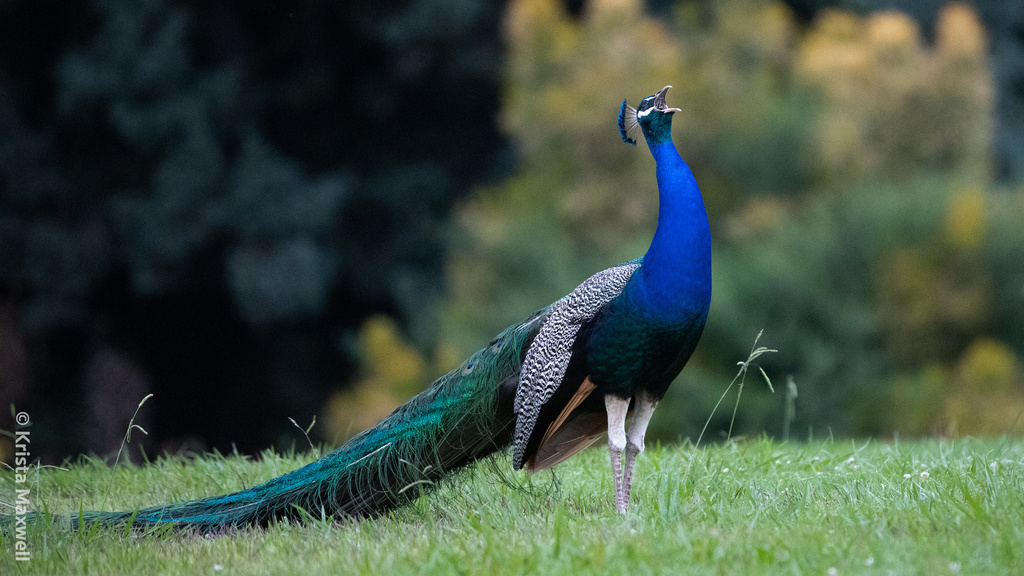
Indian Peafowl
Photo © Krista Maxwell
Photo © Krista Maxwell — CC0 1.0 — Source: iNaturalist photo #81532360Identification
The Indian peafowl is easily identifiable by its striking sexual dimorphism. Males, or peacocks, are large birds averaging 100–120 cm from bill to tail, with some individuals reaching 200–230 cm when their full train is extended. They weigh 4.1–5.2 kg, making them among the heaviest members of the pheasant family. Peacocks display a metallic blue crown with a distinctive fan-shaped crest tipped in bluish-green. Their neck is long and blue with scaly bronze-green feathers marked in black and copper. The most famous feature is the elaborate train of elongated upper tail coverts, which extends from the rump and is adorned with ornate eye-spots consisting of purplish-black nuclei ringed with blue and copper, surrounded by alternating green and bronze bands.
Peahens are considerably smaller at around 38 cm in length and weigh 2.7–4.1 kg. They lack the spectacular train and instead display a rufous-brown head with a chestnut-tipped crest, brownish upper body with pale mottling, and a distinctive iridescent green lower neck. Both sexes share dark brown eyes and brown-colored beaks and legs. Several colour mutations exist, including white leucistic peafowl, which have become common in captive populations.
Range & Habitat
Native to the Indian subcontinent, the Indian peafowl has since been introduced to many other parts of the world. Within its native range, it inhabits open forests and cultivable lands where it can forage on the ground. The species thrives in areas offering a mix of open spaces and vegetation, allowing it to move between feeding grounds and roosting sites with relative ease.
Behaviour & Diet
The Indian peafowl forages primarily on the ground in small groups, feeding on berries, grains, snakes, lizards, and small rodents. Despite the considerable length and weight of the male's train, peacocks remain capable of flight, though they typically escape predators on foot through undergrowth. They roost in tall trees at night. The species is vocal and makes loud calls that serve an important ecological function, often indicating the presence of predators in forest areas and making the birds relatively easy to locate.
The male's elaborate train features prominently in courtship behaviour, being raised into a fan and quivered during displays. The function of this spectacular train has puzzled scientists for over a century. Darwin initially struggled to explain it through natural selection alone, later proposing sexual selection as the mechanism. Contemporary theories, including Amotz Zahavi's handicap hypothesis—suggesting males honestly signal their fitness through train splendour—remain debated among researchers.
Best Time & Places to See It
The Indian peafowl is the national bird of India and remains widespread throughout the Indian subcontinent. The species is listed as Least Concern on the IUCN Red List, indicating stable populations. The train feathers are moulted annually, typically beginning at the end of the monsoon in August or September, with full regrowth completed by February to March. Train development in males begins in the second year of life but is not fully mature until age four. Visiting during the breeding season, when males are most active in displaying their trains, offers the best opportunities for observation.
Photography Tips
The Indian peafowl's loud calls make it relatively easy to locate in the field, giving photographers an advantage in tracking down subjects. The male's vibrant blue head, elaborate crest, and spectacular train—with its intricate eye-spots—provide exceptional photographic opportunities, particularly during courtship displays. The coloration of the train results from the microstructure of the feathers and optical phenomena rather than pigmentation, so lighting conditions significantly affect how these colours are rendered in photographs. Photographing birds in small foraging groups offers opportunities to capture natural behaviour, while individuals roosting in tall trees at dusk or dawn can provide striking silhouettes. The stark contrast between the brilliantly coloured male and the more subdued peahen offers interesting compositional possibilities for wildlife photographers.
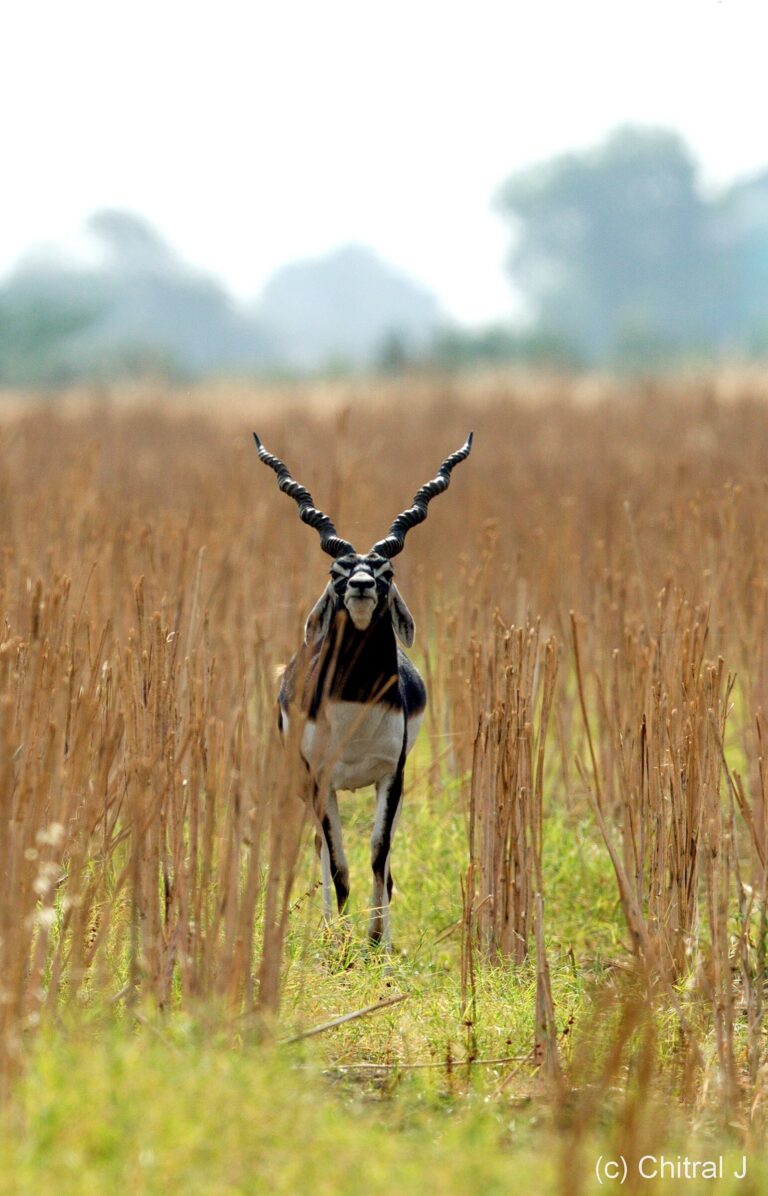
Blackbuck Jeep Safari
Nothing matches these filters.
Kanha Tiger Reserve
Minneriya National Park
Abel Tasman National Park
Angamedilla National Park
Bandhavgarh National Park
Bandipur National Park
Banke National Park
Bannau Brycheiniog National Park
Bardiya National Park
Nothing matches these filters.
No community photos yet. Log in to add the first one.