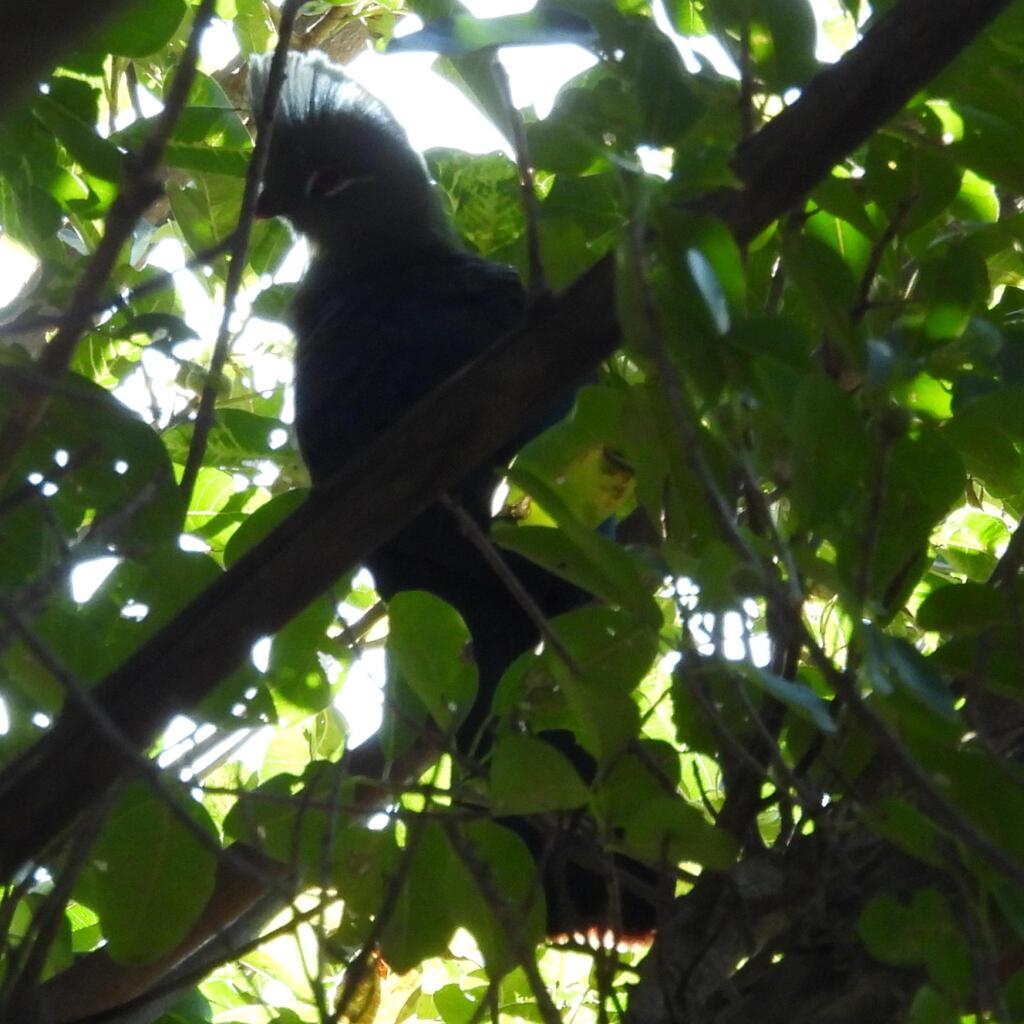
Knysna Turaco
Photo © Henry de Lange
Photo © Henry de Lange — CC BY 4.0 — Source: iNaturalist #301199095Identification
The Knysna turaco is an unmistakable large forest bird, measuring 40–42 cm in length including its long tail. It displays predominantly green plumage with striking field marks: a tall green crest tipped with white, a small but thick orange-red bill, and a distinctive white line just below the eye. The eye-ring is deep red and the eye itself is brown. In flight, the most conspicuous feature is the brilliant crimson primary flight feathers that contrast sharply with the green body. Sexes are similar in appearance, though juvenile birds have a shorter crest lacking the white tips of adults.
The Knysna turaco belongs to a remarkable family known for possessing true red and green pigmentation in their feathers—a feature unique among birds. The red pigment turacin and green pigment turacoverdin both contain copper, giving these colours their exceptional vibrancy. This structural difference means the turaco's colours remain consistent throughout the year, unlike most birds whose plumage colours fade seasonally.
Range & Habitat
This species is a resident breeder in the mature evergreen forests of southern and eastern South Africa, as well as Eswatini. It is often inconspicuous in the treetops, making it challenging to spot despite its large size and bold colouration. The bird's preference for dense forest canopy means it spends much of its time hidden among the foliage.
Behaviour & Diet
The Knysna turaco is typically observed flying between forest trees or hopping along branches. It feeds on fruit, insects, and earthworms, moving actively through the canopy in search of food. The species is vocal, producing a loud and distinctive kow-kow-kow-kow call that often betrays its presence before the bird itself is seen.
The bird's brilliant crimson flight feathers are thought to serve an important anti-predator function. When threatened, the sudden flash of red as the bird takes flight tends to distract predators, which focus on the most visible colour. As the turaco lands and folds its wings, the red feathers become concealed against the green body, allowing the bird to disappear into the forest canopy and escape unseen.
Best Time & Places to See It
The Knysna turaco is a year-round resident in its forest habitat, so it can be encountered at any time. Listen for its loud kow-kow-kow-kow call, which is often the first indication of the bird's presence. Early morning hours typically offer the best viewing opportunities, as the bird is more active during these times.
Photography Tips
Patience and a keen ear are essential when photographing this species. Use the bird's distinctive call to locate individuals, then position yourself quietly to await flight shots that showcase the dramatic crimson primary feathers. The contrast between the red wings and green body in flight provides striking photographic opportunities. Photographing perched birds requires a telephoto lens due to their preference for the upper forest canopy and their tendency to remain partially obscured by foliage. Early morning light filtering through the forest canopy can beautifully highlight the white-tipped crest and the unique copper-based pigmentation of this remarkable bird.
Addo Elephant National Park
Garden Route National Park
Kruger National Park
Nothing matches these filters.
No community photos yet. Log in to add the first one.
No community observations of this species yet.