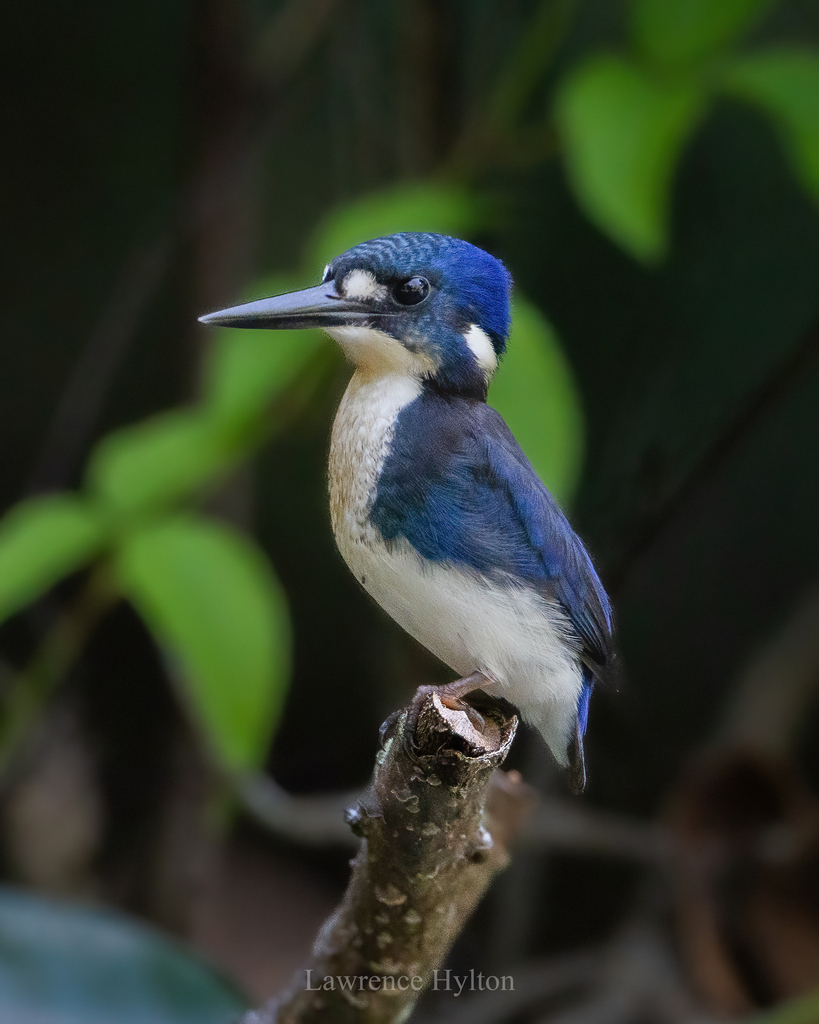
Little Kingfisher
Photo © Lawrence Hylton
Photo © Lawrence Hylton — CC BY 4.0 — Source: iNaturalist #260963282Identification
The little kingfisher is one of the world's smallest kingfishers, measuring just 11.5 to 13 cm in length. It is unmistakable in its range, featuring a glossy, deep-blue back and head that contrasts sharply with a snowy white breast. The bird has a heavy, prominent bill relative to its tiny body, dark brown feet with an unusual toe arrangement (one rear toe and only two forward toes), and a short tail. Males weigh 10–15 g while females weigh 10–14 g, making it a diminutive presence in its wetland habitats.
Range & Habitat
The little kingfisher is found across a wide range spanning from northern Australia to Indonesia, Papua New Guinea, and the Solomon Islands. In Australia, it occurs in northern Queensland and coastal Northern Territory. It inhabits open forests, woodlands, swamps, and mangroves throughout its range. The species is generally uncommon and sedentary, with nine recognized subspecies showing slight variation in plumage across different regions, particularly in the extent of blue patches on the breast.
Behaviour & Diet
This tiny kingfisher hunts by perching quietly on branches close to the water, then plunging swiftly to catch prey before returning directly to its perch. Its diet consists of small fish, crustaceans, insect larvae, and water-beetles. During breeding season (October to March in Queensland, February in Northern Territory, and January to April in Papua New Guinea), both parents cooperate to rear young, which fledge from burrows excavated in riverbanks or formed in rotting mangrove roots, paperbark, or termite mounds. Clutches typically contain 4–5 glossy white eggs, and parents continue feeding fledglings for 9 days or more after they leave the nest.
Best Time & Places to See It
The little kingfisher's breeding season is the most productive period for observation, though timing varies by location: October to March in Queensland, February in Northern Territory, and January to April in Papua New Guinea. Search for this sedentary species in wetland habitats with suitable perching branches overhanging water, particularly in mangrove areas and swampy woodlands. Its generally uncommon status and small size make it challenging to locate, requiring patience and careful observation of likely habitat.
Photography Tips
The diminutive size of the little kingfisher presents both challenge and opportunity for photographers. Use a telephoto lens (at least 400–600 mm) to capture frame-filling images without disturbing the bird during its quiet perch-hunting behavior. Position yourself before dawn when the bird is most active, and remain patient—this species will remain motionless on a branch for extended periods before diving. The brilliant blue plumage reflects light strongly, so be mindful of exposure compensation to preserve detail in the white breast. The bird's preference for hunting close to the water means positioning yourself low and using natural light from behind to silhouette the hunting environment while the kingfisher itself remains well-lit.
Daintree National Park
Endeavour River National Park
Girringun National Park
Kakadu National Park
Litchfield National Park
Wooroonooran National Park
Nothing matches these filters.
No community photos yet. Log in to add the first one.
No community observations of this species yet.