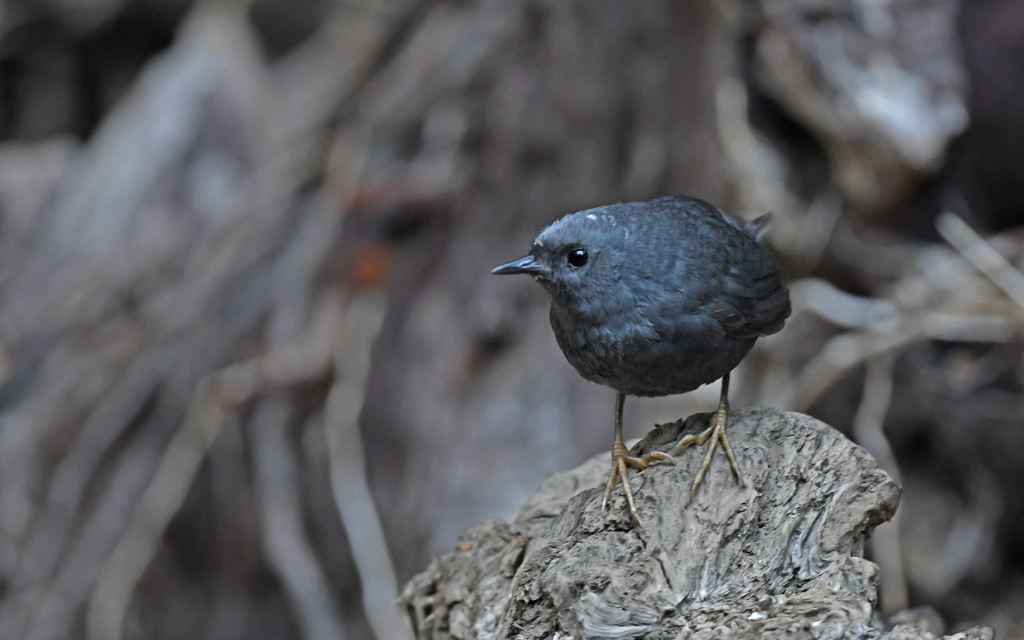
Magellanic Tapaculo
Photo © Christoph Moning
Photo © Christoph Moning — CC BY 4.0 — Source: iNaturalist photo #382201369Identification
The Magellanic tapaculo is a small wren-like bird measuring 10 to 12 cm in length. It has a slender black bill, pinkish legs that are fairly long, and a short tail held erect. The plumage is dark grey with chestnut tones on the flanks, undertail, and wings. Some individuals display a distinctive silvery-white patch on the crown. Juvenile birds are brown with dark barring and typically lack the white crown patch. The song is notably loud, staccato, and repetitive, making it distinctive in its habitat.
Range & Habitat
This species is found in southern South America, ranging northward from Tierra del Fuego to the Valparaíso Region in Chile and San Juan Province in Argentina. Charles Darwin collected a specimen in the Falkland Islands in 1833 or 1834, though no definite records have been documented there since. The tapaculo inhabits dense vegetation near ground level in forests and woodlands, frequently occurring near water sources and commonly associated with stands of Chusquea bamboo.
Behaviour & Diet
The Magellanic tapaculo is highly terrestrial, preferring to run rather than fly when moving through its habitat. It forages for insects among dense vegetation. During breeding season, it constructs a distinctive domed nest from moss, lichens, and root fibres, typically laying two or three white eggs.
Best Time & Places to See It
To locate this elusive bird, search dense, low vegetation in forested and woodland areas of southern Chile and Argentina, particularly near water and in bamboo thickets. Its loud, repetitive song is often the best indicator of its presence, making it easier to detect by ear than by sight.
Photography Tips
The Magellanic tapaculo's secretive behaviour and preference for dense ground-level vegetation make photography challenging. A patient approach and willingness to work in poor light conditions among thick undergrowth are essential. Focus on listening for its distinctive loud song to locate individuals, then move slowly and carefully to avoid flushing the bird. A telephoto lens will be valuable for capturing images from a distance without disturbing this terrestrial species.
Alerce Costero National Park
Cabo de Hornos National Park
Cerro Castillo National Park
Chiloé National Park
Corcovado National Park
Lago Puelo National Park
Laja National Park Lagoon
Lanín National Park
Los Alerces National Park
Nothing matches these filters.
No community photos yet. Log in to add the first one.
No community observations of this species yet.