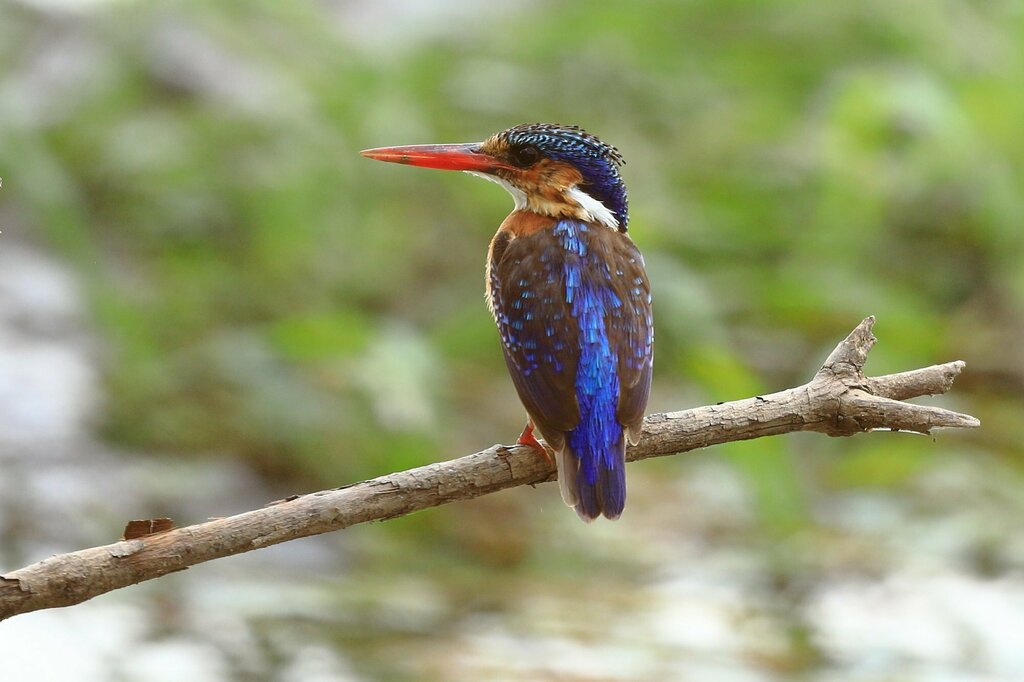
Malachite Kingfisher
Photo © Darren Obbard
Photo © Darren Obbard — CC BY 4.0 — Source: iNaturalist photo #320208439Identification
The malachite kingfisher is a small kingfisher, measuring around 13 cm in length. Its most striking feature is the bright metallic blue of its upperparts, complemented by a short crest of black and blue feathers on the head. The face, cheeks, and underparts are rufous, with distinctive white patches on the throat and rear neck sides. Adults have a reddish-orange bill and bright red legs, while younger birds show a black bill and duller overall plumage. The sexes are similar in appearance, making this a visually distinctive species despite its small size.
Range & Habitat
This species is widely distributed across Sub-Saharan Africa, occurring throughout the continent except for very arid regions of Somalia, Kenya, Namibia and Botswana. It is largely resident, though it undergoes seasonal climate-related movements. The malachite kingfisher shows a strong preference for freshwater habitats, favouring reeds and aquatic vegetation near slow-moving water and ponds where it can hunt effectively.
In flight, the malachite kingfisher is a blur of motion, its short rounded wings beating rapidly as it flies low over water in search of prey. The bird's streamlined silhouette and swift, direct flight make it a thrilling sight for observers positioned near suitable water bodies.
Behaviour & Diet
The malachite kingfisher is a specialist fisher with distinctive hunting behaviour. It maintains regular perches or stands positioned low over the water, from which it hunts with patience and precision. Characteristically, the bird sits upright with its tail pointed downwards, watching intently before dropping suddenly with a splash to capture prey, typically returning to its perch almost immediately with a struggling catch.
The diet consists of fish, aquatic insects, and crustaceans. Small prey items are swallowed promptly, while larger food items are beaten against a bough or rail before consumption. The bird demonstrates particular skill in handling fish, typically lifting them by the middle and repositioning them—sometimes by tossing them into the air—before swallowing them head downwards. Breeding occurs in tunnels excavated by both partners in sandy banks, usually positioned over water. Most burrows incline upward before reaching the nesting chamber, where three to four clutches of three to six round white eggs are laid on a bed of fish bones and regurgitated pellets.
Best Time & Places to See It
The malachite kingfisher can be encountered year-round throughout its Sub-Saharan range, though seasonal movements occur in response to climate changes. Observers should focus on freshwater habitats with reeds, aquatic vegetation, and slow-moving water or ponds. Patience near suitable fishing perches will reward visitors with sightings of this active and engaging species.
Photography Tips
The malachite kingfisher's small size and rapid movements present both challenges and opportunities for photographers. Its habit of maintaining regular low perches over water offers predictable positioning for camera placement. The bird's bright metallic blue upperparts and rufous underparts provide excellent colour contrast, particularly in strong natural light. Anticipating the characteristic sudden diving motion will help capture the dramatic fishing behaviour. Early morning light, when the bird is most active and the blue plumage is most vibrant, offers the best photographic conditions.
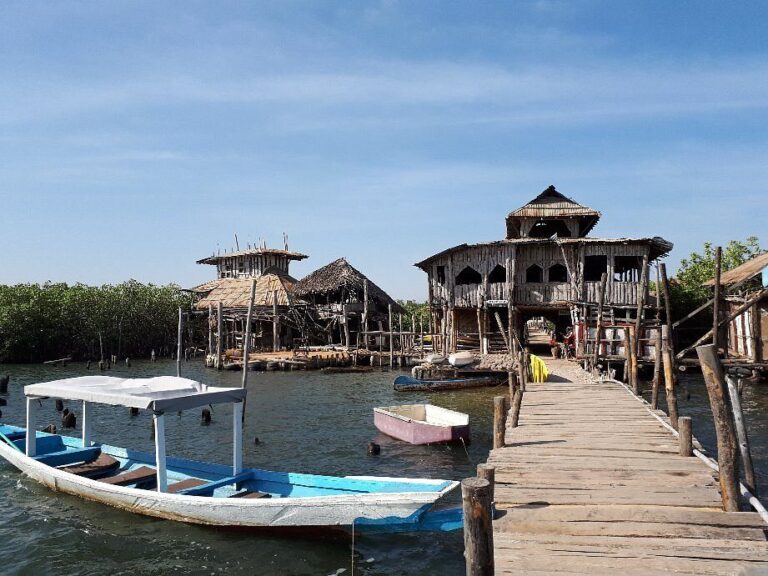
Private Half-Day Wake Up With Birds & Breakfast
Nothing matches these filters.
Bwindi Impenetrable National Park
Lake Mburo National Park
Mabamba Swamp
Murchison Falls National Park
Queen Elizabeth National Park
Aberdare National Park
Abijata-Shalla Lakes National Park
Addo Elephant National Park
Agulhas National Park
Nothing matches these filters.
No community photos yet. Log in to add the first one.