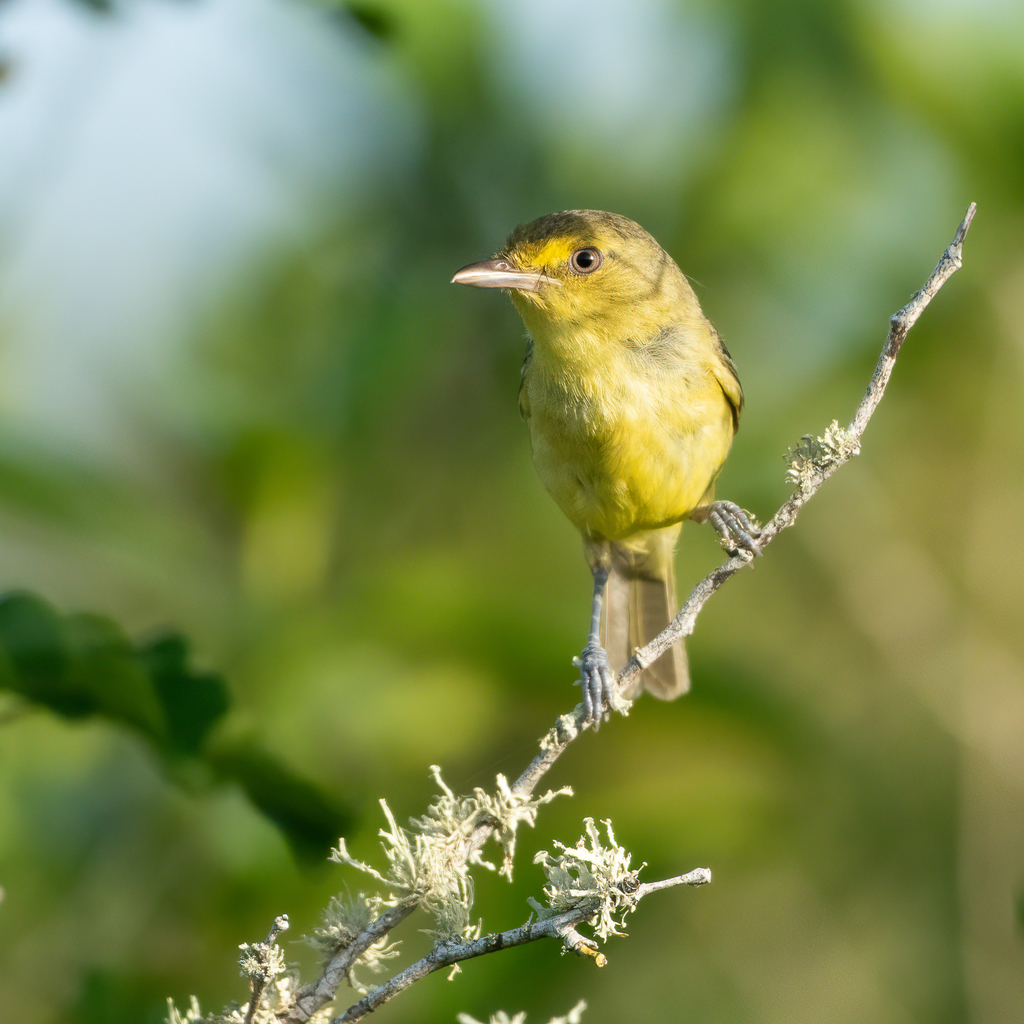
Mangrove Vireo
Photo © danygl
Photo © danygl — CC BY 4.0 — Source: iNaturalist #89818474The mangrove vireo (Vireo pallens) is a species of bird in the family Vireonidae, the vireos, greenlets, and shrike-babblers. It is found in Mexico and every Central American country except Panama. == Taxonomy and systematics == The mangrove vireo was formally described in 1863 by the English naturalist Osbert Salvin based on specimens collected at El Realejo in Nicaragua and at Puntarenas in Costa Rica. He coined the current binomial Vireo pallens. The specific epithet is from Latin meaning "pale-colored", "greenish" or "yellowish". El Realejo has been designated the type locality. The mangrove vireo's taxonomy is unsettled. The IOC, AviList, and BirdLife International's Handbook of the Birds of the World assign it these 10 subspecies: The Clements taxonomy does not recognize V. p. wetmorei and V. p. browningi, including them within V. p. semiflavus. Some twentieth century authors treated the mangrove vireo as conspecific with the white-eyed vireo (V. griseus). Others have suggested that two or three species are represented within the mangrove vireo because of plumage and vocal differences between the "Pacific" and "Caribbean" groups of subspecies. Subspecies V. p. approximans was originally described by Robert Ridgway as a species. Ridgway noted the bird's strong similarity to what is…
Santa Rosa National Park
Santa Elena, Costa Rica
+359 birds+30 mammals
Where Pacific-facing slopes descend from volcanic uplands toward the Guanacaste lowlands, Santa Rosa National Park unfolds across a mosaic of tropical dry forest, gallery woodland, and…
VIEW NATIONAL PARKDzibilchantún National Park
Barcelona, Mexico
+144 birds+2 mammals
Across the limestone plains of Yucatán, where cenotes pierce the bedrock and tropical forest clings to shallow soils, lies Dzibilchantún—a modest yet ecologically vital national park…
VIEW NATIONAL PARKSian Ka’an
Chunyaxché, Mexico
+350 birds+16 mammals
Where the Yucatán Peninsula dissolves into wetland and mangrove, a vast mosaic of forest, lagoon, and coastal margin creates one of Mexico's most biodiverse strongholds. Across…
VIEW BIOSPHERE RESERVETikal National Park
Tikal, Guatemala
+399 birds+16 mammals
Dense rainforest canopy rises above the limestone plateau of Petén, where archaeological wonder and ecological richness merge seamlessly across one of Central America's most biodiverse landscapes.…
VIEW NATIONAL PARKLaguna del Tigre National Park
Petén, Guatemala
+399 birds+29 mammals
Where the Petén lowlands dissolve into wetland and forest, Laguna del Tigre National Park protects one of Guatemala's most ecologically vital landscapes. This sprawling reserve encompasses…
VIEW NATIONAL PARKSierra del Lacandón National Park
Petén, Guatemala
+348 birds+7 mammals
Where the Petén rainforest rises into limestone ridges and deep ravines, Sierra del Lacandón National Park protects one of Central America's most intact tropical wilderness zones.…
VIEW NATIONAL PARKCarara National Park
Tárcoles, Costa Rica
+397 birds+19 mammals
Where the Pacific coastal plain meets transitional forest, Carara National Park straddles one of Central America's most dynamic ecological boundaries. The park's landscape encompasses lowland deciduous…
VIEW NATIONAL PARKPalo Verde National Park
Bagaces, Costa Rica
+318 birds+24 mammals
Dry forest spreads across Palo Verde's low-lying terrain in northwestern Guanacaste, where seasonal rivers and lagoons etch through deciduous woodland that sheds its canopy each winter.…
VIEW NATIONAL PARKMarino Las Baulas National Park
Santa Cruz, Costa Rica
+246 birds+9 mammals
Where the Pacific meets a mosaic of dry forest and mangrove estuary, this coastal national park protects one of Central America's most dynamic wildlife theatres. The…
VIEW NATIONAL PARKCurú National Wildlife Refuge
Paquera, Costa Rica
+249 birds+8 mammals
Where the Pacific coast of Puntarenas dissolves into dry deciduous forest and mangrove fringe, Curú Wildlife Sanctuary holds one of Costa Rica's most ecologically vital yet…
VIEW WILDLIFE SANCTUARYNo community photos yet. Log in to add the first one.
No community observations of this species yet.