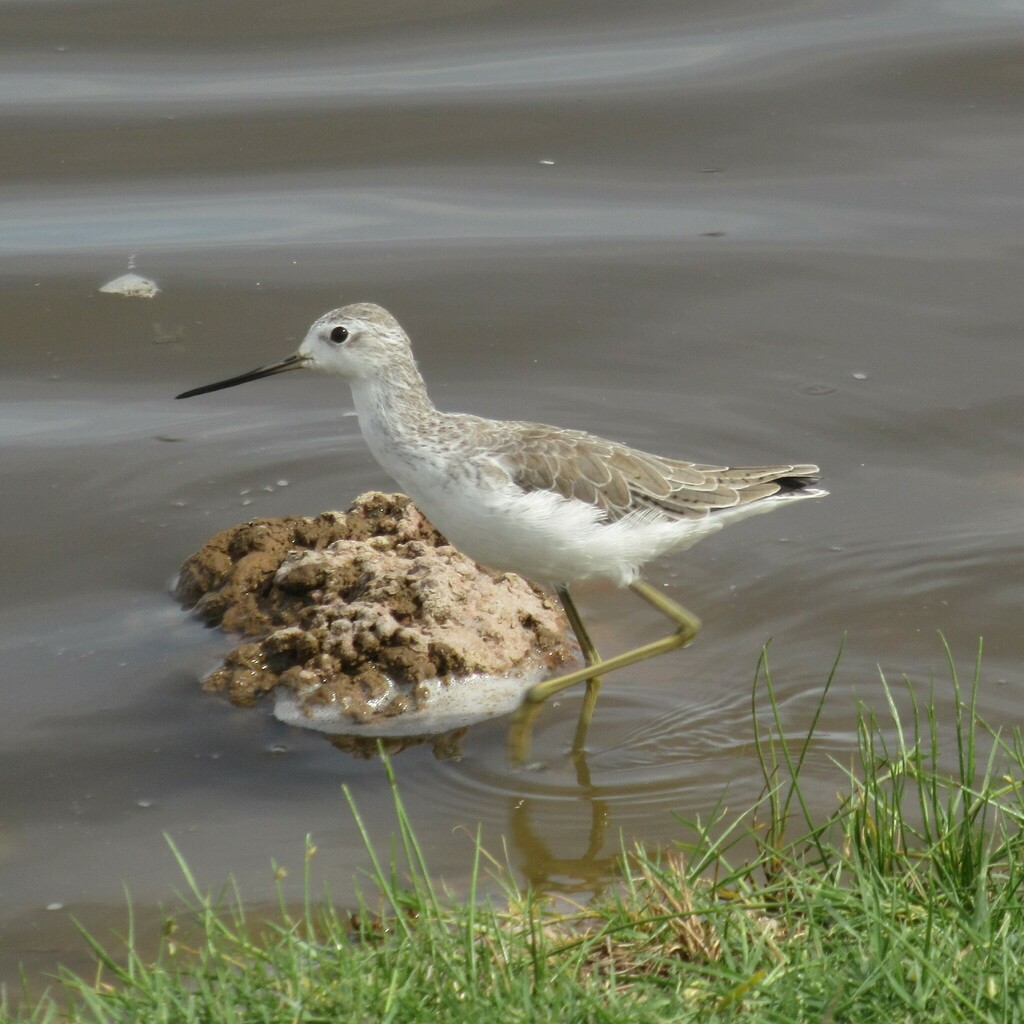
Marsh Sandpiper
Photo © Marian Read
Photo © Marian Read — CC0 1.0 — Source: iNaturalist #143868114Identification
The marsh sandpiper is a small, elegant wader measuring 22–26 cm in length with a wingspan of 55–59 cm and weighing 45–120 g. It resembles a diminutive greenshank, distinguished by its long, fine bill and notably long yellowish legs. In breeding plumage, the bird appears greyish brown, becoming paler in winter. A striking white wedge runs up the back, visible in flight—a useful field mark shared with the greenshank. The plumage pattern includes subdued light brown tones above with darker mottling, and somewhat diffuse small brownish spots scattered across the breast and neck.
While it shares similarities with the greenshank, the marsh sandpiper is more closely related to the common redshank and wood sandpiper, forming a group of smallish shanks within the genus Tringa.
Range & Habitat
The marsh sandpiper breeds across the Palearctic from easternmost Europe to the Russian Far East, inhabiting open grassy steppe and taiga wetlands. As a migratory species, the majority of birds winter in Africa and India, with some populations traveling to Southeast Asia and Australia. During winter, they favour fresh water wetlands such as swamps and lakes.
The species is protected under the Agreement on the Conservation of African-Eurasian Migratory Waterbirds (AEWA). Marsh sandpipers are rare vagrants to North America, with most records from Alaska and California, though sightings have also occurred in Mexico and Canada.
Behaviour & Diet
Marsh sandpipers are typically seen singly or in small groups, particularly during winter months on their favoured freshwater wetlands. Beyond these basic observations, detailed information about their specific feeding ecology and behavioural patterns remains limited in available sources.
Best Time & Places to See It
For birders in Europe and Asia, the breeding season offers the best opportunity to observe marsh sandpipers in their steppe and taiga wetland habitats across the Palearctic. For those wintering grounds, Africa and India host substantial populations during the non-breeding season. Observers in Southeast Asia and Australia may encounter migrants during their passage periods. In North America, sightings are rare but possible, with Alaska and California representing the most likely locations, though the species remains a notable vagrant.
Photography Tips
The marsh sandpiper's elegant proportions—particularly its long fine bill and elongated yellowish legs—make it a rewarding photographic subject. The white wedge up the back is most evident in flight photography, so capturing birds in flight will best showcase this distinctive field mark. The subtle plumage patterning, with its light brown tones and diffuse spotting, rewards close-focus work. Since the species typically occurs singly or in small groups rather than large flocks, patient stalking of individuals on freshwater wetlands offers the best chances for intimate portraits.
Private Full-Day Kotu Birdwatching Experience: An Introduction to Kotu’s Diverse Birdlife
Nothing matches these filters.
Bwindi Impenetrable National Park
Kanha Tiger Reserve
Lake Mburo National Park
Mabamba Swamp
Minneriya National Park
Murchison Falls National Park
Queen Elizabeth National Park
Aberdare National Park
Abijata-Shalla Lakes National Park
Nothing matches these filters.
No community photos yet. Log in to add the first one.
No community observations of this species yet.