Meller’s Duck
Photo © Лариса Артемьева
Photo © Лариса Артемьева — CC0 1.0 — Source: iNaturalist #252123497Identification
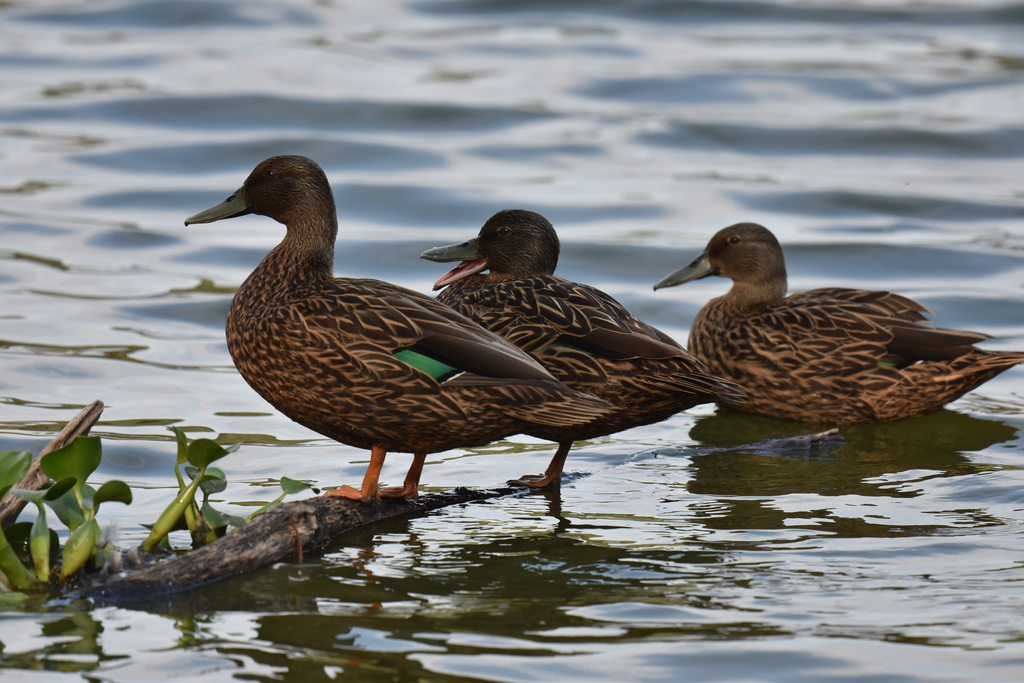
Meller's duck is a large dabbling duck that superficially resembles a female mallard but is distinctly larger, measuring 55–65 centimetres (22–26 inches), making it one of the largest species in the genus Anas. Despite this similarity to mallards, Meller's duck lacks the supercilium (eyebrow stripe) characteristic of many mallard relatives. Its plumage is predominantly dark brown with narrow pale fringes on the upper parts and wider fringes on the lower parts, creating a somewhat subtle, mottled appearance. The speculum feathers are green and bordered with white, similar to mallards. Its pale grey bill is noticeably larger than typical for dabbling ducks and features dark patches at the base, while its feet and legs are distinctly orange.
Range & Habitat
Meller's duck is endemic to eastern Madagascar, where it historically inhabited wetland areas, particularly the Lac Alaotra wetlands, which supported the largest populations. A secondary population was established on Mauritius in the mid-18th century, though this introduced population is now on the verge of extinction. The species' range has been severely impacted by habitat destruction, especially in the latter half of the 20th century, with waterbird populations declining dramatically in their traditional strongholds.
Behaviour & Diet
Unlike most of their closer relatives, Meller's ducks are fiercely territorial during breeding season, a trait shared only with the African black duck among their relatives. Pairs remain mated until their young become independent. On Madagascar, the species breeds during most months except May–June, with timing dependent on local conditions; the Mauritian population has been recorded breeding in October and November. Despite their drab plumage and territorial nature, the species reproduces readily in captivity when provided with adequate space and suitable habitat.
Best Time & Places to See It
For travelers hoping to observe Meller's duck in its native range, eastern Madagascar remains the primary destination, though historical habitat loss means populations are now scarce and fragmented. The Lac Alaotra wetlands, though degraded, may still support birds during breeding season (except May–June). In captivity, the species can be viewed in several European zoos participating in the European Endangered Species Programme, including Cologne Zoo, Edinburgh Zoo, Durrell Wildlife Park, and Zürich Zoo, offering more reliable opportunities for observation.
Photography Tips
Meller's duck's dark brown, finely-patterned plumage presents challenges for field photography, requiring careful exposure metering to capture detail in both highlights and shadows. The orange feet and legs provide valuable identification markers worth highlighting in shots. The pale grey bill with dark patches is another distinctive feature to capture. The species' territorial behavior during breeding season may make birds wary and less approachable; patience and distance are essential. For photographers visiting zoos, captive populations provide more predictable opportunities to photograph the green wing speculum, orange feet, and subtle plumage patterns.
Your photo, your rights. Always credited to you.
No community photos yet. Log in to add the first one.
No community observations of this species yet.