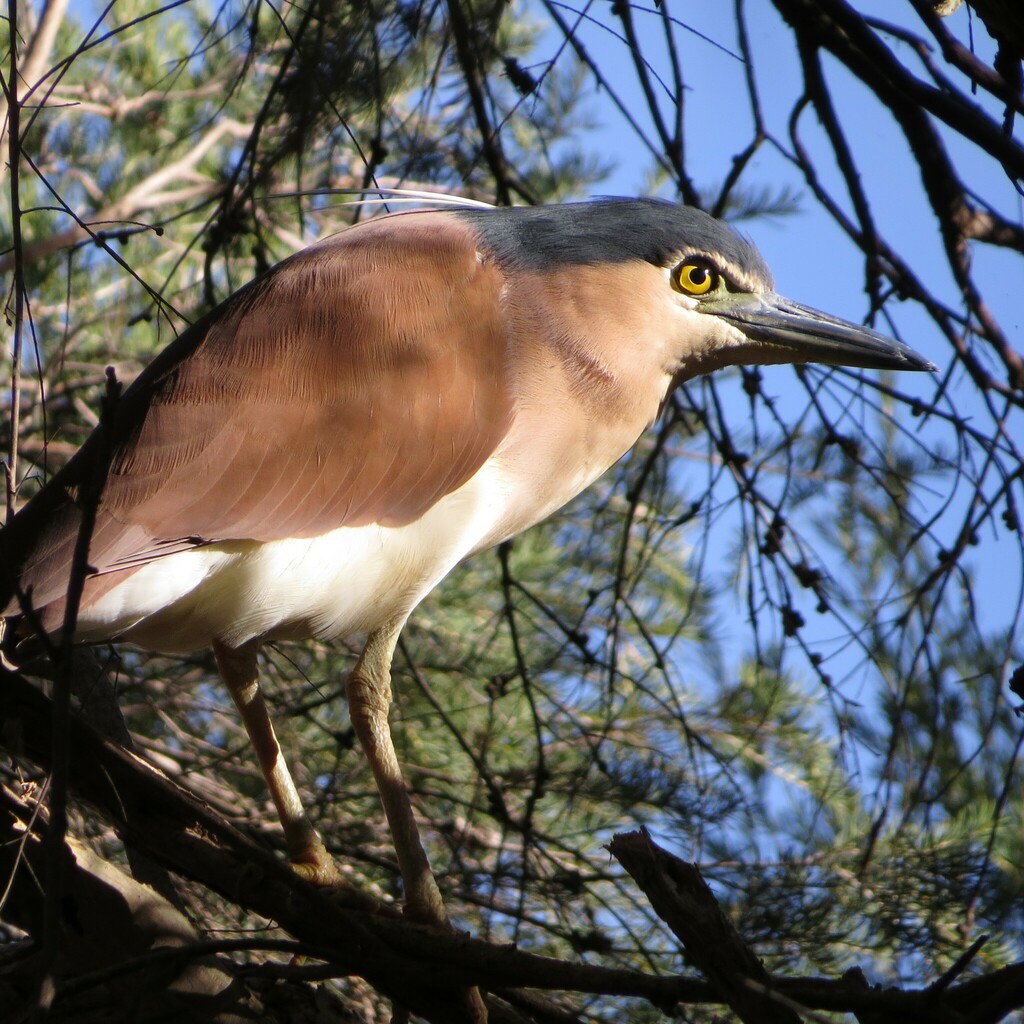
Nankeen Night Heron
Photo © pimelea
Photo © pimelea — CC BY 4.0 — Source: iNaturalist #190303316Identification
The nankeen night heron is a medium-sized heron measuring 55–65 cm in length with a distinctive rich chestnut and white plumage. Adults display cinnamon-brown upperparts with a rufous back and wings, contrasting sharply with white underparts. The face is white with a cinnamon tint, and breeding adults show a grey-black crown and nape adorned with two or three thin white plumes tipped with black. The heavy black bill matches the head in length, while the iris is straw yellow (sometimes orange-tinged during breeding). Legs and feet are creamy yellow, turning bright pink during courtship. Juveniles are strikingly different, with dark brown streaking on the head and neck, olive-yellow bills with black tips, and lime-green to olive-grey legs.
Range & Habitat
This species has a broad distribution across the Indo-Pacific region, found in Australia, New Zealand, the Philippines, Papua New Guinea, the Solomon Islands, Java, Palau, the Caroline Islands, and New Caledonia. Six subspecies are recognized, with one now extinct. The nankeen night heron occupies diverse habitats including forests, meadows, shores, reefs, marshes, grasslands, and swamps, demonstrating remarkable adaptability across its range.
Behaviour & Diet
The nankeen night heron is primarily nocturnal, roosting during the day and becoming active at dusk. Adults produce distinctive calls: males give a 'qu-arck' sound when departing roosts, while females and juveniles make higher-pitched 'qu-ook' calls. When disturbed, they emit a short, deep 'quock,' and in flight produce hoarse croaking calls. Chicks beg with 'kak-kakkak' sounds to solicit parental feeding, and juveniles utter high-pitched screeches when alarmed.
Best Time & Places to See It
The nankeen night heron's nocturnal habits make observation challenging but rewarding for dedicated birdwatchers. Look for them at dusk around marshes, wetlands, and coastal habitats throughout their range. The breeding season is particularly productive for viewing, when plumage becomes more intense and birds are more vocal. Australia, New Zealand, and Papua New Guinea offer reliable opportunities to encounter this species.
Photography Tips
Photographing this nocturnal heron requires patience and low-light capability. Position yourself near roosts at dawn or dusk when birds are most active. The bird's distinctive plumage—rich chestnut upperparts against white underparts—photographs beautifully in warm evening light. During breeding season, capture the delicate white crown plumes and the pink legs in courtship displays. A telephoto lens is essential given the bird's wariness and tendency to roost in dense vegetation.
Aketajawe Lolobata National Park
Belair National Park
Ben Boyd National Park
Blue Mountains National Park
Bogani Nani Wartabone National Park
Boodjamulla National Park
Bribie Island National Park
Cape Range National Park
Carnarvon National Park
Nothing matches these filters.
No community photos yet. Log in to add the first one.
No community observations of this species yet.