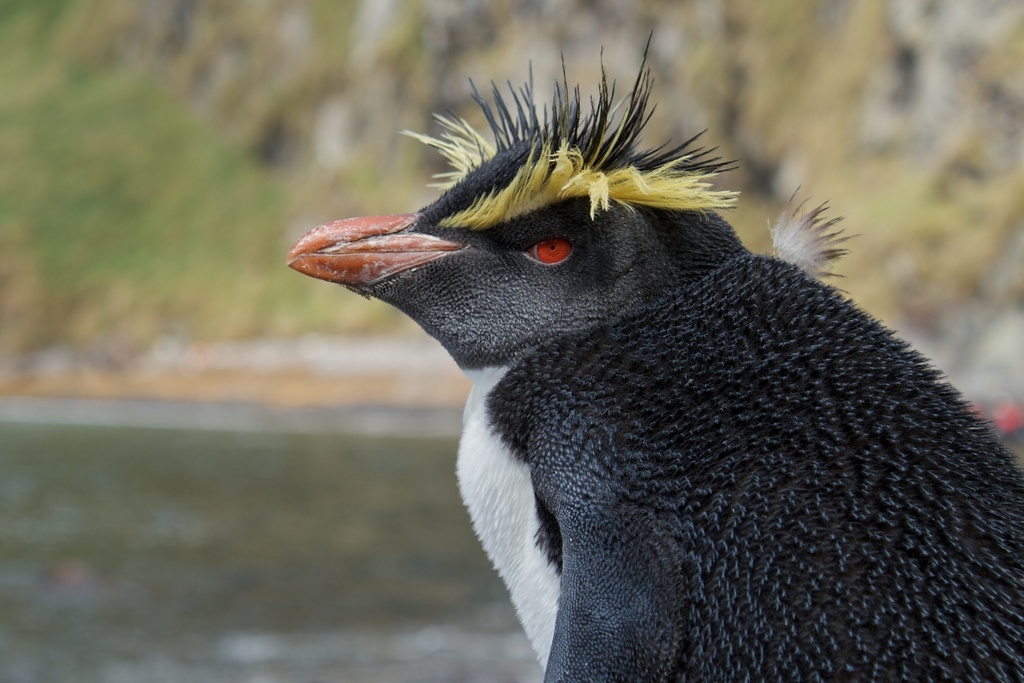
Northern Rockhopper Penguin
Photo © Brian Gratwicke
Photo © Brian Gratwicke — CC BY 4.0 — Source: iNaturalist photo #104255The northern rockhopper penguin (Eudyptes moseleyi), also known as Moseley's rockhopper penguin, Moseley's penguin, or Tristan penguin, is a penguin species native to the southern Indian and Atlantic Oceans. It was formerly considered conspecific with the eastern and western rockhopper penguins. A study published in 2009 showed that the population of the northern rockhopper had declined by 90% since the 1950s. For this reason, the northern rockhopper penguin is classified as endangered. == Taxonomy == The rockhopper penguins have been considered to consist of two species, northern and southern rockhopper penguin, since research published in 2006 demonstrated morphological, vocal, and genetic differences between the two populations. The latter species was itself later split into the eastern rockhopper penguin and the western rockhopper penguin. Molecular datings suggest that the genetic divergence between the northern and the two southern species of rockhopper penguin may have been caused by a vicariant event caused by a shift in the position of the Subtropical Front during the mid-Pleistocene climate transition. Analysis of a part of a mitochondrial control region from a northern rockhopper penguin found on the Kerguelen Islands showed that it may have come from Gough Island, 6,000 km away, and that the southern…
Sea Lion Island
Sealion Island Settlement, Falkland Islands
+74 birds+3 mammals
Windswept tussock grasslands roll across volcanic terrain where Southern Ocean swells crash against rocky shores, creating one of the Falkland Islands' most dramatic wildlife theatres. This…
VIEW ISLAND & ARCHIPELAGOVolunteer Point
Stanley, Falkland Islands
+70 birds+3 mammals
Windswept grasslands meet volcanic black sand beaches where three penguin species converge in the South Atlantic's most theatrical wildlife theatre. This remote peninsula on East Falkland…
VIEW NATURE RESERVENo community photos yet. Log in to add the first one.
No community observations of this species yet.