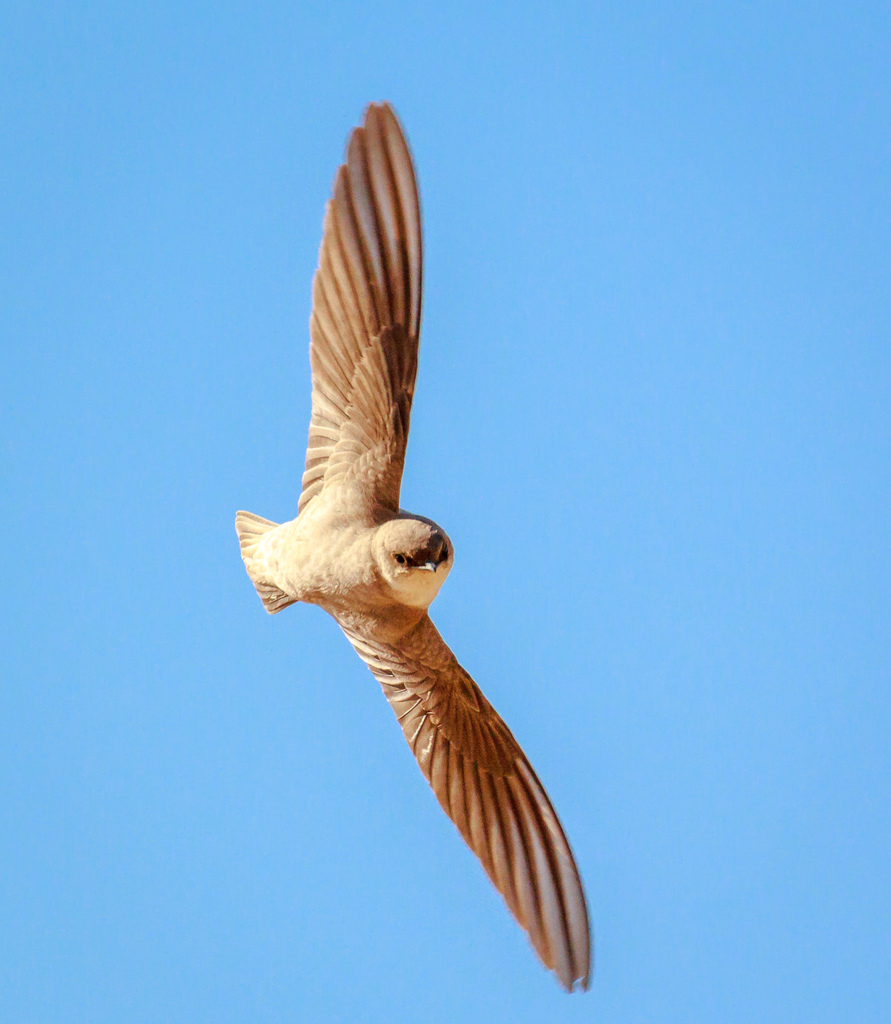
Pale Crag Martin
Photo © ramidos
Photo © ramidos — CC BY 4.0 — Source: iNaturalist #210227871The pale crag martin (Ptyonoprogne obsoleta) is a small passerine bird in the swallow family that is resident in Northern Africa and in Southwestern Asia, east to Pakistan. It breeds mainly in the mountains, but also at lower altitudes, especially in rocky areas and around towns. Unlike most swallows, it is often found far from water. It is 12–13 cm (4+1⁄2–5 in) long, with mainly brown plumage, paler-toned on the upper breast and underwing coverts, and with white "windows" on the spread tail in flight. The sexes are similar in appearance, but juveniles have pale fringes to the upperparts and flight feathers. It was formerly considered to be the northern subspecies of the rock martin of southern Africa, although it is smaller, paler, and whiter-throated than that species. The pale crag martin hunts along cliff faces for flying insects using a slow flight with much gliding. Its call is a soft twitter. This martin builds a deep bowl nest on a sheltered horizontal surface, or a neat quarter-sphere against a vertical rock face or wall. The nest is constructed with mud pellets and lined with grass or feathers, and may be built on natural sites under cliff overhangs or on…
Abijata-Shalla Lakes National Park
Ethiopia
+438 birds+7 mammals
Two crater lakes of contrasting chemistry define this remote corner of Ethiopia's Rift Valley, where soda lakes and freshwater basins create a mosaic of distinct aquatic…
VIEW NATIONAL PARKBale Mountains National Park
Ethiopia
+397 birds+20 mammals
Where the Ethiopian highlands rise above 4,000 metres, the Bale Mountains create a landscape of stunning ecological extremes—from afroalpine grasslands swept by wind and mist to…
VIEW NATIONAL PARKSimien Mountains National Park
Debark, Ethiopia
+120 birds+9 mammals
Where granite escarpments plunge thousands of metres into misty valleys, the Ethiopian highlands reveal a landscape of almost mythical drama. These volcanic plateaus, carved by ancient…
VIEW NATIONAL PARKNo community photos yet. Log in to add the first one.
No community observations of this species yet.