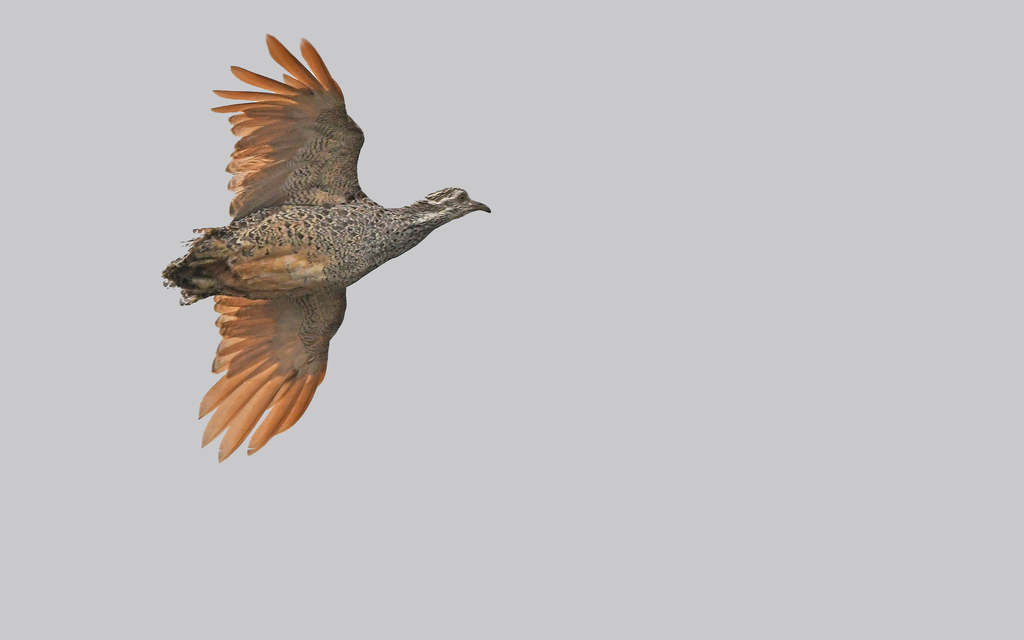
Patagonian Tinamou
Photo © Christoph Moning
Photo © Christoph Moning — CC BY 4.0 — Source: iNaturalist photo #382467566Identification
The Patagonian tinamou is a compact bird, approximately 35 cm (14 in) in length, making it relatively modest in size. Its plumage is distinctly patterned: the upper parts are grey spotted with black, while the throat is white. The breast displays a warm rufous tone that contrasts with the cinnamon-colored belly, creating an attractive and recognizable appearance for field identification.
Range & Habitat
This species is native to southern South America, with its range concentrated in southern Chile and southwestern Argentina. The Patagonian tinamou occupies temperate grassland habitats, particularly at altitudes between 200 and 800 m (660–2,620 ft), though it can also be found on savannah and brushland within this elevation range. Its overall occurrence range spans approximately 400,000 km² (150,000 sq mi).
Behaviour & Diet
The Patagonian tinamou is a ground forager, typically collecting food items from the ground or low-lying bushes. Its diet is varied, consisting primarily of fruit supplemented by small amounts of invertebrates, flower buds, tender leaves, seeds, and roots. This opportunistic feeding approach allows the species to make use of diverse food sources available across its grassland and brushland habitats.
The breeding system of this species is particularly fascinating: males are solely responsible for incubating eggs and raising chicks, which may originate from as many as four different females. The male tends the young until they are ready for independence, typically around 2–3 weeks of age. Nests are located on the ground in sheltered positions, either within dense brush or between raised root buttresses that provide protection and concealment.
Best Time & Places to See It
The Patagonian tinamou inhabits the temperate grasslands and brushlands of southern Chile and southwestern Argentina, making these regions the primary destinations for sighting this species. The bird's preference for grassland and savannah habitats at moderate altitudes (200–800 m) means that travelers should focus on these specific elevation zones. As a ground-dwelling species that forages in open and semi-open terrain, the Patagonian tinamou is more likely to be encountered in grassland areas rather than dense forest.
Photography Tips
Photographing the Patagonian tinamou presents the challenge typical of ground-dwelling grassland birds: patience and careful approach are essential. The bird's patterned plumage—with its grey-and-black spotted upper parts and contrasting rufous breast—should be carefully exposed to capture the subtle coloration details. Early morning light in open grassland habitats will help reveal the bird's distinctive markings. Keep in mind that tinamous, while capable of flight, are not strong fliers, so they may rely on running through grass as a primary escape method, making them easier to track visually once located. Use longer lenses to maintain distance and avoid disturbing foraging birds.
No community photos yet. Log in to add the first one.
No community observations of this species yet.